Wildlife on Kennel Property: Coyotes, Bears, Snakes, and the Rabies Question at Open-Acreage Boarding Facilities
Published on October 22, 2026
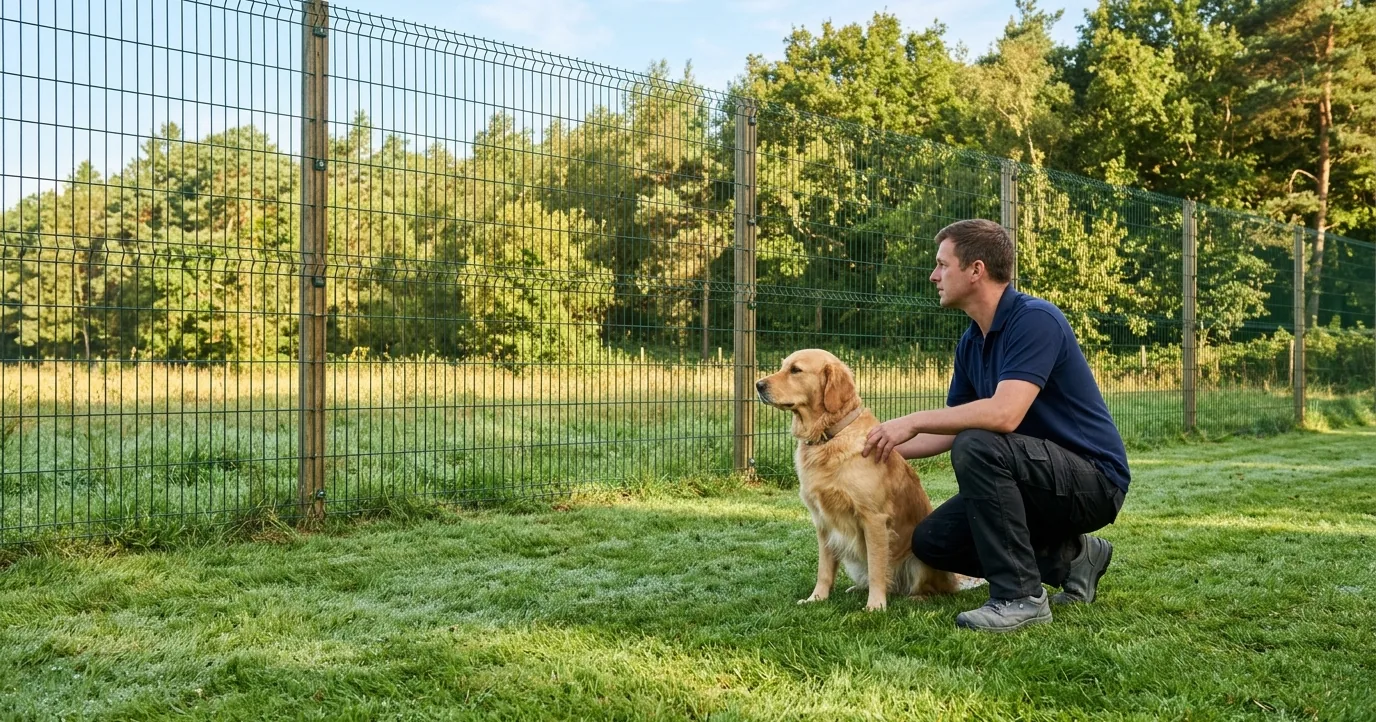
Early one September morning, a black bear climbed a backyard fence in suburban Maryland and ambled across the lawn, minutes before the homeowner, a writer for the American Kennel Club, let her dog out. In almost 30 years at the house she had never seen one. A state wildlife expert told her that as homes and businesses spread, bears passing through suburban neighborhoods should come as no surprise.
Now picture that yard with forty acres around it. Rural kennels sell open acreage, and the same acreage is habitat. Black bears now live in at least 40 states, and coyotes, once confined to the western two-thirds of North America, now occur from the Atlantic to the Pacific after expanding their territory by an estimated 40 percent since the 1950s. Seen from the treeline, a kennel is a building full of food, waste and barking dogs, and a dog in an outdoor run overnight is stationary, noisy and smells of dinner. This guide covers what keeps wildlife out, what should happen when something gets in, and why a bite from an animal nobody identified makes your dog’s rabies certificate the most important paper in its file.
Why Wildlife Comes to a Kennel
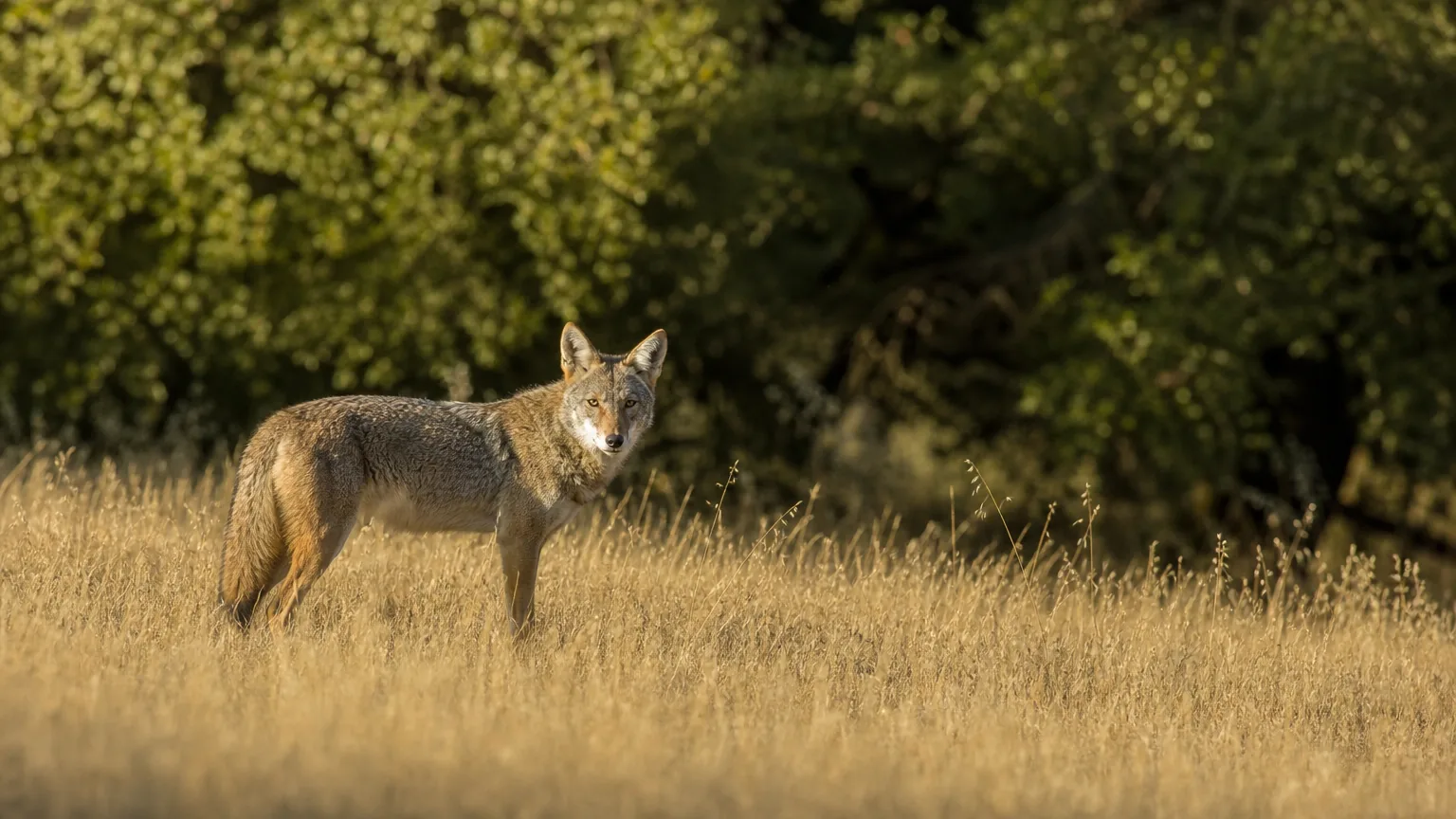
Coyotes mostly eat rodents, but Humane World for Animals (formerly the Humane Society of the United States) notes that pet food and garbage can make a yard look like a dependable buffet. Without those lures, visits are brief and rare. A coyote that finds food in one yard learns to search others.
Small dogs are at risk as prey. Larger dogs are attacked less often, and Humane World says it generally happens when coyotes feel their territory is threatened, usually in the January to March breeding season, or when feeding has cost them their fear of people. In January 2026, Idaho Fish and Game warned residents after a group of coyotes killed a dog at a home near Sun Valley, and flagged the mating season (February to early March) and the pupping season (March to May) as the riskiest times.
Bears follow food even more single-mindedly. The AKC notes that a bear may smell food up to two miles away, and that it remembers where it found a meal and comes back. In May 2023, a black bear that had spent about two weeks raiding a wolfdog sanctuary near Black Mountain, North Carolina, eating from buckets and damaging fences, sheds and food bowls, broke into a pen and killed a 12-year-old wolfdog. The food came first, and the death came later.
Wildlife can harm dogs without touching them, too. Rats, raccoons and other night visitors can leave leptospirosis in mud and standing water, as our guide to blue-green algae and leptospirosis in kennel ponds explains.
Food and Waste Drive Most Encounters
Since food is what brings wildlife in, food handling is where prevention starts, and it is the cheapest part. BearWise, a programme created by bear biologists and backed by state wildlife agencies, explains that pet food is rich in fat and protein, which makes it extremely attractive to bears. Its advice is to feed pets indoors, bring bowls in at night, and store food where bears cannot see or smell it, in screw-top or bear-resistant containers rather than sacks a bear can drag away. Humane World gives coyote country the same message, and Idaho Fish and Game’s list of attractants to secure includes one that matters more at a kennel than anywhere else: dog feces.
A kennel generates all of it in bulk, from sacks of kibble and freezers of raw food to the waste of dozens of dogs. England’s licensing standard for boarding kennels, written for a country without coyotes or black bears, still builds in the right habits: bowls emptied after each meal so wet food is not left out, feed stored away from vermin, feces removed at least twice a day, and a pest control programme wherever a problem is found.

On a tour, look for:
- Feeding indoors, with bowls collected as soon as dogs finish.
- Food in sealed metal or bear-resistant containers inside a closed building.
- Dog waste in lidded, wildlife-resistant bins that are emptied often.
- No bird feeders, open compost or windfall fruit near the dog areas.
- Rodent control that keeps bait out of the dogs’ reach.
A Fence That Keeps Dogs In Will Not Necessarily Keep Wildlife Out
Kennel fencing is usually designed and inspected as containment. England’s standard requires wire fencing to be strong, rigid, high enough and dig-proof “to prevent an escape”, and our guide to latches, gates and fencing gaps covers keeping a dog inside. Keeping wildlife out is the same job pointed the other way.
For coyotes, Humane World recommends a fence at least six feet tall that either extends at least six inches underground or has a mesh apron laid flat along the outside for at least 12 inches, pinned with landscape staples. On top, a “coyote roller”, a spinning bar that rolls off an animal trying to scramble over, or a similar topper stops climbers.
Bears need electricity. BearWise calls a properly installed, grounded and maintained electric fence the most effective way to keep them out, with at least three strands of wire (five or six are better), the lowest 7 to 9 inches off the ground and the highest 36 to 42 inches up, powered by an energizer of at least 6,000 volts and 0.5 joules. The shock hurts but does not harm, so the fence is safe around pets. At a kennel, it belongs outside the dog fencing and around the feed store and bins. Upkeep is the weak point: wet vegetation touching the wires can short the fence out, so growth has to be kept low and the voltage checked often.
Overnight housing is the last line. Wisconsin’s care rules for licensed breeders, dealers and shelters require outdoor dog shelters to give dogs “reasonable protection from predators.” Boarding kennels fall outside that licence, but it is a fair standard, and an open-topped run with a dog in it all night does not meet it. Some rural permits already require dogs indoors overnight for the neighbors’ sake, as our guide to what a kennel’s location tells you explains, and the same rule protects them from wildlife.
Dusk, Dawn and the Last Toilet Break of the Night
The risk concentrates in the last turnout before lights out and the first one in the morning. Humane World notes that coyotes are generally nocturnal and advises letting dogs out only with someone beside them, especially at night. The AKC advises checking the yard before letting a dog out at the times of day and year when bears are on the move, and Idaho Fish and Game suggests a leash for night-time toilet breaks. At a kennel, that becomes a routine:
- Sweep first. Before any turnout in the dark, a handler walks the yard and fence line with a flashlight.
- Leash after dark, even inside a fenced yard, with small dogs taken out one at a time.
- Never unattended. No dog stays in a yard or open run after dusk.
- Read the fence line. Fresh digging, scat inside the perimeter or a dog that keeps barking at one corner all mean something has been visiting.
Those signs belong in the day’s log alongside appetite and stool, and our guide to what a daily report card should record explains why a written record beats a handler’s memory.
Snakes in the Yard, the Woodpile and the Shed
The Merck Veterinary Manual notes that deadly snakebites are more common in dogs than in any other domestic animal, partly because many dogs are small relative to the dose of venom. In North America the danger comes from pit vipers (rattlesnakes, copperheads and cottonmouths) and coral snakes.
Snakes go where there is cover and food. University of California pest management guidance lists heavy brush, tall grass, rocks, logs and lumber piles as hiding places to clear, and recommends rodent control, since snakes come looking for prey and shelter in rodent burrows. A woodpile beside a play yard is the classic rural mistake, because it shelters the rodents and the snakes together. The same guide says mothballs, sulfur and other home remedies do not work, and no plant repels snakes. Snake-proof fencing is possible but expensive, needs tight gates and clear vegetation (snakes climb it to reach the top), and should be checked before snakes become active in late winter or early spring. A dog that barks or whines persistently at one spot is worth investigating.
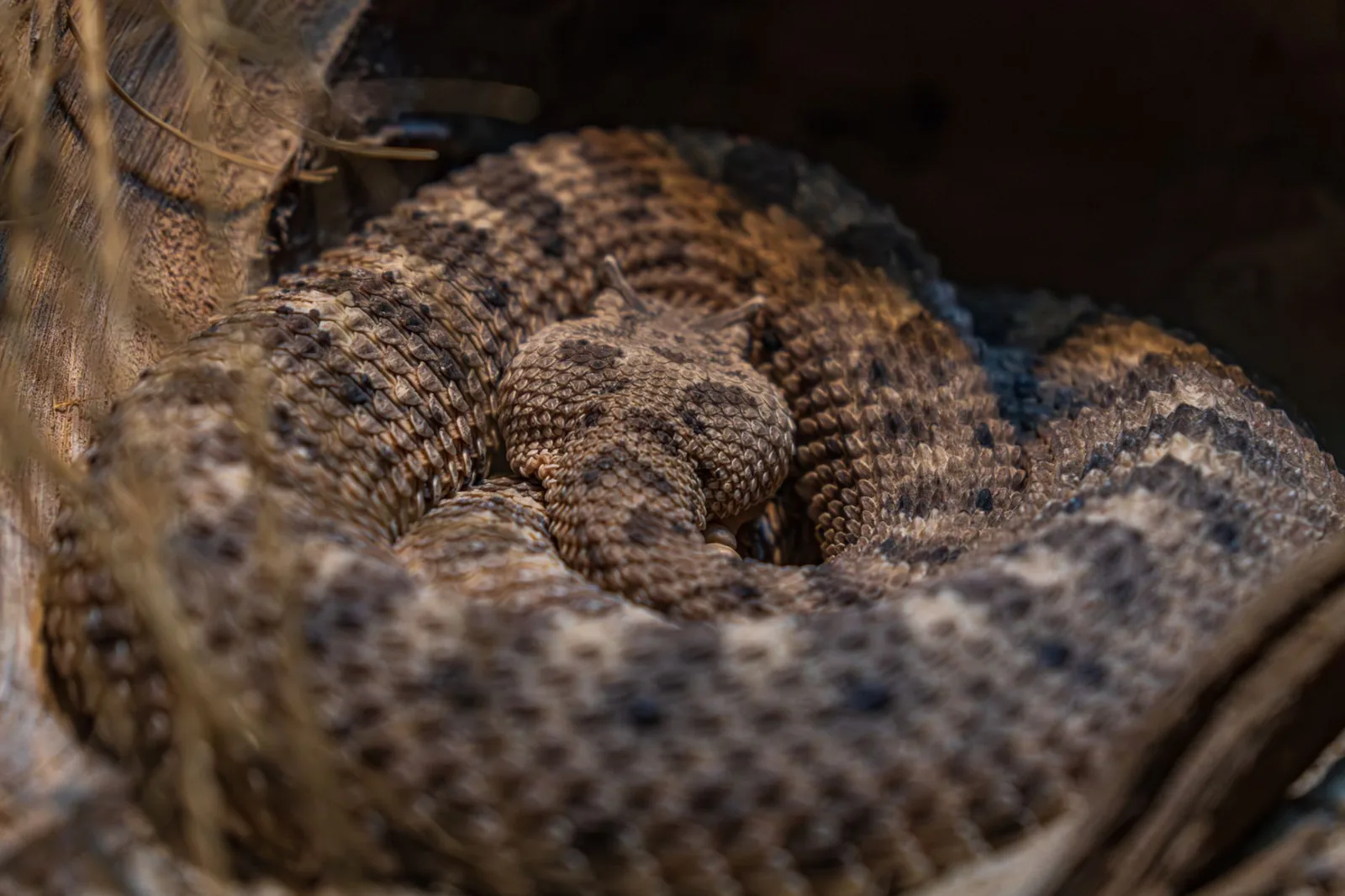
If a dog is bitten, Merck calls it a true emergency and says to spend no time on first aid beyond keeping the dog quiet and limiting its activity, which usually means carrying it to the car. Ice, cold packs, cutting and sucking the wound, tourniquets, electric shock, hot packs and waiting to see what develops are all ineffective and potentially harmful. Nobody should try to kill the snake, since the UC guide warns that even a dead rattlesnake can bite by reflex.
Delay is what costs dogs. In a review of 272 rattlesnake bites in dogs at five Arizona emergency centers, Witsil and colleagues found that eight dogs died, and that in dogs over ten a longer gap between bite and treatment was linked to a greater chance of death. They found no evidence that steroids, antihistamines, preventive antibiotics or the rattlesnake vaccine reduced illness or death, so a vaccinated dog still goes straight to the vet. Ask a rural kennel how far away the nearest emergency clinic is, whether it stocks antivenom, and who drives.
After a Bite or Scratch From an Animal Nobody Saw Clearly
Most encounters end with a dog barking at a shape in the dark. The ones that matter end with a wound, and when the culprit was a raccoon, skunk, fox, bat or something nobody saw properly, the rabies question comes with it.
Rabies spreads when saliva gets into a bite, an open cut, or the eyes, nose or mouth, according to the national rabies compendium of the National Association of State Public Health Veterinarians. Wildlife carries almost all of it. Of 3,834 rabid animals reported in the United States in 2024, 91.4 percent were wild, led by bats and raccoons, according to CDC surveillance by Keshavamurthy and colleagues. The compendium’s key line is that wild carnivores, skunks and bats that are not available for testing should be regarded as rabid. If the animal gets away, the dog is managed as exposed, so the first hour matters:
- Separate and examine. Bring the dog in, away from other dogs. The handler wears gloves and checks the coat for punctures and scratches.
- Leave the wild animal to animal control. Nobody touches a dead one barehanded or damages its head, which is what the laboratory tests.
- See a vet the same day for wound cleaning and, for a vaccinated dog, the rabies booster the compendium recommends.
- Report it to the local health department, which decides what happens next.
- Call the owner now, not at pickup. This belongs at the top of the list in our guide to when a kennel should phone you mid-stay.
- Look after the staff. Anyone bitten or scratched needs a medical assessment. CDC’s September 2026 health advisory, issued as rabies exposures rose nationwide, says a health official familiar with animal rabies should help judge whether treatment is needed, and puts a typical human post-exposure course at $11,000 to $14,000.
Bats need their own rule. Texas’s state health department says a bat that may have touched a person or a domestic animal must not be released, and should go to animal control for testing. If staff have to contain it, the department describes leather gloves, a coffee can and a sheet of cardboard, and warns against striking the bat, because damage to the brain can make testing impossible.
None of this is confined to remote country. In October 2026, Los Angeles County confirmed its first rabid raccoon since 1973, found in a Westlake Village backyard. A dog that may have been exposed, current on its rabies vaccine, was placed under quarantine, and the county had already confirmed a record 70 rabid bats that year.
The Rabies Question: Why the Certificate on File Matters
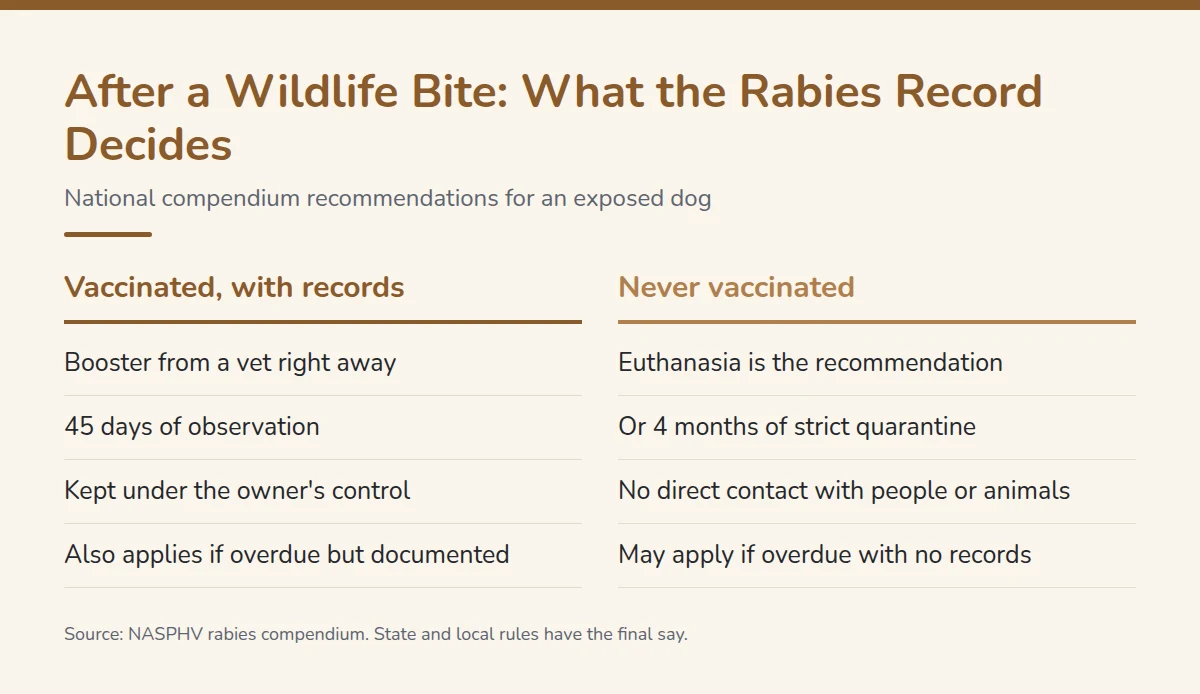
What happens next depends on the dog’s vaccination history, and on whether anyone can prove it. The compendium is the basis for rabies control programmes across the United States, although it does not override state and local law. For an exposed dog it recommends:
- Current on vaccination: a booster, then 45 days of observation under the owner’s control.
- Overdue, with records of an earlier vaccination: the same booster and 45 days.
- Overdue, with no records: treatment as unvaccinated, or blood tests showing a response to a booster before the 45-day route is allowed.
- Never vaccinated: euthanasia or, if the owner refuses, four months of strict quarantine with no direct contact with people or other animals, and a vaccine given ideally within 96 hours of exposure. Officials may extend that to six months if vaccination is delayed.
Two details catch owners out. A first rabies vaccine only counts 28 days after it is given, while a booster counts at once, so a young dog vaccinated the week before boarding is not yet protected in the eyes of the rules. And the vaccine has to be given by or under the supervision of a licensed veterinarian, with the person who gave it named on the certificate. A collar tag identifies the dog, but the certificate is the proof. Keep a photo of the current one on your phone, and expect a good kennel to hold a copy and check that it covers the whole stay.
The compendium also explains why vaccinated dogs are still observed: an overwhelming dose of virus, incomplete vaccine protection or a badly given shot can all let the disease through. Facilities have to be able to trace contacts, too. In December 2025, Cook County, Illinois, confirmed its first rabies-positive dog since before 1964. The dog had been vaccinated in June, and before its diagnosis it had attended a Chicago daycare and boarding facility while believed to be infectious. The county contacted more than 90 pet owners, exposed dogs were asked to get a booster and spend 45 days in home quarantine, and 13 people began post-exposure treatment. That only works if a facility knows exactly which dogs shared a yard, and when.
Do not confuse any of this with the ten-day rule, which applies when a healthy dog bites a person: that dog is observed for ten days, whatever its vaccination status. Local rules vary and the health department has the final word, so ask what your jurisdiction requires and get the answer in writing.
Questions to Ask a Rural Facility
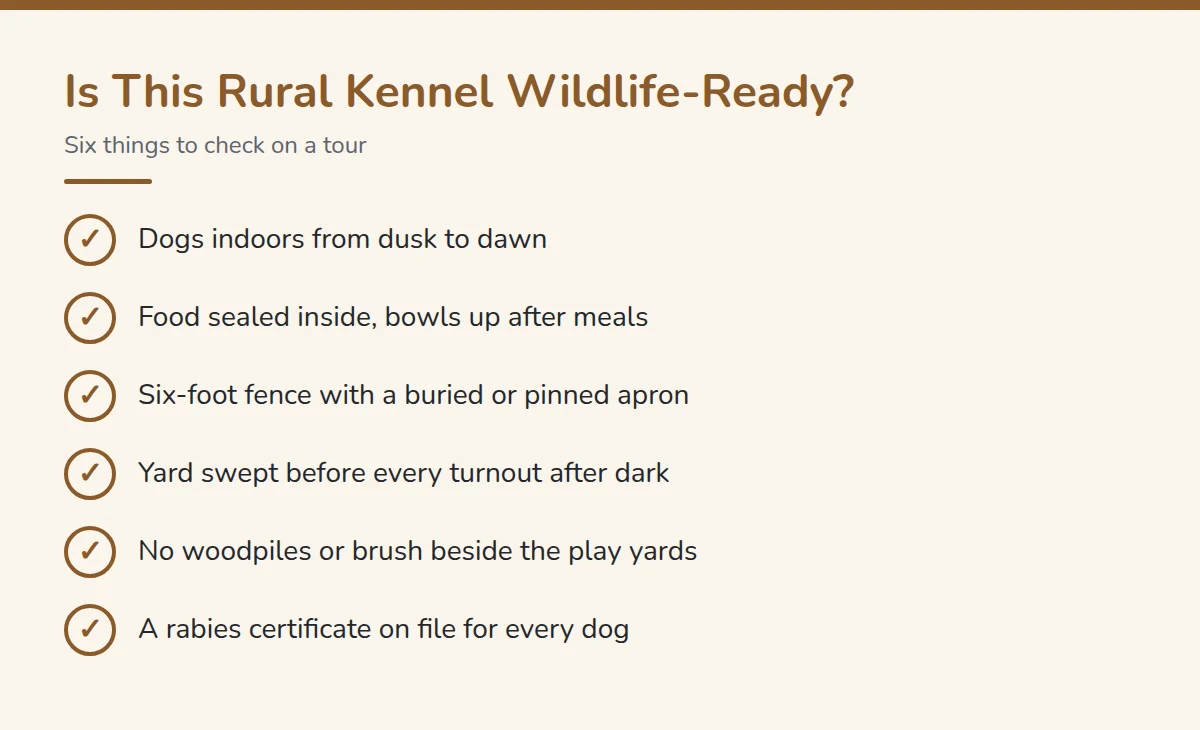
- Are dogs indoors from dusk to dawn, with the doors to outdoor runs closed overnight?
- How tall is the perimeter fence, what stops digging under it, and is there a roller or an electric wire?
- Where is food stored, and how is waste kept and collected?
- Who checks the yard before the first and last turnouts?
- What wildlife have you seen this year, and what did you change because of it?
- Where are the woodpiles and lumber in relation to the play yards?
- What happens in the first ten minutes after a bite from an unidentified animal?
- Do you hold every dog’s rabies certificate, and how far is the nearest emergency vet that stocks antivenom?
The answer to hope for is not “never”. An operator on forty acres who has never seen a coyote has probably not looked. One who can describe the bear that tipped a bin last spring, and the electric wire that went up afterwards, is managing the land properly. For operators, the same list doubles as a self-audit, and none of it costs much next to a dead dog or a four-month quarantine.
Further reading (sources)
- American Kennel Club on keeping dogs safe from bears at home and on the trail
- Humane World for Animals with its guide to coyotes, pets, attractants and coyote-proof fencing
- Hody and Kays for a map of the coyote’s spread across North America since 1900
- Idaho Fish and Game on the coyote pack that killed a dog near Sun Valley, and how to protect pets
- WLOS covering a bear that raided food buckets for weeks before breaking into a wolfdog pen
- BearWise on why pet food draws bears and how to store it
- BearWise for electric fence specifications that keep bears out
- GOV.UK setting out England’s kennel standards on fencing, feed storage and waste removal
- Wisconsin Administrative Code with the rule that outdoor dog shelters must protect against predators
- University of California IPM on rattlesnake hiding places, rodent control and snake fencing
- Merck Veterinary Manual for snakebite first aid and the folk remedies that do harm
- Witsil and colleagues with 272 rattlesnake bites in Arizona dogs and the treatments that made no difference
- National Association of State Public Health Veterinarians on the compendium of animal rabies prevention and control
- Keshavamurthy and colleagues for rabies surveillance in the United States during 2024
- CDC with its September 2026 health advisory on rising rabies exposures
- Texas Department of State Health Services for handling a bat that may have touched a person or pet
- Los Angeles County Animal Care and Control on the county’s first rabid raccoon since 1973
- Cook County Animal and Rabies Control confirming the first rabid dog in the county since before 1964
- WGN-TV with the daycare exposures, 45-day quarantines and boosters that followed