Ponds, Lakes, and Dock Diving at Boarding Facilities: Blue-Green Algae, Leptospirosis, and the Water-Quality Questions Nobody Asks
Published on October 10, 2026
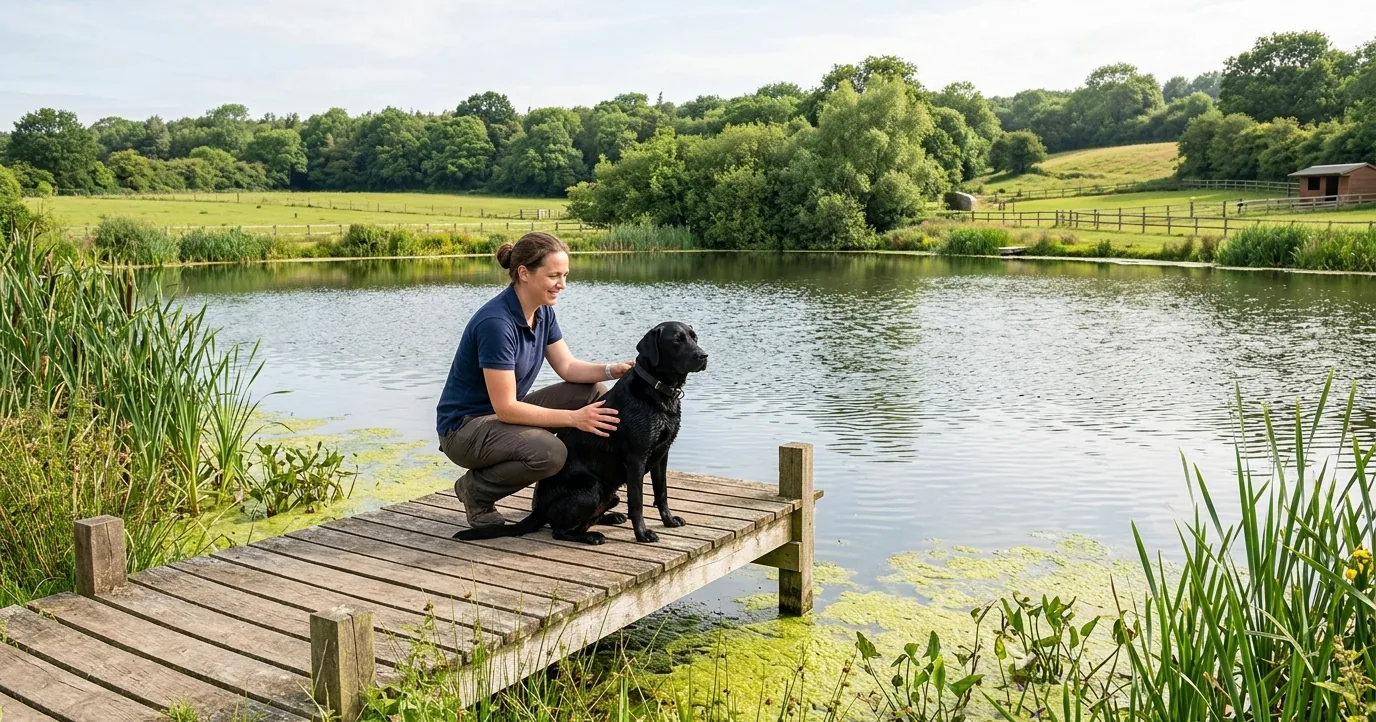
North America Diving Dogs, one of the bodies that sanctions competitive dock diving, will no longer recognise a pond as a venue. Its facility rules require a pool of “clean, clear water, no debris, or algae,” and then say it outright: “We no longer accept pond facilities.” Meanwhile, rural kennels and dog resorts still market exactly what the sport walked away from. A swimming pond. A stretch of lake frontage. A dock built out over a farm pond, or a creek at the bottom of the paddock.
When owners ask about that water, they usually ask about drowning. Is someone watching? Can a tired dog get out? Those questions matter, and our guide to pool safety, hydration and drowning risk at boarding covers them in detail. This article is about the other half. A pool is dosed, filtered and drained. A pond is a living system fed by sun, runoff and whatever drinks from it at night, and the bigger risk in natural water is not that a dog cannot swim. It is what the dog swallows while it does.
A Pond Is Not a Pool With Grass Around It
Nothing in a pond is killing what grows there. Chlorine, filtration and the occasional drain and refill are what keep pool water predictable, and natural water has none of them. Three problems follow. Cyanobacteria, the organisms behind blue-green algae, can bloom in it. Wildlife urine can seed it, and the mud around it, with leptospirosis. And everything that relieves itself near the water adds gut parasites such as giardia.
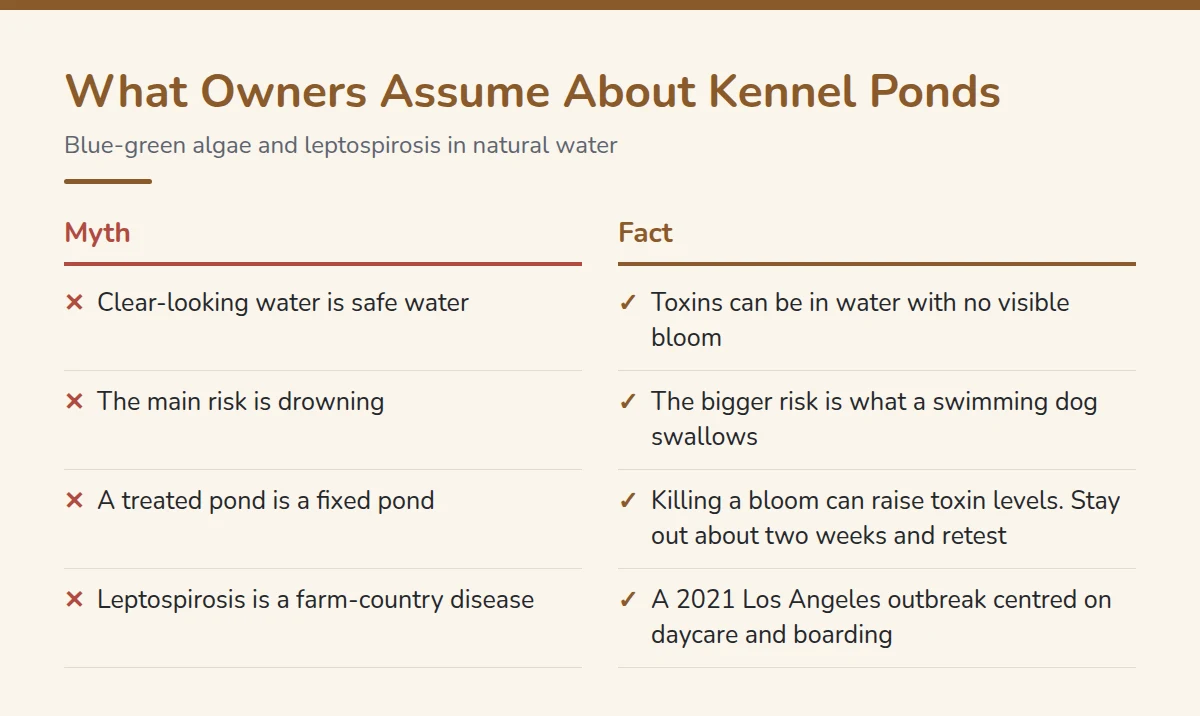
Regulation mostly treats garden water as a drowning hazard. England’s statutory guidance for licensed boarding kennels, one of the more detailed rulebooks anywhere, says dogs must not have unsupervised access to ponds, pools, wells and any other garden feature that might be a threat. That is a sensible rule about access, and it does what it is meant to do. Supervision prevents a drowning. It does nothing about a toxin a dog swallows while a member of staff stands on the bank and watches it swim.
Blue-Green Algae Is Not Algae, and Dogs Are Its Usual Victims
Despite the name, blue-green algae are bacteria. The American Kennel Club explains that cyanobacteria cannot be seen individually and only look like algae once they clump together, most often in still freshwater during hot, dry spells. Kansas State University’s extension guide to farm ponds lists hot, sunny weather with little wind and little recent rain as the conditions that favour a bloom, with nitrogen and phosphorus in the water as the fuel. Farm runoff is a known risk factor, but the guide is clear that blooms also turn up in ponds ringed by grassland, where agricultural nutrients are rarely an issue. A pond with no fields around it is not exempt, although what the neighbours spread on their land still matters, which is one more reason a kennel’s location tells you so much about the stay.
A bloom can look like spilled paint, foam, scum or floating mats, in colours from bright green and blue-green to brown or red, and it often smells of rotting vegetation. It can also look like very little. The CDC notes that the toxins can be in the water as well as in the cells, and Kansas State’s guide warns that a pocket of water carrying a lethal dose can sit within a few feet of water with low levels. No single sample, and certainly no glance from the gate, tells you whether a pond is safe.
Dogs take the brunt of it because of how they use water. A review of canine poisonings in the United States by Backer and colleagues describes dogs as particularly vulnerable because they swim in and drink from blooms and eat algal mats. In the surveillance cases the authors examined, swimming combined with swallowing water or licking algae off the coat was the most common route of exposure, and more than half of the poisonings were fatal. It is not only the retrievers, either. The same review found a wide range of breeds at risk, poodles, dachshunds and toy breeds included, in backyard ponds as well as lakes and rivers.
State figures show how lopsided the toll is. Minnesota’s health department received 18 reports of animal illness linked to harmful algal blooms between 2014 and 2023. Every one of them was a dog, and 13 of those dogs died.
Dock diving concentrates the exposure. The sport is built on repetition: launch, grab the toy with an open mouth, swim back, climb out, shake, go again. The AKC points out that dogs who catch balls and toys in the water swallow more of it, and Kansas State warns that dogs may be drawn to the unpleasant smell of some blooms. Over an afternoon of retrieves, that adds up to a lot of pond.
Why There Is No Time to Wait and See
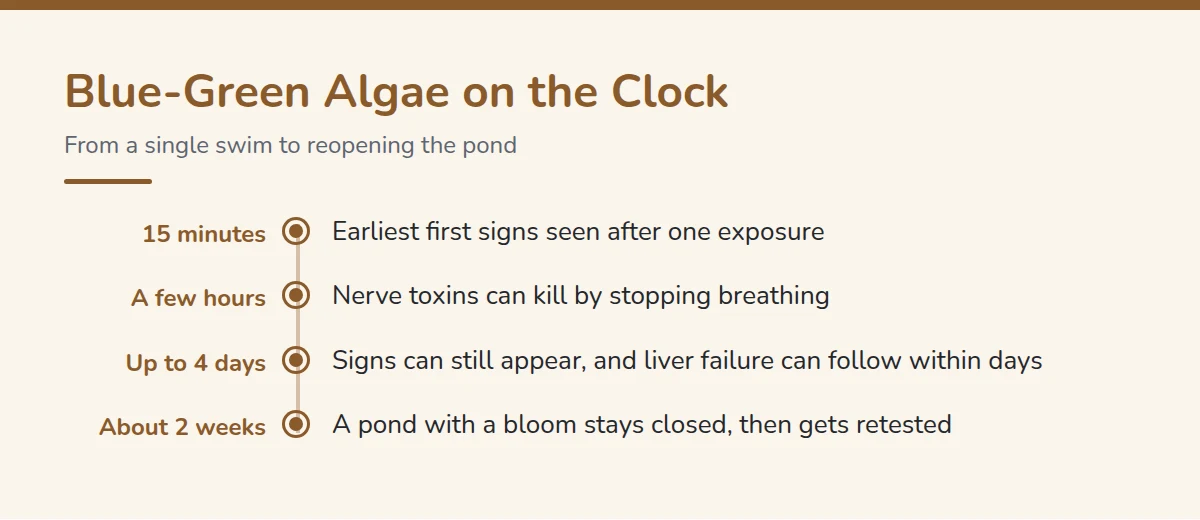
Cyanobacteria produce two main families of toxin. Cornell’s Riney Canine Health Center names microcystins, which injure the liver, and anatoxins, which attack the nervous system, as the most serious. The Merck Veterinary Manual describes how differently they kill. When the nervous system is affected, death can come within a few hours because the animal stops breathing, while liver failure takes a few days.
The speed is the problem. In a CDC surveillance report covering 2016 to 2018, animals with a single known exposure first showed signs anywhere from 15 minutes to four days afterwards. Backer’s review describes two dogs from the same household that died within 20 to 30 minutes of falling ill after time in a backyard pond. The signs to know are vomiting, diarrhea, drooling, weakness, stumbling, disorientation, tremors, seizures, trouble breathing and collapse.
There is no antidote. Cornell’s guidance says so plainly, adds that the poisoning can be rapidly fatal, and warns that many dogs exposed to these toxins may not survive long enough to reach a veterinary hospital. Treatment means removing what toxin it can and supporting the dog through the rest, and it works best when it starts early.
For a boarding facility, that turns the usual approach upside down. A dog that has been in a bloom does not get watched to see whether symptoms develop. It gets rinsed with clean water straight away, so it cannot lick the toxin off its coat, as the CDC advises. Then it goes to a vet, and the owner gets a call from the car. That is exactly the kind of event that belongs on the list of incidents a kennel should phone you about mid-stay. At a rural site, distance matters too, so ask how far away the nearest emergency vet is and who drives.
Leptospirosis Lives at the Water’s Edge
Leptospirosis is a bacterial disease spread in the urine of infected animals. The updated ACVIM consensus statement by Sykes and colleagues names rodents as the most important reservoir worldwide, alongside other wild and domestic species, and explains that infection happens when the bacteria reach mucous membranes or broken skin. The organism can multiply in waterlogged soil and is most common where the climate is warm and wet. A pond with muddy banks, visited at night by rats, raccoons, skunks, opossums or livestock, is close to a textbook source.
In dogs, leptospirosis damages the kidneys and liver, and a severe form that causes bleeding into the lungs has been associated with mortality of up to 70 percent. It also spreads to people, which makes a contaminated pond a staff safety problem as well as a welfare one.
The most useful thing an owner can know is that this is not only a rural disease, and that boarding is part of its story. During an outbreak that began in 2021, Los Angeles County, hardly a landscape of farm ponds, recorded 201 canine cases and 13 deaths. Of the cases with data, 66 percent had been exposed at a dog daycare or boarding facility, and two separate facilities each had clusters of more than 30 dogs. The county attributed the outbreak to dogs passing the bacteria to one another in group settings, so the other guests can be a source as well as the wildlife. A 2026 study of the outbreak by Randolph and colleagues found that none of the 47 dogs with a known vaccination history had been completely vaccinated against leptospirosis.
The consensus statement draws the conclusion for the industry. It recommends annual leptospirosis vaccination for all dogs from 12 weeks of age, and says boarding and daycare facilities should require it, because outbreaks have occurred in association with such facilities. England’s licensing rules already require a current leptospirosis vaccination record for every boarded dog, the kennel’s own dogs included. If a facility with natural water on site asks only for rabies, distemper, parvovirus and Bordetella, that gap is worth raising. The vaccine also starts with two injections given weeks apart, so a first-ever dose the week before drop-off is not protection yet.
Wildlife leaves a slower problem in the water as well. Giardia and similar gut parasites spread through feces, and a pond shared by dozens of dogs and visited by wild animals collects plenty of it. These infections tend to surface a week or so after a dog gets home, which is why our guide to why dogs come home sick from boarding is worth reading alongside this one.
What a Responsible Operator Actually Does
It starts with someone who knows what to look for checking the water every day, before the gate opens. Kansas State’s guide explains that the species that usually cause trouble float near the surface and collect on the downwind side of a pond, so the downwind edge and any sheltered coves are where to check and where to sample. A daily check that consists of glancing at the middle of the pond from the yard is not a check.
Two free screens help. A Clemson University factsheet describes the stick test, in which a stick pushed into the scum comes out looking coated in paint if the material is likely cyanobacteria, and the jar test, in which a layer that forms at the surface of a sample left undisturbed in a clear jar for 8 to 16 hours points to cyanobacteria. Both are screens, not verdicts. A positive result closes the water. A negative one does not prove it safe, and only a laboratory can say whether a bloom is a toxin-producing type.
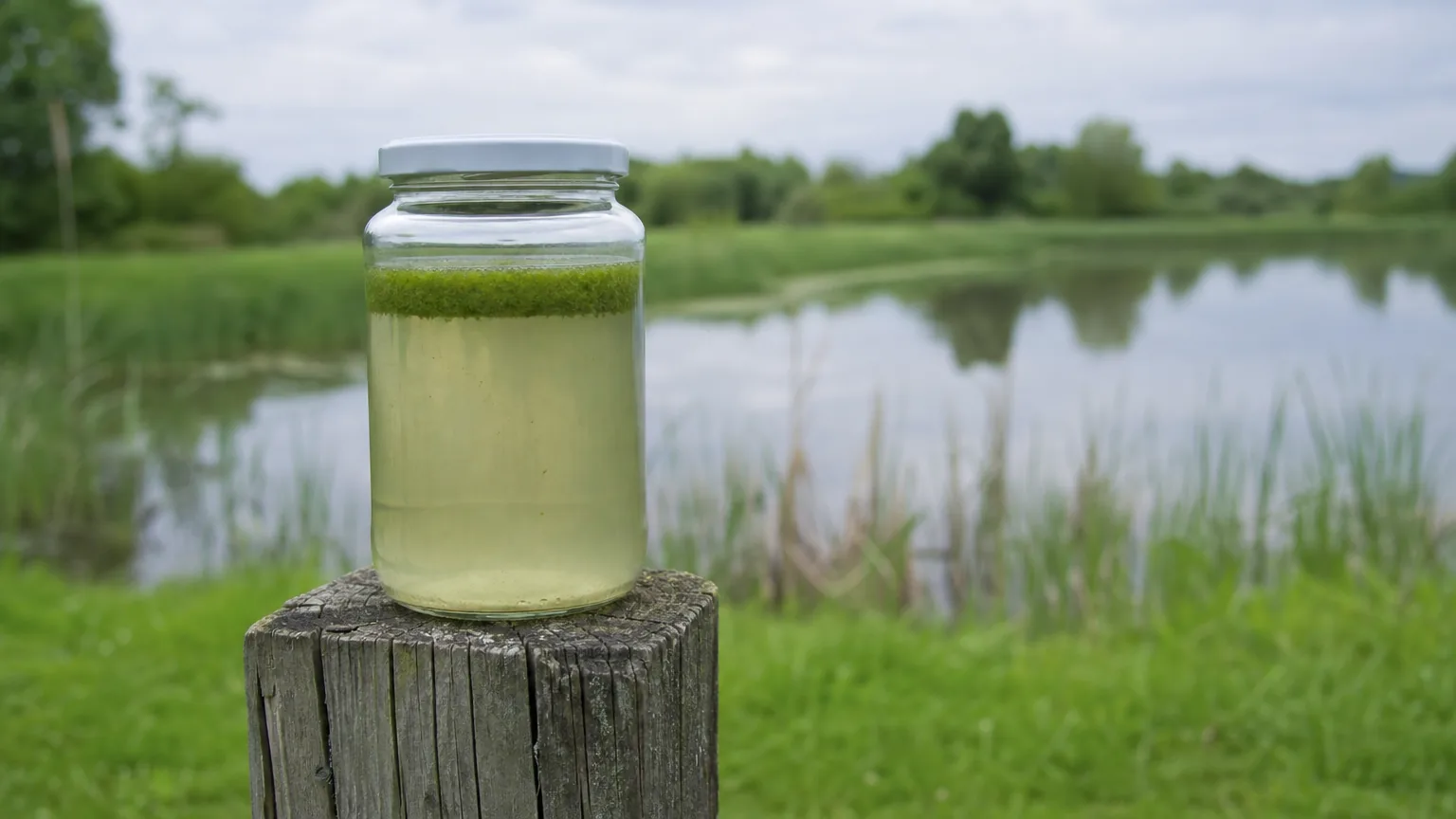
Closing has to mean closed for long enough. Kansas State’s advice for livestock ponds is to keep animals off a blooming pond for about two weeks and retest before access resumes, and there is no reason to hold a kennel’s dogs to a lower standard. The same guide warns against the old fix. Copper sulfate is no longer recommended, because copper builds up in pond sediment for years, and because killing the cells can raise the toxin concentration as they break down. A pond that was treated yesterday is a pond to stay out of, not one that has been fixed.
The season, at least, is predictable. In the CDC’s 2016 to 2018 surveillance data, nearly all animal illnesses occurred between May and September. A pond that stays open every day of a hot summer, with no closures on record, has either been very lucky or has not been checked.
The rest is routine, and it should be visible on a tour:
- Fresh drinking water at the water’s edge, so hot dogs are not drinking the pond.
- A rinse with clean water after every swim, before the dog can groom.
- Rodent control around buildings and feed stores, and fencing that keeps livestock and as much wildlife as possible off the banks, both of which the leptospirosis consensus lists as prevention.
- A written log of daily checks, closures and test results.
- A plan for bloom days, whether that is a treated pool, a sprinkler, or no swimming at all.
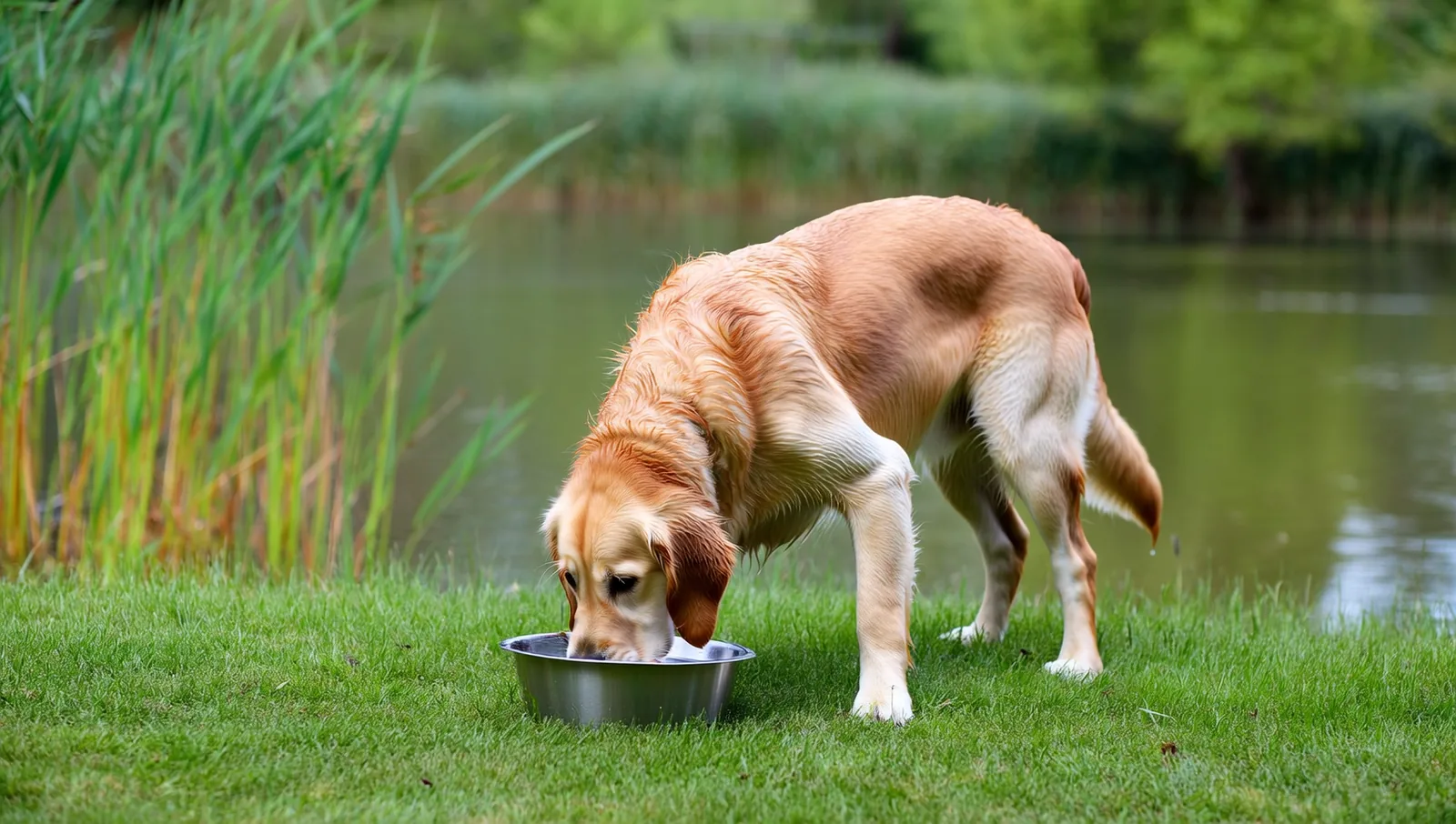
For an operator deciding whether a pond is an amenity or a liability, that list is the answer. With daily checks, a closure rule that actually gets used, lepto required at booking and a willingness to disappoint customers in August, a pond is an amenity. Without them, it is a liability with a nice photograph. If the dock is the draw, the first question is what lies under it. A purpose-built dock pool with filtration raises pool questions, while a dock over a pond raises pond questions, whatever the brochure calls it. And if the swims happen off the property, the advice in our guide to adventure daycare and off-site outings applies, including checking local bloom advisories before the van leaves.
Questions to Ask Before Your Dog Swims in Natural Water
Put these to the facility before you tick any box that allows water play:
- Is the swimming water a treated pool or natural water? If there is a dock, what is underneath it?
- Who checks the water each day before dogs go in, and is that check written down?
- What makes you close the water, how long does it stay closed, and when did you last close it?
- Do you ever have the water tested by a laboratory, and can I see the results?
- Do you treat the pond with algaecide, and how long do dogs stay out afterwards?
- Is clean drinking water available at the water’s edge, and is every dog rinsed after swimming?
- Is the leptospirosis vaccine required for every dog that swims, or only recommended?
- What wildlife and livestock use the water, and what do you do about rats?
- If a dog is exposed to a bloom, what happens in the first ten minutes, and how far away is the nearest emergency vet?
The answer you are hoping for on closures is a date. An operator who shut the pond on a hot weekend in July, lost bookings over it and can tell you so is running natural water properly. One who says the dogs love it and nobody has ever been sick has told you how often they look. If the answers leave you uneasy, keep your dog out of natural water altogether, and put that exclusion on the booking form in writing rather than mentioning it at the counter.
Further reading (sources)
- North America Diving Dogs on why its dock diving pools must be algae-free and ponds no longer qualify
- American Kennel Club for what blue-green algae is and why dogs that fetch in water swallow more of it
- Kansas State University Research and Extension with its guide to identifying and managing blue-green algae in farm ponds
- CDC on keeping animals away from harmful algal blooms and rinsing them after contact
- Roberts and colleagues in the CDC’s national surveillance of algal bloom illnesses in people and animals, 2016 to 2018
- Backer and colleagues for a review of suspected and confirmed canine cyanotoxin poisonings in the United States
- Minnesota Department of Health on a decade of algal bloom illness reports in animals, every one of them a dog
- Cornell Riney Canine Health Center with why blue-green algae poisoning has no antidote
- Merck Veterinary Manual on how quickly nerve and liver toxins from algae kill
- Clemson University for the stick and jar tests that screen a pond for cyanobacteria
- Sykes and colleagues with the updated ACVIM consensus statement on leptospirosis in dogs
- Los Angeles County Veterinary Public Health on the 2021 canine leptospirosis outbreak linked to daycare and boarding
- Randolph and colleagues for a clinical study of the Los Angeles outbreak and its unvaccinated dogs
- GOV.UK setting out England’s licensing conditions for dog kennel boarding, from pond access to vaccinations