Water at Dog Boarding: Hydration Monitoring, Pool Safety, and the Drowning Risks Nobody Mentions
Published on September 13, 2026
In July 2026, a Roanoke animal warden walked into City Dogs Boarding & Playcare on a day when the air temperature was 91 degrees and felt like 97. Her search warrant, filed that week in Circuit Court, described a ground temperature of 85 degrees, several dogs in apparent heat distress, an employee’s account of a dog with heat stroke symptoms that included convulsions and vomiting, and dogs in wire kennels visibly shaking and huddled in the corners. One line in that warrant matters more than the rest: there was no drinking water visible in a brick warehouse where as many as 70 dogs were being boarded (Roanoke Times, 2026). Police urged owners to collect their dogs as quickly as possible.
Water is the cheapest thing a boarding facility provides and one of the easiest to get wrong. It also shows up twice in the same stay, playing two completely different roles. Once as the bowl in the run, which is the thing keeping your dog alive and which almost nobody asks about. And once as the resort swimming pool in the photograph that sold you the booking, which everybody asks about and which carries risks the brochure does not list. Here is what to check on both.
The Bowl in the Run Is the Part Nobody Audits
A rough working figure for a healthy dog is about one ounce of water per pound of body weight per day, or roughly 50 to 60 millilitres per kilogram. Most boarded dogs drink more than that baseline, because they pant more, move more, and run warmer than they do at home. The dogs that matter are the minority going the other way.
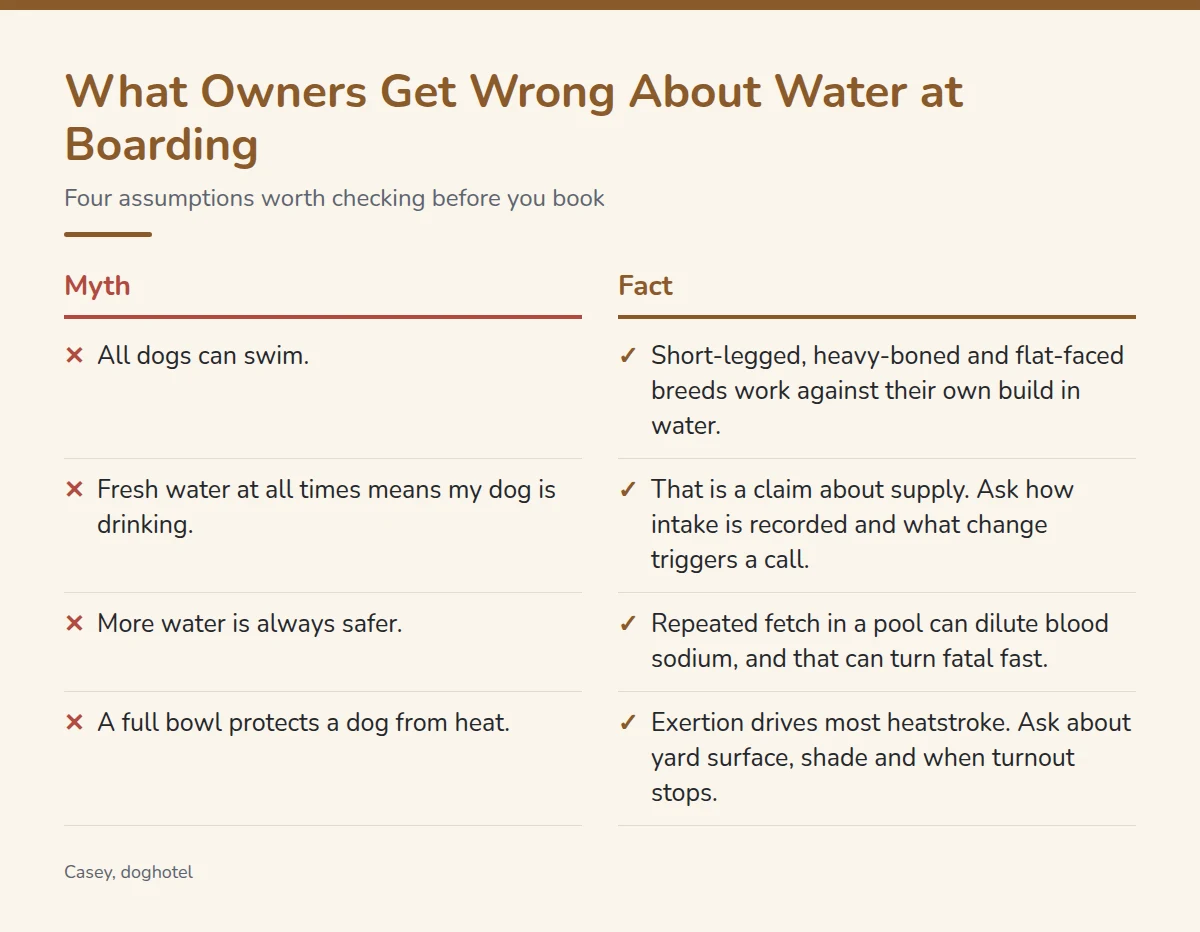
Stress suppresses drinking the same way it suppresses eating, and the under-drinkers are the dangerous ones because low intake travels silently. A dog that refuses a meal gets noticed at the next feeding, since the bowl comes back full and somebody has to write it down. A dog that has barely touched its water produces no such moment. It simply gets quietly more dehydrated over two or three days, which is exactly the window a long weekend covers.
So the question to ask is not whether water is available. “Fresh water at all times” is a claim about supply, not about consumption, and every facility will say it. Ask instead how intake is actually tracked. The facilities that catch problems do something concrete: they fill to a marked line and note what is left at each check, or they log water alongside food on the daily card rather than treating it as an afterthought. Ask what triggers a phone call, and whether reduced drinking is on that list next to refused meals.
Dehydration itself is harder to spot than most owners assume. Tacky or dry gums, a slow capillary refill, sunken eyes, and lethargy are the practical signs, and the skin tent test at the shoulders is the one everybody has heard of. It is also the least reliable. An overweight dog’s skin springs back normally even when that dog is genuinely dehydrated, and a thin or elderly dog’s skin tents even when hydration is fine, because the elasticity went years ago. The test misleads in precisely the dogs least able to absorb the error. If your dog is a lean senior, say so at drop-off and ask staff to judge by gums and urine output instead.
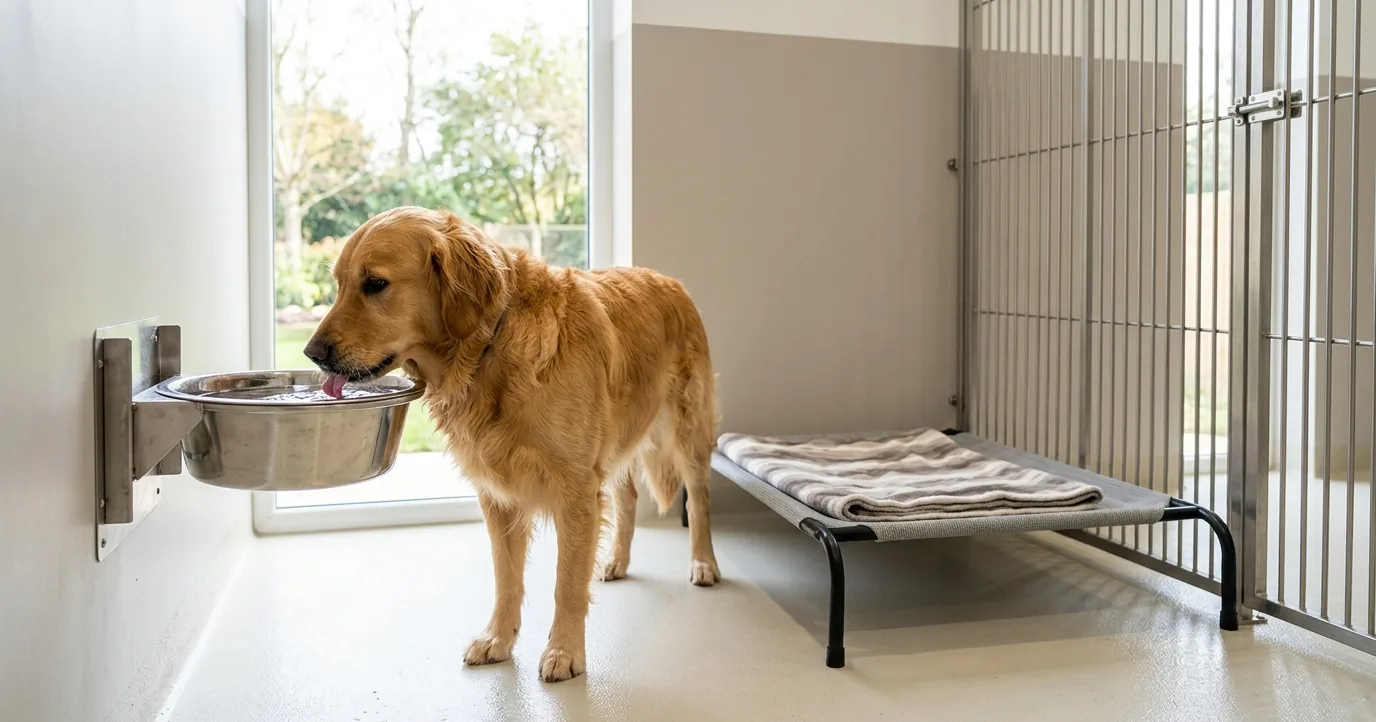
One mundane detail is worth more than any policy statement: how the vessel is secured. A loose bucket knocked over at 9 a.m. means no water at all until somebody walks past, and in a busy facility that can be hours. Clip-mounted buckets, weighted bowls, or recessed bowl holders solve it. This sits alongside the rest of the feeding and bowl hygiene questions worth putting in writing at booking.
Communal Bowls, Yard Buckets, and Splash Pads
A shared water vessel is a shared drinking vessel, and in a yard full of dogs that makes it a straightforward fecal-oral route. Giardia is the classic example. The Companion Animal Parasite Council notes that environmental reservoirs like soil, grass, and standing water are genuinely difficult to decontaminate, which is why a single yard bucket rinsed once a day is not the same as one that is emptied, scrubbed, and disinfected on a schedule.
Splash pads deserve their own paragraph, because the engineering problem is real and well documented on the human side. The CDC reviewed waterborne disease outbreaks associated with splash pads in the United States between 1997 and 2022 and found 60 outbreaks producing 10,611 cases and 152 hospitalisations. Cryptosporidium accounted for 40 of those outbreaks and 91 percent of the cases. The reason is specific: crypto oocysts tolerate chlorine and can survive more than seven days in properly chlorinated water, and spraying or jetting water aerosolises free chlorine, which drives the concentration down exactly where you need it. The CDC notes that recirculating systems do better with secondary disinfection, meaning ultraviolet or ozone, than with chlorine alone.
None of that data is about dogs. The parallel is what makes it useful. A splash pad works by catching whatever lands on it, and dogs are considerably less continent than toddlers. If a facility runs one, ask whether the water recirculates or drains to waste, and if it recirculates, whether there is UV or ozone treatment in the loop. Drain-to-waste is the simpler, safer design. A facility that has never been asked this will usually tell you honestly that they do not know, which is itself an answer.
The Pool in the Marketing Photo
There is no national standard for supervising a swimming pool at a dog boarding facility. No licensing body sets a dog-to-attendant ratio for water, no certification requires a lifeguard, and in most jurisdictions a pool is treated as just another yard feature. That absence is the whole reason you have to ask.
What good operations do is straightforward. One staff member is assigned to the water and does nothing else while dogs are in it, rather than supervising the pool and the adjacent play yard at the same time. Group sizes in the water are smaller than on land. The pool is physically gated when it is not in use, not merely covered, because covers drown dogs that walk onto them.
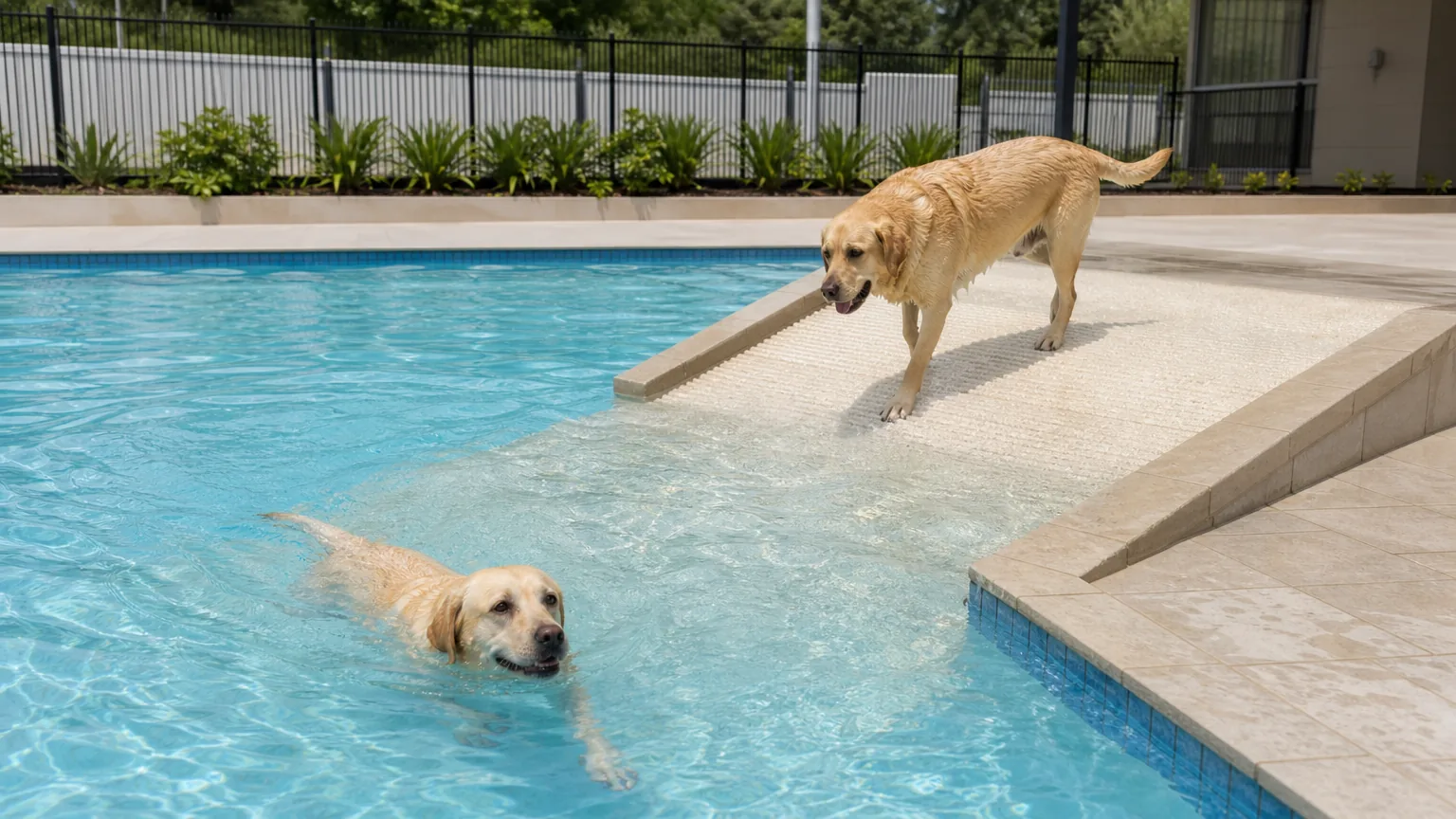
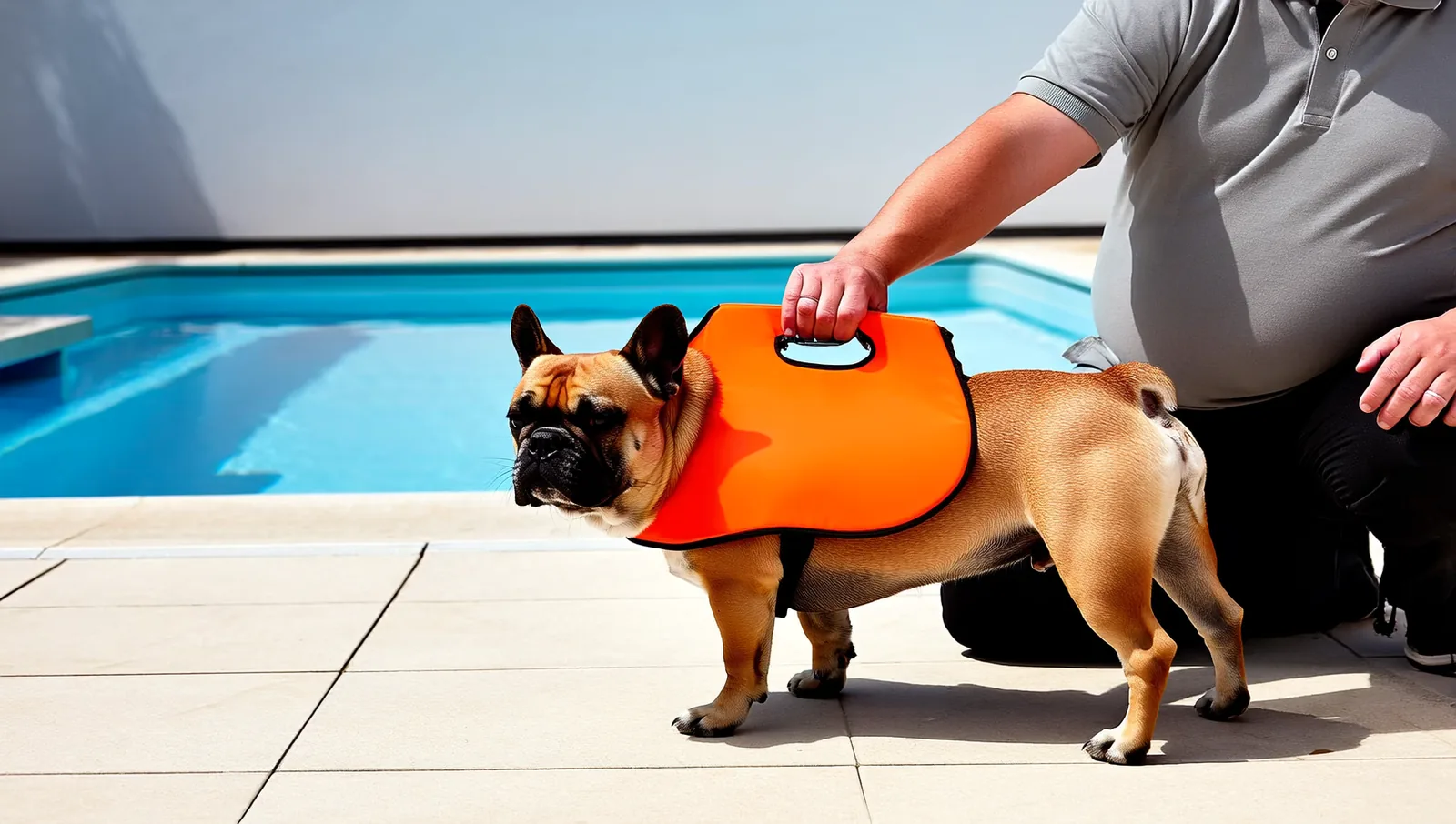
The exit is the part that kills. Dogs do not intuitively understand pool steps or ladders, and a first-time swimmer that falls in will often swim the perimeter looking for a way out until it is too tired to keep its head up. A proper dog pool has a wide graduated ramp or a beach entry the dog can find from anywhere in the water, and staff should be able to tell you that every dog is walked to the exit and shown it before it swims. Life vests matter for the same reason, and the one feature that counts is a strong grab handle across the shoulders so a person can lift a panicking dog out in one motion.
It is also worth remembering the ordinary version of this hazard. Ponds, drainage ditches, and unfenced pools on rural properties are a recognised category of freak accident risk at boarding facilities, and they do not have to be a marketed amenity to drown a dog.
The Dogs That Should Not Be Swimming at All
It is a myth that all dogs swim. Weight distribution decides a great deal of it, and short-legged, long-bodied, heavy-boned dogs like Basset Hounds, Dachshunds, and Corgis are working against their own build in water. Flat-faced breeds are worse off still: they tire quickly, and they have to hold a muzzle clear of the surface that barely projects past their eyes. If you have a Bulldog, Pug, or French Bulldog, the water belongs on the same list as group play and summer turnout among the things a facility should be adapting for that breed group.
The category is broader than breed, though. Seniors with arthritis or laryngeal paralysis, dogs recovering from surgery, dogs on sedatives, and dogs with any seizure history all belong out of the pool. So does any dog that has never swum before and is now being introduced to water by strangers, in a group, away from its owner.
The practical problem is consent. Pool access is frequently bundled into a general daycare or activity waiver signed at drop-off, which means owners approve it without ever deciding on it. Write the restriction on the booking form rather than mentioning it at the counter, and phrase it as a prohibition: no pool, no splash pad, no unsupervised water. Facilities follow written prohibitions far more reliably than remembered preferences.
Water Intoxication Is the Risk Nobody Warns You About
A dog that swallows a large volume of water quickly can dilute the sodium in its blood, a condition called hyponatremia. Water then moves into the cells, and while organs like the liver can accommodate some swelling, the brain is encased in bone and cannot. It is uncommon, but it can be fatal and it develops fast.
The scenarios that cause it are exactly the ones a pool encourages. Repeated fetch retrieves where the dog opens its mouth each time it grabs the toy, dogs that bite at a hose or sprinkler stream, and enthusiastic swimmers that submerge their heads over and over. Small dogs reach a dangerous dose sooner, simply because there is less of them to dilute.
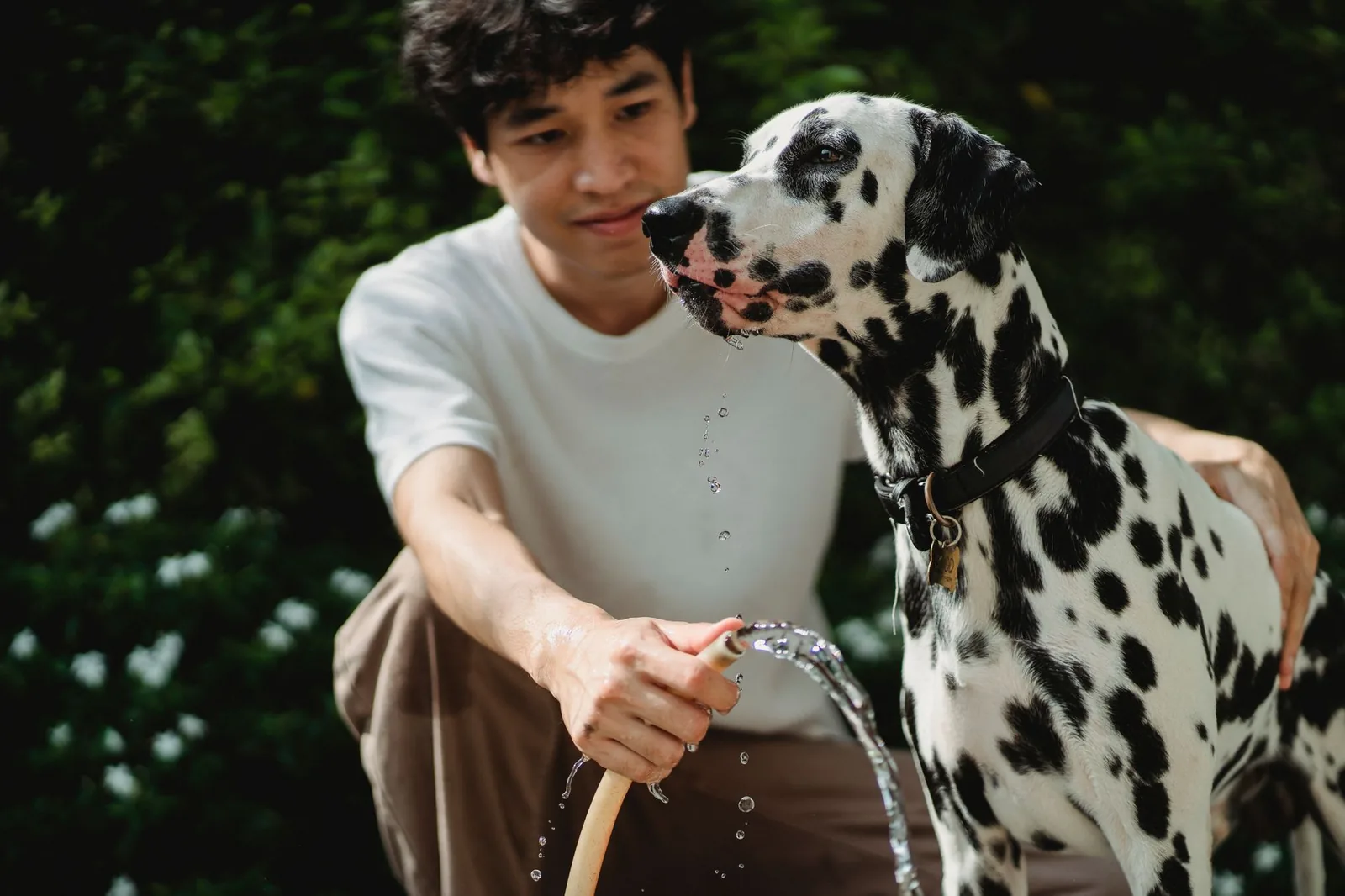
The signs are lethargy, staggering and loss of coordination, bloating, nausea and vomiting, glazed eyes, dilated pupils, pale gums, and heavy salivation, progressing in severe cases to difficulty breathing, collapse, seizures, and coma. This is an emergency room visit, not a wait-and-see. Prevention is dull and effective: break up water play every 15 minutes or so and move the dog onto dry land for a while, and do not run continuous high-repetition fetch in the water.
Two more things belong in the 24 hours after any water incident. A dog that inhaled water during a scare can develop breathing trouble hours later as the lungs react, so new coughing, laboured breathing, or unusual lethargy the evening after a swim warrants a call to a vet rather than an early night. And moisture trapped in the ear canal after swimming is the routine, far more common aftermath, worth drying at the time and checking for head shaking later.
Available Water Is Not the Same as a Hydrated Dog
The last thing worth being clear about is that a full bowl does not protect a dog from heat. Research on UK dogs under primary veterinary care found that exertional heat-related illness, the kind brought on by activity, is a bigger threat than the hot car scenario that dominates public messaging. Dogs overheat while doing something, and a boarding facility in July is full of dogs doing something.
Ground temperature is the measurement owners never think to ask about, and it is the one the Roanoke warrant recorded. Air at 85 degrees with a concrete or artificial-turf yard surface baking well above that is a different environment from 85 degrees in the shade. Ask what the yard surface is, what shade exists over it, when turnout is suspended, and what replaces it indoors. That conversation belongs with the wider one about how turnout and play sessions are actually scheduled.
The Questions to Ask Before You Consent
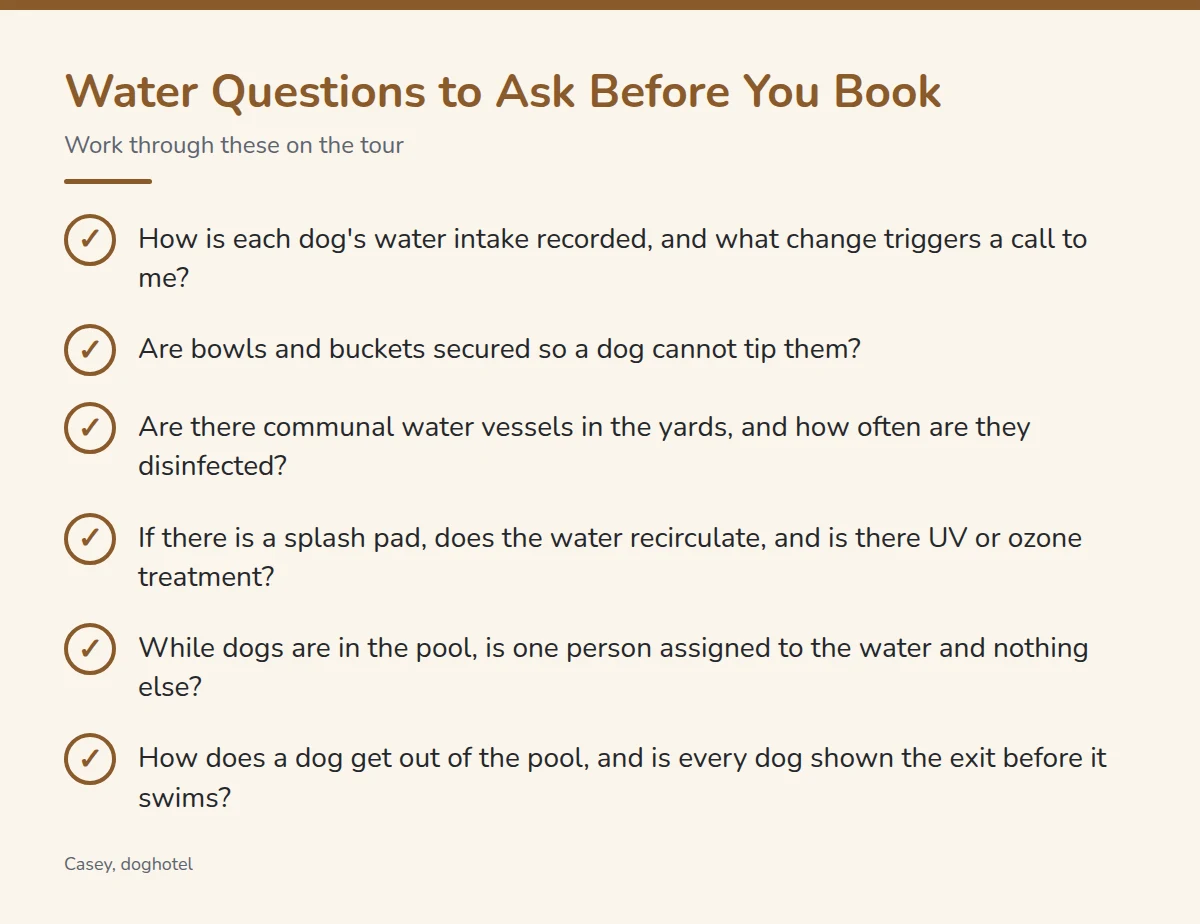
Work through these on the tour, and add the answers to the list of things you already weigh when choosing a facility in the first place:
- How is each dog’s water intake recorded, and what change in drinking triggers a call to me?
- Are bowls and buckets secured so they cannot be tipped, and how often are they emptied and disinfected?
- Are there communal water vessels in the play yards, and what is the cleaning schedule for them?
- If there is a splash pad, does the water recirculate, and is there UV or ozone treatment?
- While dogs are in the pool, is one person assigned to the water and nothing else?
- How does a dog get out of the pool, and is every dog shown the exit before it swims?
- Is the pool gated when it is not in use?
- What is your policy on repeated fetch in the water, and do you take breaks?
- What is the yard surface, and at what point is outdoor turnout suspended in heat?
An operator who runs water well will enjoy these questions. One who has never considered them will give you vague reassurance about dogs loving the pool, and that is the answer you came for.
Further reading (sources)
- Roanoke Times on the search warrant that found no visible drinking water for 70 boarded dogs
- American Kennel Club for how much water is too much and what hyponatremia looks like
- American Kennel Club with why the idea that every dog can swim is a myth
- VCA Animal Hospitals on the basics of keeping a dog safe around water
- CDC with 25 years of splash pad outbreaks and why chlorine does not stop crypto
- Companion Animal Parasite Council on controlling giardia and why standing water is hard to decontaminate
- Animals for the finding that exertion, not parked cars, drives most canine heatstroke
- Scientific Reports with incidence and risk factors for heat-related illness in UK dogs
- American Veterinary Medical Association on recognising and responding to heat stress in pets