Should Your Dog Share a Kennel With a Stranger? What Pair-Housing Research Says About Buddy Suites and Social Boarding
Published on September 24, 2026
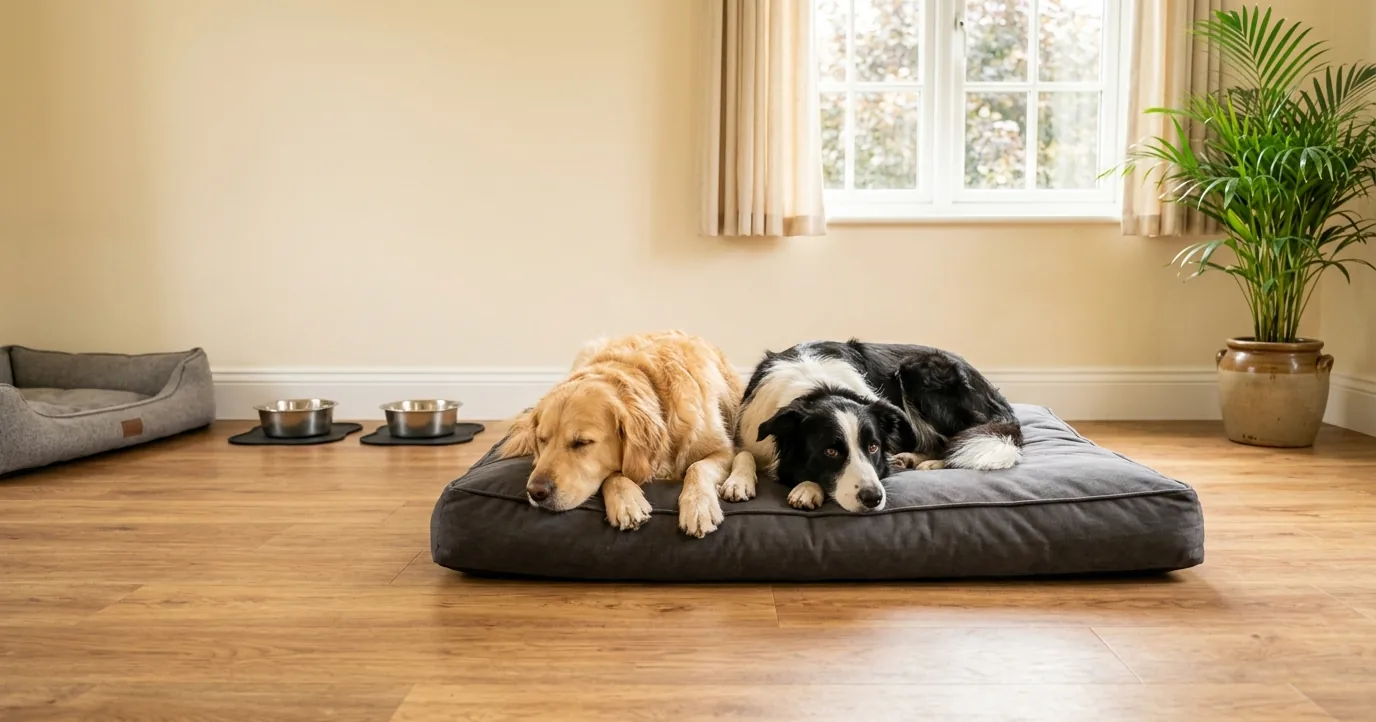
“Would your dog like a roommate?” is a question some owners now hear at booking. It comes from facilities that offer shared suites, “social” overnight boarding, or a buddy option in which your dog spends the night in the same room as another guest’s dog. The pitch is companionship. Dogs are social animals, a strange building is a lonely place, and a friend in the room should make the nights easier.
It runs against the way most kennels have always worked: one household per kennel, and other dogs only in supervised play. So owners are left unsure whether they are being offered a welfare upgrade or a risk. Shelters have been pairing unrelated dogs for years, and the research that has come out of that work gives a clearer answer than you might expect. A well-matched roommate can take some of the edge off kennel life. A poorly matched one is a risk that plays out overnight, in a small room. And almost everything depends on how the match was made and who is watching.
Three Different Things Get Called “Social Boarding”
The label covers very different setups, so it is worth pinning down which one you are being offered.
- Dogs from the same household sharing a suite. The most common version. The dogs already live together, and the kennel’s job is making sure the space fits both.
- Group or open-floor housing. Several dogs, often from different homes, share one larger space overnight. It is a separate model with its own screening demands.
- Two strangers in one suite. Your dog and one unrelated guest share a room overnight. This is the arrangement the pair-housing research speaks to most directly, and the subject of this article.
It also helps to separate daytime play from overnight housing. A play group is an hour or two in a yard, with staff watching and room to walk away from a dog your dog does not like. A shared suite means twelve or more hours in one room, much of it after the building has gone quiet. A dog that thrives in group play or on a supervised pack hike has shown that it enjoys other dogs when there is space to leave. It has not yet shown that it can share a bed, a water bowl and a small room with a stranger through the night.
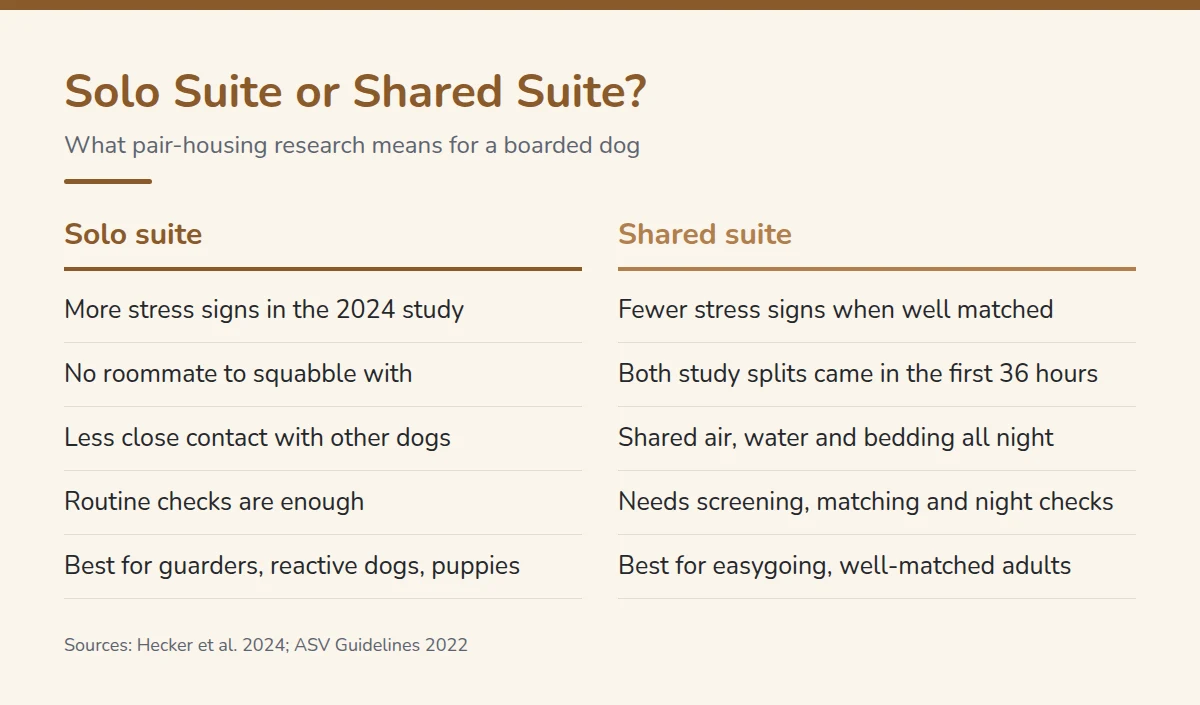
What the Pair-Housing Research Found
The study most useful to boarding owners was published in PLOS One in 2024 by Hecker and colleagues, who worked at the Humane Society of Western Montana. Most of the dogs had arrived at the shelter only days earlier, which makes them a closer match for a boarded dog than the long-term laboratory dogs behind much of the earlier research. Each dog first met a calm, similar-sized dog on leash in a standardised test: 66 dogs were tested, and five were excluded for aggressive behaviour. Of the 61 that passed, 31 were paired with a kennelmate chosen for size, energy level and what staff knew about each dog, and 30 were housed alone. Every dog was filmed four times a day for a week, and a subset gave daily urine samples for cortisol testing.
The paired dogs lip licked, whined and held their ears back significantly less often than the dogs housed alone. All three are recognised stress signals, and they are the same signs described in our guide to kennel stress in dogs. Paired dogs also played alone with toys less, which the authors read as the kennelmate supplying enrichment the single dogs lacked. Pairs were in physical contact in nearly 10 percent of observation intervals, not counting play, and several pairs chose to share one bed even though two were provided.
Three findings are weaker than they sometimes sound in summary. The cortisol result pointed the same way, with paired dogs generally showing a bigger fall from their baseline, but the authors themselves call it “some, but not conclusive” evidence. The finding of no change in dog-dog skills rested on only eight dogs that stayed long enough to be retested. And the shelter already ran a strong enrichment programme, including small-group time in outdoor pens, so the effect could look different in a barer building.
Other studies agree on the direction and add caveats. A 2017 pilot by Grigg and colleagues, which moved long-stay kennelled dogs from solitary to pair housing, found lower hair cortisol after the switch but wide individual variation: only two of the eight paired dogs showed clear drops across several stress behaviours. A 2026 study in PeerJ by Gunter and colleagues found no difference in cortisol between co-housed and single-housed shelter dogs. What did show up there was familiarity. Dogs coming back from a week in foster care that were housed with a dog they already knew spent less time in high-intensity activity than dogs housed alone or with a new companion, and tended to rest more.
Taken together, the evidence says a compatible companion helps many kennelled dogs a little, that some dogs gain far more than others, and that a dog yours already knows may count for more than one it does not. It does not say that any two dogs in any room are better off than one.
The Fine Print That Made It Work
The conditions under which pairing helped are, in effect, the questions to put to a kennel.
Screening and matching came first. Every dog passed a meeting test before it was paired, and every match was chosen rather than decided by whichever suite was free. The Association of Shelter Veterinarians, in its guidelines for shelter care, is blunt about the alternative: random co-housing is “an unacceptable practice”. Unrelated animals must not share an enclosure until their health and behaviour have been assessed, and should be “intentionally matched for age, sex, health, and behavioral compatibility.”
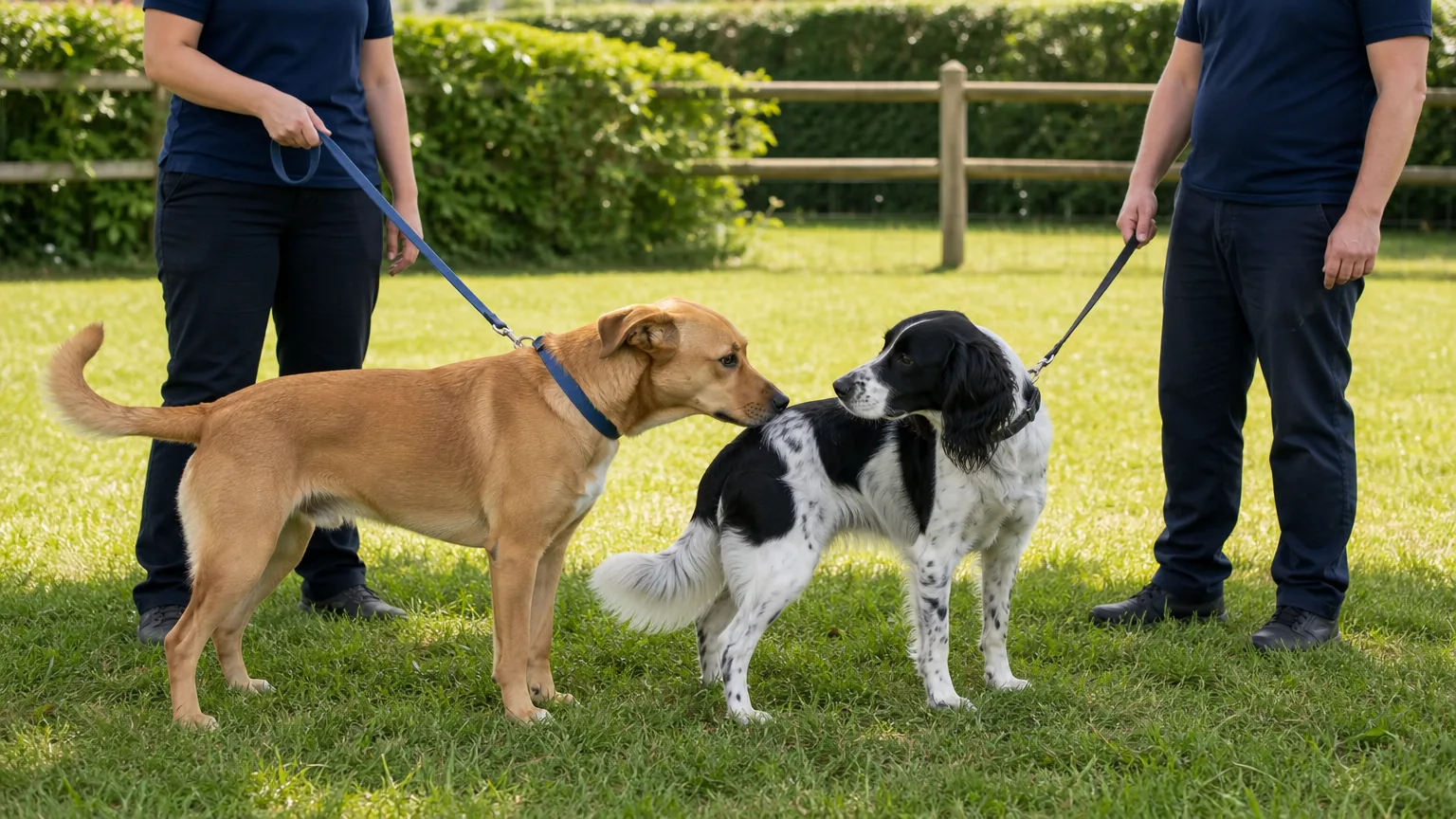
Introductions happened outside the kennel. In the Gunter study, dogs met in outdoor fenced yards, on leash first and off leash only if that went well, with staff looking for relaxed body language and both dogs choosing to stay close. The ASV guidelines recommend the same order: meet first, move in together second.
Each dog kept its space. The Montana researchers held the space per dog roughly constant, putting pairs of medium and large dogs into kennels about 2.3 by 2.7 metres (roughly 7.5 by 9 feet), more than twice the floor area of the smaller runs most single dogs lived in. The ASV guidelines ask for more when the dogs are strangers. A shared enclosure has to let each dog keep its distance from its roommate, which “often requires more space per animal” than solo housing, “particularly when unfamiliar animals are cohoused.”
Pairs, not groups. The study’s authors warn that “housing more dogs in a kennel is not necessarily better”, and the ASV guidelines prefer pairs for dogs “to maximize safety and biosecurity.”
Somebody was watching. Staff monitored the pairs through the day, especially in the first few days. That turned out to matter.
Why the First 36 Hours Carry the Risk
The study’s authors took the obvious worry seriously: a new kennelmate might add stress rather than relieve it, because two dogs have to work out a relationship in a small space. The data showed when that risk appears. Two pairs had to be separated for aggression, and both splits happened within 36 hours of the dogs moving in together. Neither caused an injury, and the authors concluded that the first few days of co-housing deserve the closest monitoring.
Moving is a stressor in its own right. Paired and single dogs alike showed a rise in cortisol on the first day after being moved to a new kennel, and whining was highest on day one. A boarded dog arrives with all of that and more stacked up at once: a new building, new people, new noise, and its owner gone. Put a stranger in the room and the dog is doing all of its adjusting at the same time. On a two-night stay, that risky first 36 hours is most of the booking, while the benefits in the research were measured across a full week.
Timing matters as well. Gunter’s team pointed out that shelter dogs do most of their resting in the evenings and early mornings, when staff are usually not in the building. At a kennel with nobody on site overnight, that is exactly when a squabble over a bed would go unseen.
Why Most Kennels Still House Dogs Alone
Solo housing is the default for reasons that have little to do with indifference to dogs’ social lives. The Montana paper opens by noting that shelters house dogs alone to reduce injury and the spread of disease, and a boarding kennel faces both.
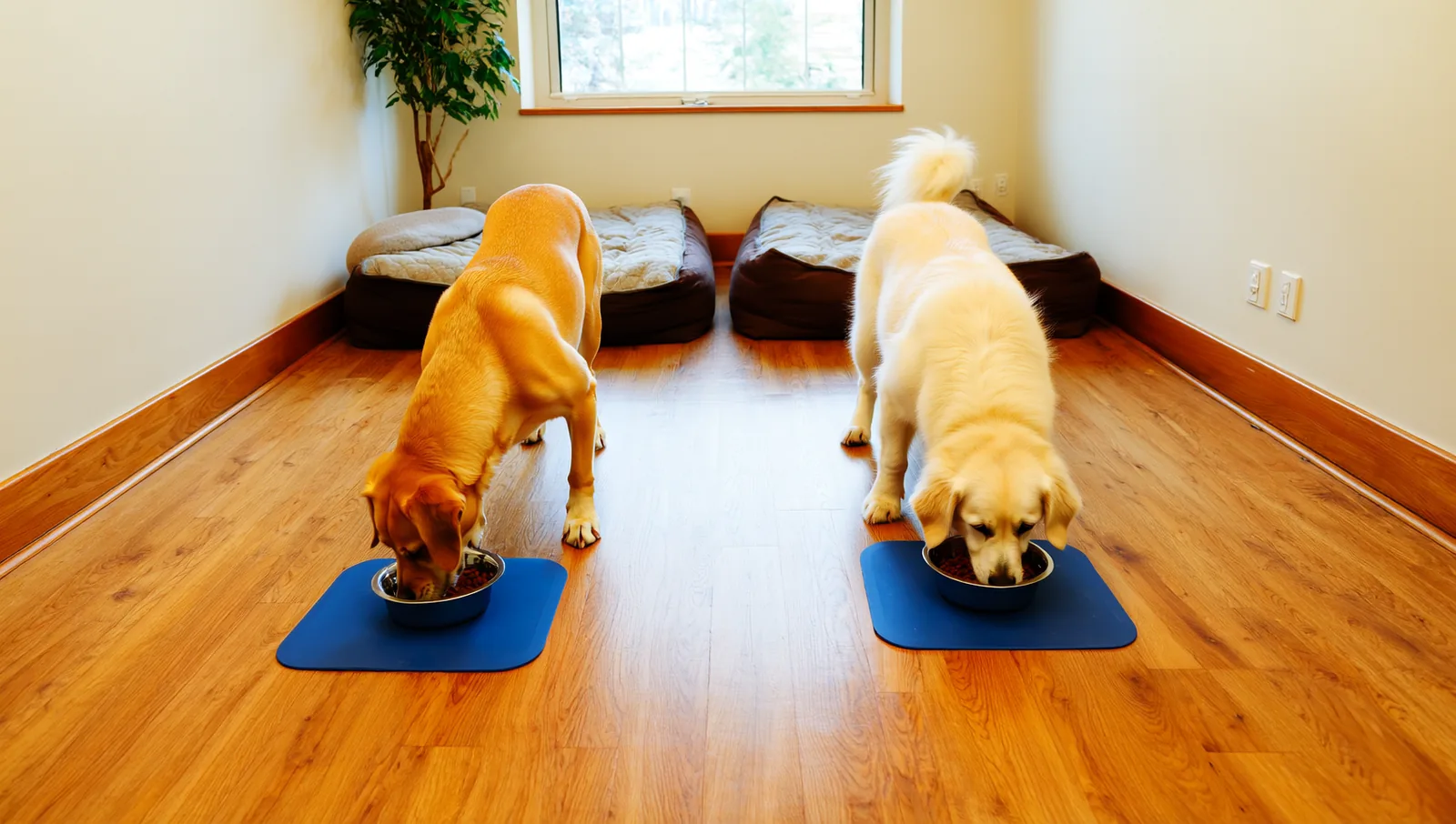
Injury. In a play yard, a dog that wants out can leave. In a suite it cannot. Trouble tends to start over resources: food, a chew, a toy, the better bed, the spot by the door. The ASV guidelines recommend separate feeding or careful matching, at least one bowl per animal spread around the enclosure, and close watching at mealtimes. If your dog has any history of guarding food or chews, that alone should settle the question.
Disease. Roommates share air, bedding and water all night, and noses meet at close range. The ASV guidelines note that larger groups raise the risk of conflict and infectious disease, and that turnover within a group must be kept low, partly to limit disease exposure. Boarding runs on turnover. A roommate who goes home on Tuesday and is replaced by a new dog on Wednesday is the pattern the guidelines warn against.
The rules. In England the question is settled for licensed kennels: “Only dogs from the same household can share a kennel unit and they must be monitored,” with the owner’s written authorisation, including permission to separate them. The same section says social animals must not be isolated from their own kind for longer than necessary, so the English answer is contact with other dogs, yes, and a shared kennel with a stranger’s dog, no. In the US, the rules vary by state and city. The federal regulations for USDA-licensed breeders and dealers do not cover an ordinary boarding kennel, but their compatibility rule is a sensible floor for any roommate policy: dogs housed together must be compatible, females in heat are kept away from males, a dog with a vicious or overly aggressive disposition is housed alone, puppies four months old or younger stay away from adult dogs other than their mothers, and a dog with a contagious disease is isolated.
Capacity. Sometimes “shared suite” really means “we are full”. Even in Gunter’s study shelter, co-housing was more common at the time because of capacity constraints. Dogs from different homes doubled up in a run built for one during a busy week is one of the warning signs of an overcrowded kennel. A planned buddy suite comes with a screening process. An improvised one comes with a spare cot.
Which Dogs Make Good Roommates
The profile that emerges from the research is fairly specific. A good candidate is an adult dog that is relaxed on meeting unfamiliar dogs and recovers quickly from any wariness, is close in size and energy to its proposed roommate, is healthy and fully vaccinated, and has no history of guarding food, toys, beds or space. A dog that already lives with another dog, or plays easily and often with others, has given you more evidence than a dog that has always been the only one.
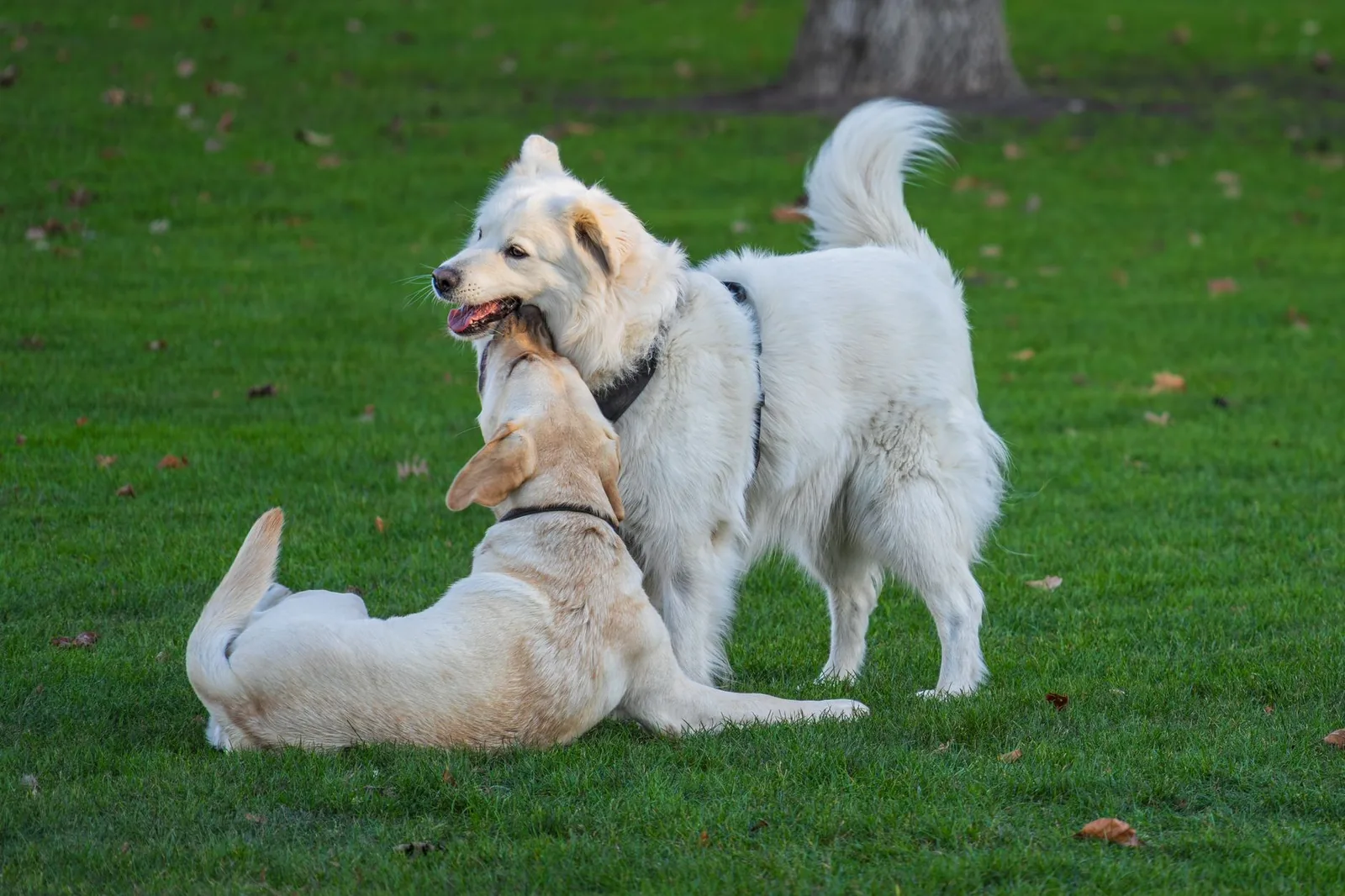
Some dogs should stay out of shared rooms altogether:
- Resource guarders, even mild ones. A lip curl over a chew at home can become a fight in a small room.
- Reactive or fearful dogs. The ASV guidelines require individual housing for animals that are fearful or aggressive toward other animals, or stressed by their presence. These dogs need the quieter setup described in our guide to boarding anxious or reactive dogs.
- Puppies. Because of their vulnerability to infectious disease, the ASV guidelines say puppies under 20 weeks must not be housed with unfamiliar animals unless the benefits outweigh the risks for every animal involved.
- Intact dogs and females in season. Even the federal rules for breeders bar housing a female in heat with a male.
- Dogs that need individual monitoring. A dog on medication, recovering from surgery, off its food or coughing, or a senior with sore joints facing a bouncy roommate is better off alone, where staff can see exactly what it ate, drank and passed.
One gap is worth knowing about. None of these studies looked at dogs with separation anxiety, so there is no evidence either way that a stranger comforts a dog whose distress is about losing its person.
Questions to Ask Before You Say Yes
- Is sharing optional, and will you name the roommate on a consent form that also lets you separate them?
- How do you choose the match: size, age, energy, play style, sex and neuter status?
- Will the dogs meet outside the suite first, on leash and then off, with a handler who knows both?
- How big is the suite, and can each dog get away from the other? Are there two beds and two water bowls?
- Are meals fed apart, and are chews and food toys taken out while the dogs are shut in together?
- Who is in the building overnight, and how often is a new pair checked on its first night?
- If it is not working, is a solo suite held free, and will you call me?
- Will my dog keep the same roommate for the whole stay, or can a new dog move in when the first goes home?
- What vaccination and health requirements does the other dog have to meet?
A kennel running a real programme will have heard all of these and will answer in detail. The ASV guidelines set the floor plainly: co-housing animals that fight with one another “is unacceptable.” A kennel that answers “they’ll be fine, they love other dogs” has told you it has not thought about the night.
What Tells You It Went Well
Behaviour is the most useful signal you will get. A 2025 study by Powell and colleagues, covering 224 dogs in three Pennsylvania shelters, concluded that watching dogs in their kennels may give shelters the most useful information about stress, while faecal cortisol and an immune marker offered no definitive insights into how the dogs fared. So ask staff what they saw, not just whether the dogs “got on”. Did both dogs rest? Did both finish their meals? Did either spend the evening pressed into a corner, or standing guard over the water bowl? The ASV guidelines recommend regular weight checks for co-housed animals precisely because a dog quietly losing out at the bowl can go unnoticed. At pickup, run your hands over your dog’s neck, ears and legs for nicks or punctures, and weigh it if you can.
The Bottom Line
The research supports a narrow version of social boarding: a deliberately chosen match, introduced outside the suite, given room to keep its distance, fed apart, and watched closely through the first day and a half. For a sociable adult dog, that can make a stay easier. A stranger moved into your dog’s room because the kennel ran out of space is a different thing entirely. If a facility cannot answer the questions above in detail, book the solo suite. For most boarded dogs it remains the sensible default, as long as the day includes real time with people and, for dogs that enjoy it, supervised time with other dogs.
Further reading (sources)
- Hecker and colleagues on how matched pair housing changed shelter dogs’ stress behaviour over a week
- Grigg and colleagues for a pilot study moving kennelled dogs from solitary to pair housing
- Gunter and colleagues with why a familiar kennelmate mattered more than a new one
- Powell and colleagues on in-kennel behaviour as the most useful everyday stress measure
- Association of Shelter Veterinarians for the standards on matching, space and monitoring when dogs share an enclosure
- GOV.UK with the English licensing rule that only same-household dogs share a kennel
- Cornell Legal Information Institute on the federal compatible-grouping rule for dogs housed together