Boarding Your Dog Over Fireworks Weekends: Noise Phobia, Escape Risk, and How Kennels Handle July 4th and New Year's Eve
Published on November 6, 2026
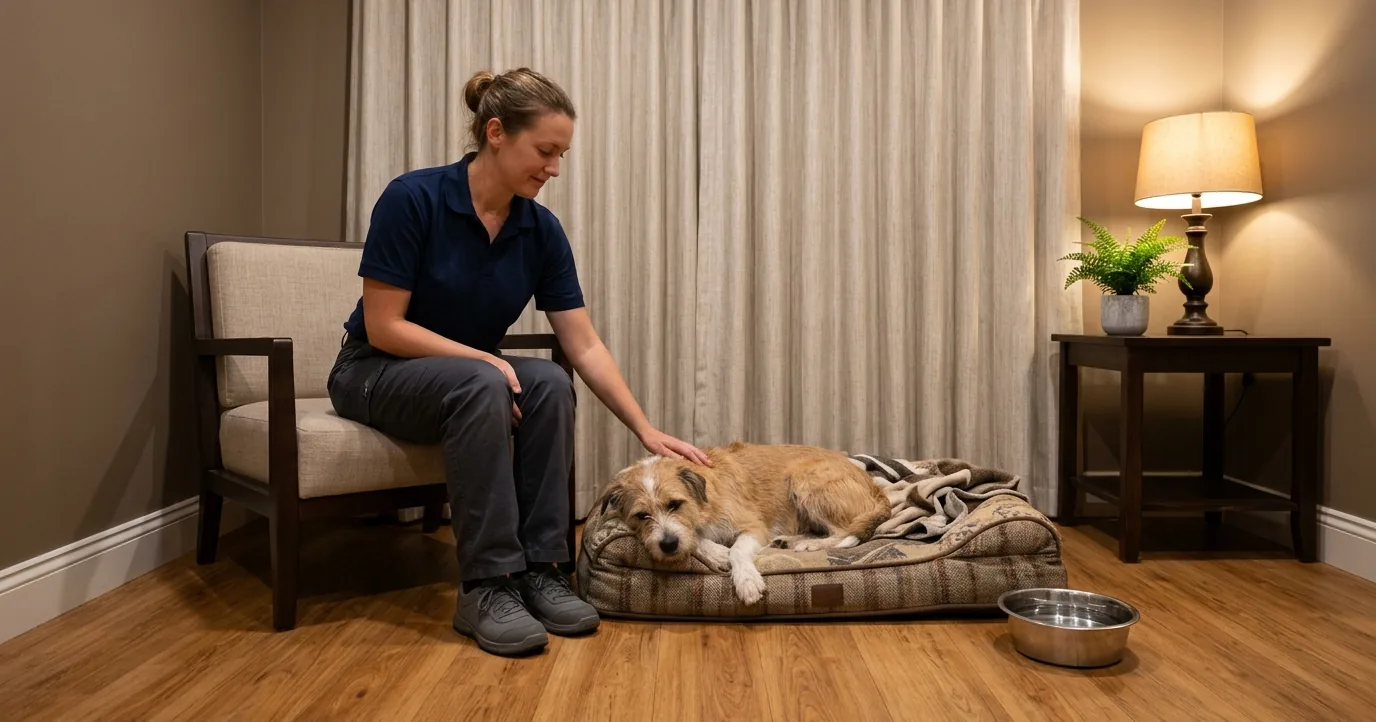
In Washington State, the Fourth of July lasts eight days. State law allows consumer fireworks every day from 28 June to 5 July, until 11 p.m. on most nights and until midnight on the Fourth, then again from 6 p.m. on New Year’s Eve until 1 a.m. on New Year’s Day. Cities and counties can narrow those windows, and other states set their own, but the pattern is much the same everywhere: the bangs start days before the holiday and trail on after it.
Those are also the weeks when the most people leave home. AAA expected a record 72.2 million Americans to travel at least 50 miles over the nine days around Independence Day in 2026, and 122.4 million over the 13 days of the most recent year-end holidays. Kennels fill up. So the dogs most afraid of fireworks are often boarded on exactly the nights they fear most, in a strange building, without the person they would normally run to.
If your dog is one of them, here is what a kennel can and cannot do about a display next door, where dogs get out on those nights, why calming medication must come from your vet and never the kennel’s cupboard, and the tour questions that show whether staff have a plan.
Why Fireworks Nights Are Different From Ordinary Kennel Noise
Fear of loud noises is among the most common anxiety problems in dogs, not a quirk of a few. In a survey of 13,700 Finnish pet dogs, Salonen and colleagues found noise sensitivity in 32 percent, the most common of the seven anxiety traits they measured. Stefanie Riemer’s survey of 1,225 dogs at the University of Bern found that 52 percent were at least partly affected by fireworks, and that fear of fireworks went closely with fear of thunder and gunshots.
A boarding stay stacks three more problems on top of that fear.
- The dog’s main coping strategy is gone. In a 2024 Sydney survey by Mann and colleagues, the most common thing frightened dogs did during fireworks was seek out their owner or carer (74.5 percent of them). At a kennel, that person is away.
- Noise fear rarely travels alone. In a University of Pennsylvania study of 141 dogs, a dog with noise phobia had an 88 percent probability of also having separation anxiety. Boarding sets off both at once.
- The building is a trigger too. The Merck Veterinary Manual lists boarding kennels, alongside thunderstorms and fireworks, among the common triggers of fear and phobia in dogs.
A bad night can also cost more than a night. In Riemer’s survey, almost three quarters of fearful dogs had recovered by the next morning, but recovery took up to a week for 12 percent and several weeks or even months for more than 3 percent. Merck warns that each exposure solidifies fear learning, making the fear harder to overcome, and it counts avoiding the trigger as part of treatment. Keeping a phobic dog away from the worst of the noise is not giving in to the problem.
What a Kennel Can and Cannot Do About a Display Next Door
No kennel can stop a display. It cannot stop the neighbours either, and private fireworks follow no published schedule. What it can control is where your dog is, what it can hear and see, and who is with it.
Start with the site. A kennel beside a park, a golf course, a fairground or the lake where the town fires its display is a different proposition on the Fourth from one in open farmland, and our guide to what a kennel’s location tells you covers how to read a site before you book. Public displays are announced in advance, so a well-run kennel should already know when and where the nearest ones are.
Then the building. England’s licensing standards for kennels say that dogs likely to be upset by the barking of other dogs should be housed in the quietest part of the kennel, and that excessive noise must be avoided. The same logic applies to fireworks. An interior room with solid walls, away from external doors and skylights, is quieter than a run along an outside wall, and it hides the flashes as well as softening the bangs.
British owners face the same problem on different dates. Under the Fireworks Regulations 2004, adult fireworks may not be used between 11 p.m. and 7 a.m. in England and Wales, except until midnight on 5 November and until 1 a.m. after New Year’s Eve, Diwali and the first day of Chinese New Year. That tells a kennel when the legal noise should end, not when it actually will.
Outdoor Runs and Gate Handoffs: Where Dogs Get Out
Frightened dogs do not stay put. Humane World for Animals warns that on the Fourth of July many animals run from familiar places and people and become lost, and that pets kept indoors can be frightened enough to break through windows or door screens. The prescribing information for one noise aversion drug lists trying to escape among the typical signs of noise fear, alongside panting, trembling, pacing, hiding and freezing. In a New Zealand survey, owners reported that 6 percent of their dogs and cats had been injured as a result of fireworks.
At a kennel, the escape points are predictable:
- Indoor and outdoor runs. A dog door left open after dark gives a panicking dog a fence to climb or dig under while staff are busy elsewhere.
- Toilet trips. The last trip outside is the one most likely to coincide with the first bang.
- Handoffs. Moving a dog between its run, the yard and the front desk means opening doors and gates, often with a lead in one hand.
- The car park. Arriving or leaving after dark on the night itself puts a frightened dog between an open car door and a busy road.
England’s standards require at least two secure physical barriers between a dog and any exit, and outside doors and windows that are escape proof and strong enough to resist impact and scratching. That is a good test anywhere. Our guide to emergency preparedness at boarding facilities covers the double gates, perimeter checks and lost-dog protocol to ask about.
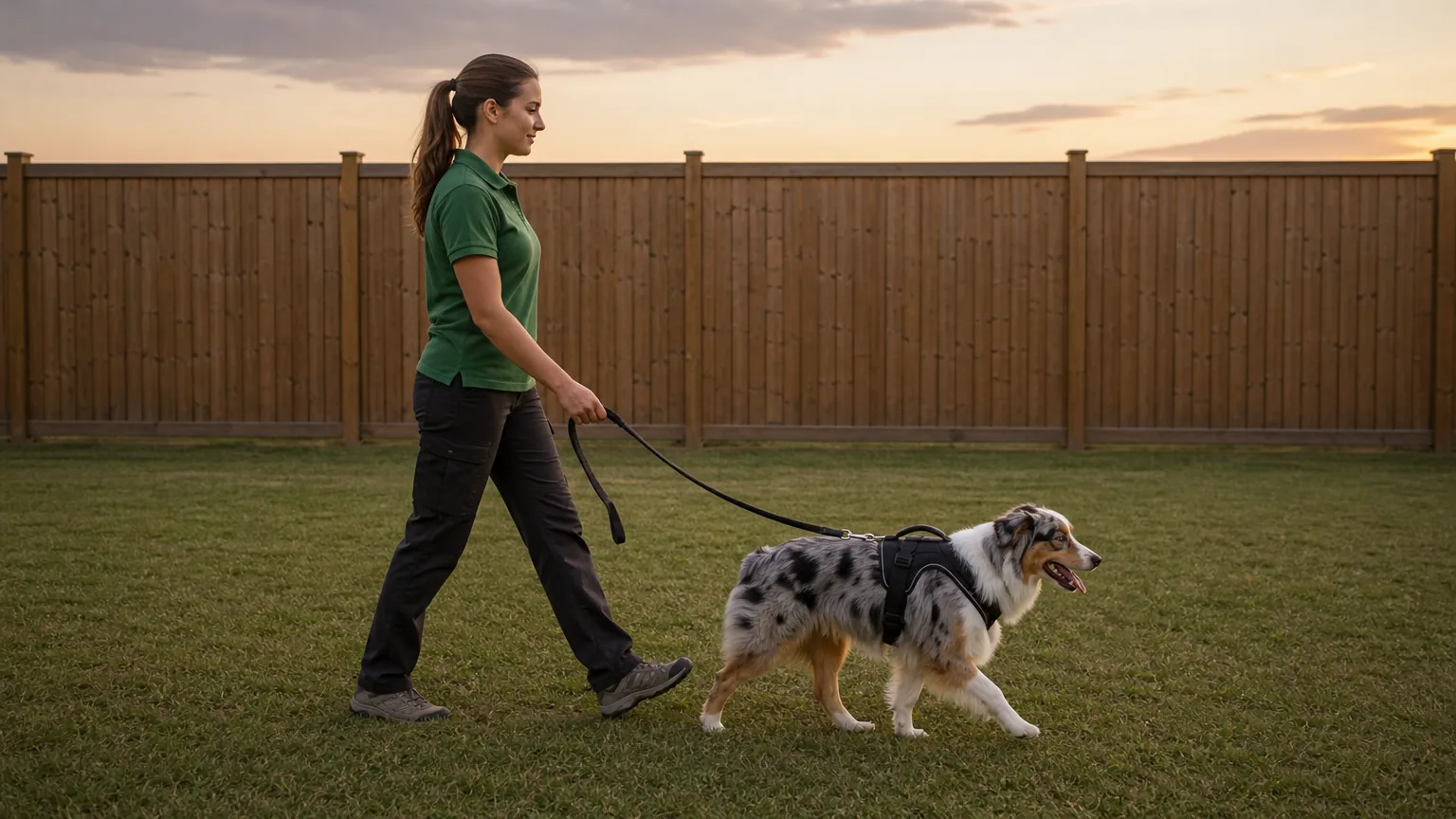
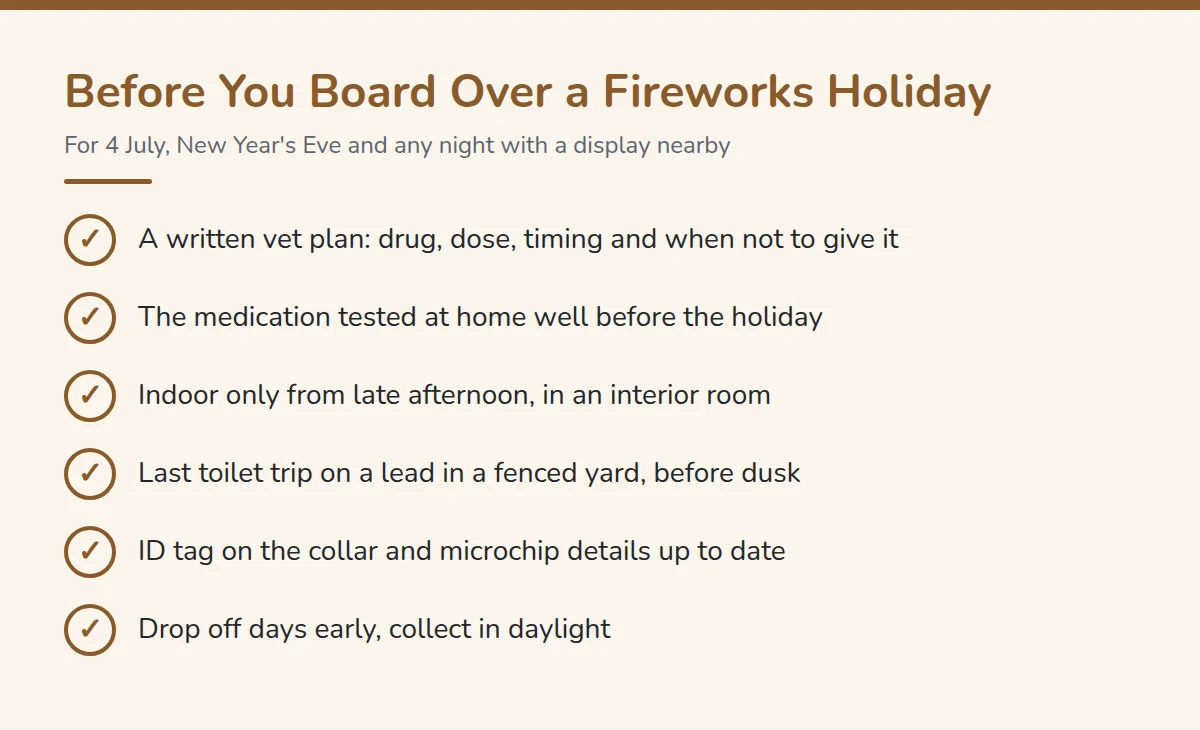
On fireworks nights, a careful kennel goes further. Outdoor access closes in the late afternoon, the last toilet trips happen on a lead inside a fenced yard before dusk, and group play ends well before dark. A dog known to bolt goes out in a well-fitted harness, or with two points of attachment, rather than on a single flat collar it can back out of. Humane World also advises an ID tag on every collar and a microchip registered with your current contact details. Check the chip record before you travel, not after a phone call.
Sedation and Anxiety Medication: Your Vet’s Call, Not the Kennel’s
Medication helps many noise-phobic dogs, and some of the strongest evidence comes, fittingly, from New Year’s Eve. In a European trial of 182 dogs with a history of firework fear, owners rated the treatment effect good or excellent for 72 percent of dogs given dexmedetomidine gel, against 37 percent on placebo. A separate trial of 238 dogs in Germany and the Netherlands found that imepitoin, started two days before New Year’s Eve, significantly reduced fear and anxiety. Both trials were led by researchers at the companies that make the drugs. Merck lists dexmedetomidine gel, trazodone, clonidine and alprazolam among the as-needed options for predictable noise such as fireworks.
What matters for boarding is that these are prescription drugs with precise instructions, and someone at the kennel has to follow them on one of the busiest nights of the year.
- Timing. The gel is given 30 to 60 minutes before the noise or at the first signs of fear, with at least two hours between doses and no more than five doses in one noise event. Trazodone takes 90 to 120 minutes to work and lasts four to six hours, according to Merck, so a dose given in the early evening may wear off before midnight on New Year’s Eve. In a small storm phobia trial, gabapentin was given at least 90 minutes ahead. With the slower drugs, a dose given at the first bang may only start working once the worst is over.
- Handling. The gel’s label calls for impermeable gloves, says the gel must not be swallowed, and says food and treats should be avoided for 15 minutes afterwards.
- Monitoring. Some dogs become sedated, with a drop in body temperature and heart rate, and the label says they should be kept warm and offered no food or water until the effect wears off. It also warns of occasional paradoxical excitement.
- Heat. The gel is not for dogs under stress from extreme heat, cold or fatigue, which matters in a hot July week.
Two rules follow. First, test the medication at home. Merck advises trialling as-needed drugs in advance to find out which drug and dose work, and for how long. A kennel should never be the place your dog takes a new drug for the first time.
Second, the kennel must never improvise. Colorado’s pet facility rules say boarding facilities may not give tranquilisers, sedatives or any drug or supplement designed to calm an animal unless it is given under the direction of the dog’s own vet, with a written prescription, and that prescription medicines must arrive in the original labelled container. In Colorado, calming supplements count too. England’s kennel standards say all medications may only be used with the owner’s prior consent and in discussion with a vet. The gel’s label warns that other central nervous system depressants may strengthen its effects, which is one more reason nothing should be added on top of a prescription without the vet’s agreement.
Ask your vet to write the plan down: the drug, the dose, when to give it relative to dusk or a storm forecast, when a repeat dose is allowed, and the signs that mean do not give it. Then hand the plan to the kennel with the medicine. A kennel that offers to give your dog something of its own has told you how it handles medication.
The aim is a dog that is less afraid, not one that is knocked out. The European gel trial deliberately tested doses below the sedative range. A drowsy dog in a run still needs watching, and stillness is not the same thing as calm.
Sound Masking, Indoor Housing and the Quiet Room
Sound masking helps, within limits. Humane World suggests leaving a radio or TV on to soften jarring noises, and Merck adds white noise, sound-absorbing curtains or panels, and a safe haven protected from the noise, with the dog moved there before the noise starts.
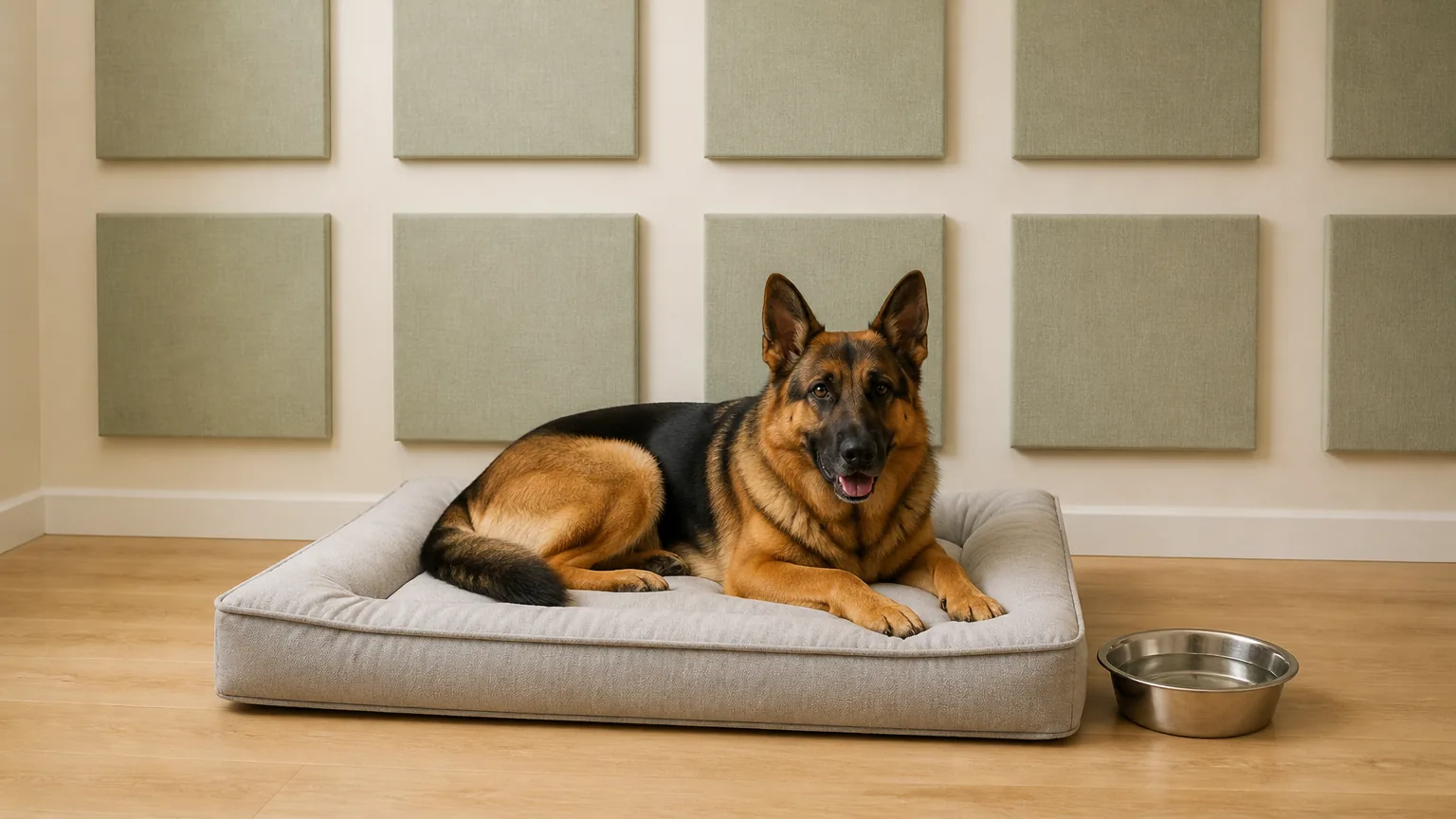
Research in kennels shows both the benefit and the catch. In a Scottish rescue centre, Bowman and colleagues found that dogs played classical music spent more time lying down and quiet and less time barking, but the effect had faded by the seventh day, possibly as soon as the second. A follow-up study found that varying the genre slowed that habituation, and that dogs were more likely to bark once the music stopped. For a fireworks night, that suggests masking that starts before dusk, runs well past the last bangs, and is not the same playlist the dog has heard all week.
Merck’s safe haven comes with a condition: it works because the dog has learned to feel safe there long before the night itself. A kennel room is a stranger’s room. You can narrow that gap by booking your dog in a few days before the holiday, so the room is familiar by the night itself, and by sending whatever your dog already hides in at home, such as its own bed or crate cover, if the kennel allows it.
Put the housing request in writing at booking: indoor only from late afternoon on the fireworks nights, no group play after dark, and an interior room if one is available. Interior rooms can run out over the holidays, so ask early.
What Fear Looks Like on the Night
Not every frightened dog howls. When researchers at the University of Bern analysed owners’ videos of dogs on New Year’s Eve and compared them with an ordinary evening, the signs most strongly linked to fireworks were ears held back, moving about and panting. Most dogs did not vocalise or hide at all, and lip licking and yawning did not rise. A quiet dog in a run is not necessarily a calm one.
Ask for the morning report to cover the night itself: when the noise started and stopped, which doses were given and at what times, whether the dog ate, and how it behaved. Our guide to the daily report card explains what a useful log looks like. Two things should prompt a phone call rather than a note at pickup: any injury, and a dog that refuses food or will not settle the next day.
There is one more reason to see your vet before booking. Noise fear that first appears in an adult dog can be a sign of pain. In a small University of Lincoln case series, dogs whose noise sensitivity was linked to musculoskeletal pain developed it nearly four years later on average than dogs without pain, and they responded well to treatment once the pain was recognised.
Thunderstorms: The Noise Nobody Can Book Around
Fireworks follow a calendar. Storms do not, which is why storm phobia is harder to plan a boarding stay around. The University of Pennsylvania study found that dogs responded to thunderstorms differently from other noises, possibly because storms are unpredictable. Merck notes that dogs afraid of thunder may also become fearful of rain, wind or changes in air pressure, and suggests that storm-phobic dogs may benefit from a daily medication through the storm season plus a situational one during storms.
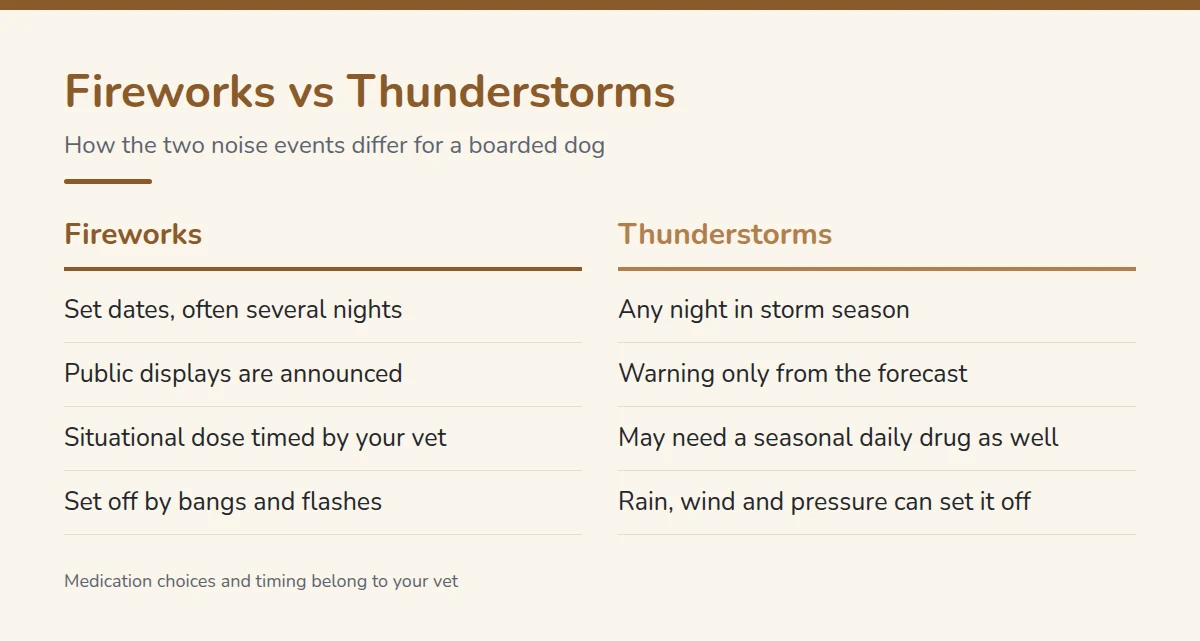
For boarding, that means two questions. Will staff give a prescribed situational dose when a storm is forecast, as your vet directs, rather than waiting for the first thunderclap? And does your dog’s storm plan (indoor room, sound masking, someone checking) apply on any night it is needed, not just on the holiday?
Questions to Ask on the Tour
- Where are the nearest public displays, and how far away are they?
- Which room would my dog be in on 4 July or New Year’s Eve, and is it inside the building or on an outside wall?
- When do outdoor runs close on fireworks nights, and when is the last toilet trip?
- How are dogs moved between the run, the yard and reception, and how many barriers stand between my dog and the road?
- Who will be on the premises after dark on the night itself, and how often will they check each dog?
- Do you use sound masking, and when does it go on and off?
- How do you log medication, and who gives a dose that falls due at 11 p.m.?
- Will you call me if my dog is injured, gets out or will not settle?
- Are you full that week, and how does that change staffing?
England’s higher licensing standards ask for every dog to be checked at least once during the out-of-hours period, by camera or in person. For a phobic dog on a fireworks night, once is not enough, and a camera cannot hold a lead. A kennel at full holiday occupancy also has fewer hands per dog on exactly the wrong evening, and our guide to capacity and staff-to-dog ratios explains how to ask about it.
When Boarding Over the Holiday Is the Wrong Plan
For some dogs, even a good kennel is the wrong place on 4 July or New Year’s Eve. Think again if your dog has injured itself in a past panic, if its fear lasts days rather than hours, if the medication plan has never been tested, or if the only kennel available sits next to a display.
The alternatives are often easier than they sound. A sitter in your own home keeps the dog in the place it already treats as safe. Some owners move the trip by a few days, or take the dog somewhere quieter. If your dog’s fear reaches well beyond fireworks, our guide to boarding anxious or reactive dogs covers the wider setup.
Riemer’s survey also found that teaching puppies, and adult dogs that are not yet afraid, to link fireworks noise with good things was highly effective at preventing fear later on. If you have a young dog, the work you do this year may decide whether next year’s holiday needs a plan at all.
The Bottom Line
A kennel cannot cancel the fireworks, but it decides where your dog spends the night, who checks on it, how it goes outside and whether its medication is given on time. Get your vet’s plan in writing and tested at home, book an interior room early, ask the tour questions above, and drop off days before the holiday rather than on the night. A kennel that answers in detail has done this before. One that tells you the dogs all sleep through it has not.
Further reading (sources)
- Washington State Legislature on the dates and hours consumer fireworks may be set off
- AAA with its 2026 forecast of July 4th week travel
- AAA for the record year-end holiday travel forecast
- Salonen and colleagues on noise sensitivity and other anxiety traits in 13,700 Finnish dogs
- Stefanie Riemer with how firework fears develop, last and can be prevented
- Mann and colleagues for what frightened dogs and their owners do during fireworks in Sydney
- Overall, Dunham and Frank on how often noise phobia, storm phobia and separation anxiety occur together
- Merck Veterinary Manual with fear and noise phobia treatment in dogs, including situational medication
- GOV.UK for England’s kennel licensing standards on noise, escape barriers and medication
- legislation.gov.uk on the night-time fireworks curfew and its exceptions
- Humane World for Animals with its fireworks advice on keeping pets indoors and identified
- DailyMed for the prescribing information for dexmedetomidine gel for noise aversion
- Dale and colleagues on fireworks fear and injuries in New Zealand dogs and cats
- Korpivaara and colleagues with the New Year’s Eve trial of dexmedetomidine gel
- Engel and colleagues for the New Year’s Eve trial of imepitoin in noise-phobic dogs
- Bleuer-Elsner, Medam and Masson on a single dose of gabapentin before a thunderstorm
- Colorado Code of Regulations with the rule against calming drugs without a written prescription
- Bowman and colleagues for classical music and habituation in kennelled dogs
- Bowman and colleagues on whether varying the music genre keeps its calming effect
- Gähwiler and colleagues with a video analysis of dogs’ fear expressions on New Year’s Eve
- Lopes Fagundes and colleagues for noise sensitivity in dogs with and without musculoskeletal pain