Boarding Anxious or Reactive Dogs: How to Find a Hotel That Won't Make It Worse
Published on August 3, 2026
Most boarding advice is written for the average dog: sociable, adaptable, a little nervous on the first night and fine by the second. If your dog is not that dog, the standard advice can actively hurt. A dog with separation anxiety, fear-based reactivity, a startle response to sound, or a rough history before you got it does not simply find boarding harder. It can come home worse than it left, having spent a week practicing fear in a place designed for dogs who do not feel it.
That is not an argument against boarding. It is an argument for choosing differently. The features that make a facility great for a bouncy young Labrador, big open play groups, a busy social floor, a rotating cast of cheerful handlers, are often the exact features that set an anxious or reactive dog back. Here is how to tell the two setups apart, what to ask before you book, and when to walk away.
Anxious and Reactive Are Not the Same Problem
Owners and staff use these words loosely, and the confusion leads to the wrong care plan. It helps to be precise about which one you are dealing with, because the boarding setup that suits each differs.
- Separation anxiety is genuine panic at being left, usually by a specific person. It shows up as relentless vocalizing, drooling, destruction aimed at exits and barriers, and self-injury from trying to escape a crate. A quiet room alone can make this dog worse, not better, because isolation is the trigger.
- Fear-based reactivity is a dog that barks, lunges, or snaps when something frightening gets too close. The behavior looks like aggression and is usually fear asking for distance. Space and sightline control are the whole treatment.
- Leash reactivity may only appear when the dog is restrained and cannot move away. Some of these dogs are fine off leash in a yard and impossible in a narrow corridor.
- Sound sensitivity ranges from mild flinching to full noise phobia. Kennels are loud, and a barking block is close to the worst environment you could design for these dogs.
- Trauma history covers dogs from hoarding cases, rough shelters, or unknown pasts, who may be fine for days and then come apart at one particular trigger nobody predicted.
A dog can carry more than one. A dog can also be perfectly confident at home and still fall into one of these categories the moment it is confined among strangers. Everyday kennel stress touches every boarded dog to some degree, but these dogs start from a lower baseline and have a shorter fuse before ordinary stress becomes distress.
Why Open Group Play Is the Wrong Prescription
The most common mistake a well-meaning facility makes is treating a fearful dog with more exposure. Staff notice a nervous guest, decide it needs to make friends, and put it in the play yard. The dog either shuts down in a corner or explodes at the first dog that comes in fast.
Behavior professionals call the first approach flooding: forcing an animal to stay in the presence of what frightens it until it stops reacting. It sometimes produces a dog that looks calm. What that dog has usually learned is that struggling does not help, which is learned helplessness rather than confidence. The evidence-based alternative is gradual desensitization and counterconditioning below the threshold at which the dog reacts, and a boarding stay is not the setting for that work.
There is a safety argument too. A frightened dog in a group has no exit, and a dog that cannot get distance escalates. Fights are one of the ways dogs get seriously hurt at boarding facilities, and mixed-group management is where thin staffing shows first. None of this is a knock on day camp and group play, which is genuinely good for social dogs. It is simply the wrong prescription here, and a facility that cannot say so out loud is telling you something.
What a Quiet Boarding Setup Actually Looks Like
Ask about structure rather than amenities. The things that matter are mostly unglamorous.
Predictable handler rotation. A small, consistent team that gets to know your dog beats a large friendly one. Ask how many different people will handle your dog in a day and whether they can assign a primary caregiver. Predictable humans are the fastest stress reducer available.
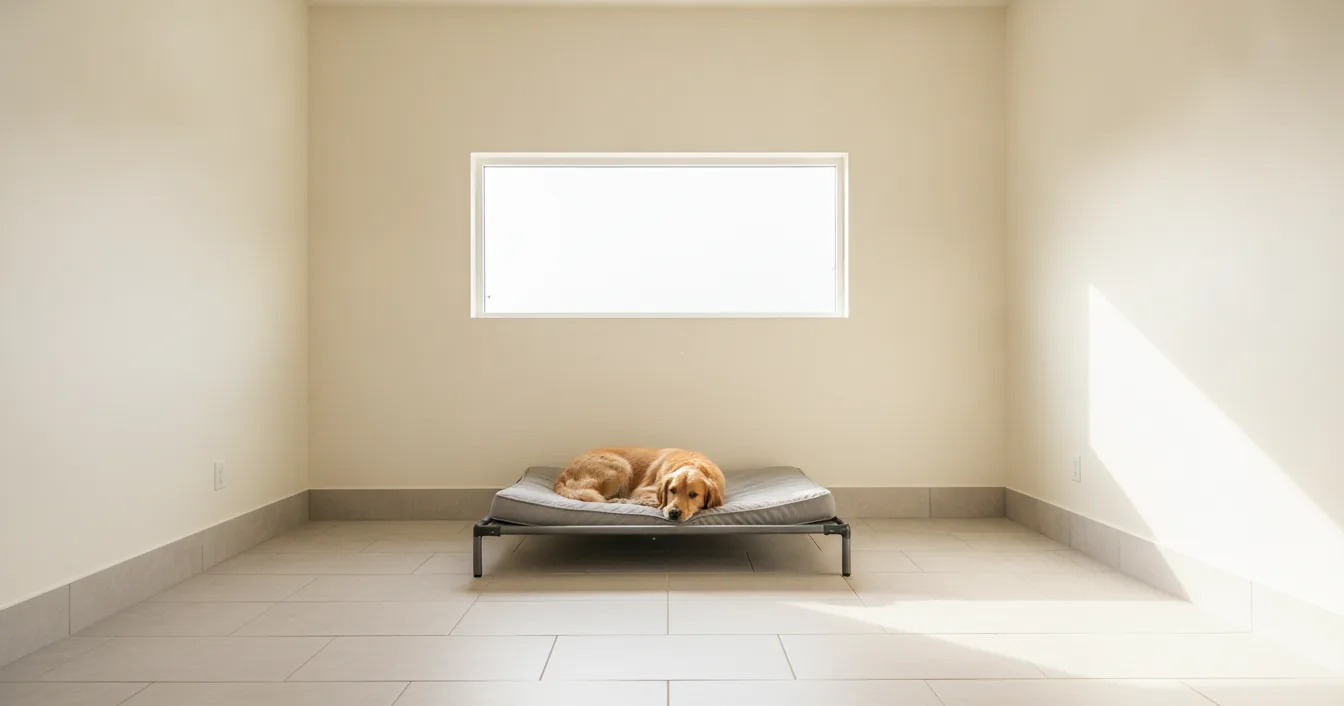
A decompression period on arrival. Good facilities do not run a nervous new guest straight past every kennel run into the busiest aisle. They give it a quiet space, let it settle for a few hours, and build the schedule up from there.
Sightline and sound control. Solid dividers rather than bars between runs, a housing block away from the main barking corridor, and genuine quiet hours. For a sound-sensitive dog, ask specifically where its suite sits relative to the noisiest area, and whether white noise or acoustic paneling is used.
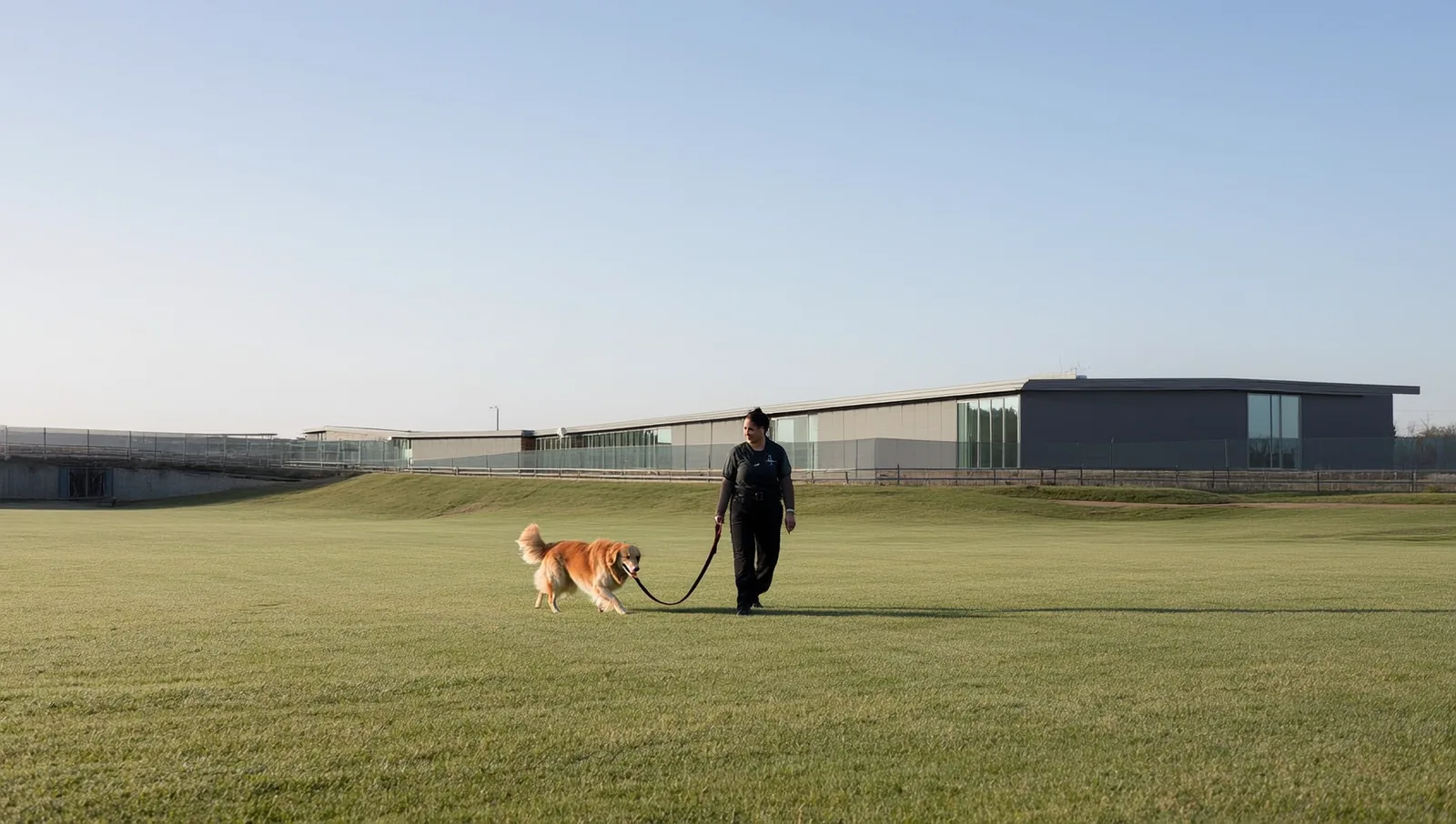
Individual exercise instead of group play. Solo yard time, sniffing walks, and one-on-one attention give a reactive dog everything the play yard would, minus the trigger. Ask how many individual sessions per day are included and whether they cost extra.
No forced socialization, in writing. The instruction “my dog does not go in group play under any circumstances” should end up on the kennel card, not just in a conversation at drop-off.
Reliable medication handling. If your veterinarian has prescribed situational anxiolytics, the facility needs to log each dose with a time and a set of initials, and be able to tell you afterwards exactly what was given and when.
Asking About Fear-Free and LIMA Protocols
Two phrases separate facilities that have studied handling from facilities that have not. Fear Free is a certification program for veterinary and pet care professionals focused on reducing fear, anxiety, and stress during handling. LIMA, which stands for least intrusive, minimally aversive, is the ethical framework credentialed trainers and behavior consultants work under, requiring the gentlest effective intervention before anything more coercive.
Do not just ask whether staff are certified. Ask what they do:
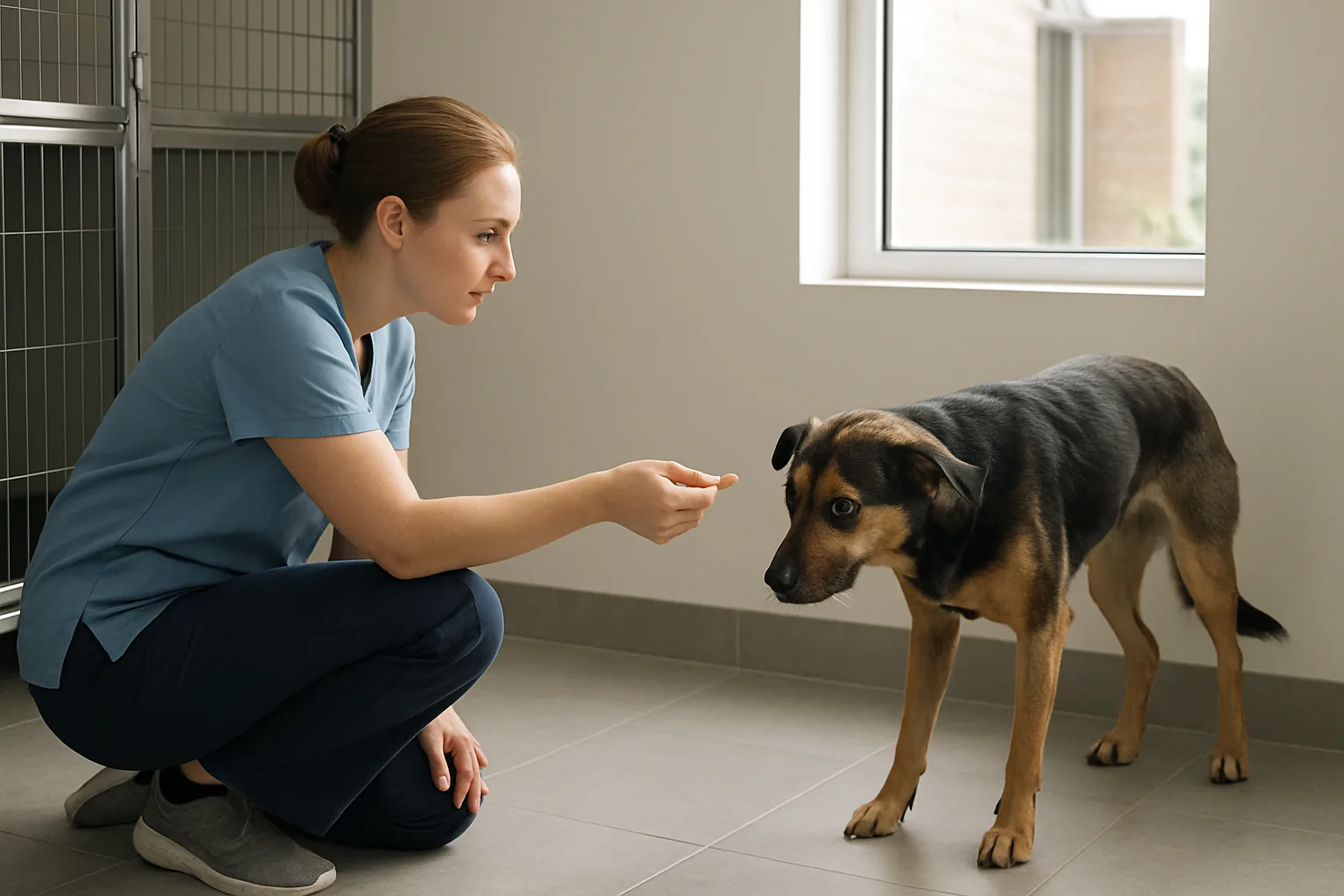
- What happens when a dog will not come out of its suite? (Good answer: they wait, toss treats, try a different handler, and give it time. Bad answer: anything involving a slip lead and pulling.)
- Do you use prong collars, choke chains, spray bottles, or air horns to interrupt behavior? (Any yes is disqualifying for this dog.)
- Who on staff is Fear Free certified, and how are new hires trained in low-stress handling?
- What is your protocol when a dog is not coping? Will you call me on day one rather than day five?
- Can we do a trial day, or a short daycare visit, before an overnight stay?
Confident, specific answers from a manager who can describe an actual dog they have handled this way tell you far more than a badge on the website.
Red Flags on the Tour
- The tour route skips the kennel area, or you are only shown the lobby and the play yard.
- Staff respond to your description of the problem with “we get all sorts, he’ll be fine,” rather than questions.
- Everyone goes in group play, and there is no individual option or it is quietly discouraged.
- Nobody asks about bite history, triggers, or your veterinarian.
- You see equipment on site that has no business in a boarding facility: prong collars, shock collars, or dogs being dragged by the collar.
- The dogs already there look shut down rather than settled. A dog pressed into a back corner, still and unblinking, is not relaxed.
- The staff-to-dog ratio makes individual attention arithmetically impossible.
Trust the room. The broader questions in our guide to choosing the right dog hotel still apply; these are the ones you add on top.
What You Owe the Facility
Honesty, in detail and in advance. Owners understate reactivity because they are afraid of being turned away, and it is the single worst thing you can do. A facility that knows your dog resource guards near doorways can manage it. A facility that finds out when someone gets bitten cannot, and your dog wears the consequence.
Put it in writing: specific triggers, bite history including anything that broke skin, what your dog looks like just before it reacts, what calms it down, its normal appetite and routine, medications with exact timings, and your veterinarian’s contact details plus consent for emergency treatment. Send familiar bedding and an unwashed t-shirt. A good facility will treat all of this as useful rather than alarming, and being turned away by one that cannot manage your dog is a good outcome, not a rejection.
When Boarding Is Not the Right Answer
Sometimes the honest answer is that a kennel is the wrong tool. A dog with severe separation anxiety, a dog with a serious bite history, or a dog on a complex behavioral medication protocol may do far better with an in-home sitter, a single-dog home boarding arrangement, or day boarding at a veterinary practice that can monitor it medically. Diagnosing separation anxiety and prescribing anything for it is veterinary territory, so talk to your vet or a veterinary behaviorist well before your travel dates rather than the week of.

After any stay, watch the trend line for a few days. Some flatness is normal decompression. New, targeted, persistent fear is not, and our guide to the signs something went wrong at boarding covers how to tell the difference.
The Bottom Line
An anxious or reactive dog can board safely. It needs a quieter building, a smaller and more consistent team, individual exercise instead of group play, handlers who work below its threshold rather than through it, and an owner who told the truth up front. Find that setup and the stay is uneventful. Book the bright, busy, social place because it looked fun and had good photos, and you may spend the months after your trip rebuilding what a week undid.
Further reading (sources)
- AAHA on handling an anxious or reactive patient
- American Veterinary Society of Animal Behavior for its position statements on humane training and socialization
- ASPCA with a plain guide to separation anxiety and other common behavior problems
- Certification Council for Professional Dog Trainers for the Humane Hierarchy that governs certificant practice
- IAABC with the credentials held by behavior consultants who take fear cases
- American Veterinary Medical Association for what to weigh before boarding your pet