Emergency Preparedness at Dog Boarding Facilities: What to Ask Before You Book
Published on August 18, 2026
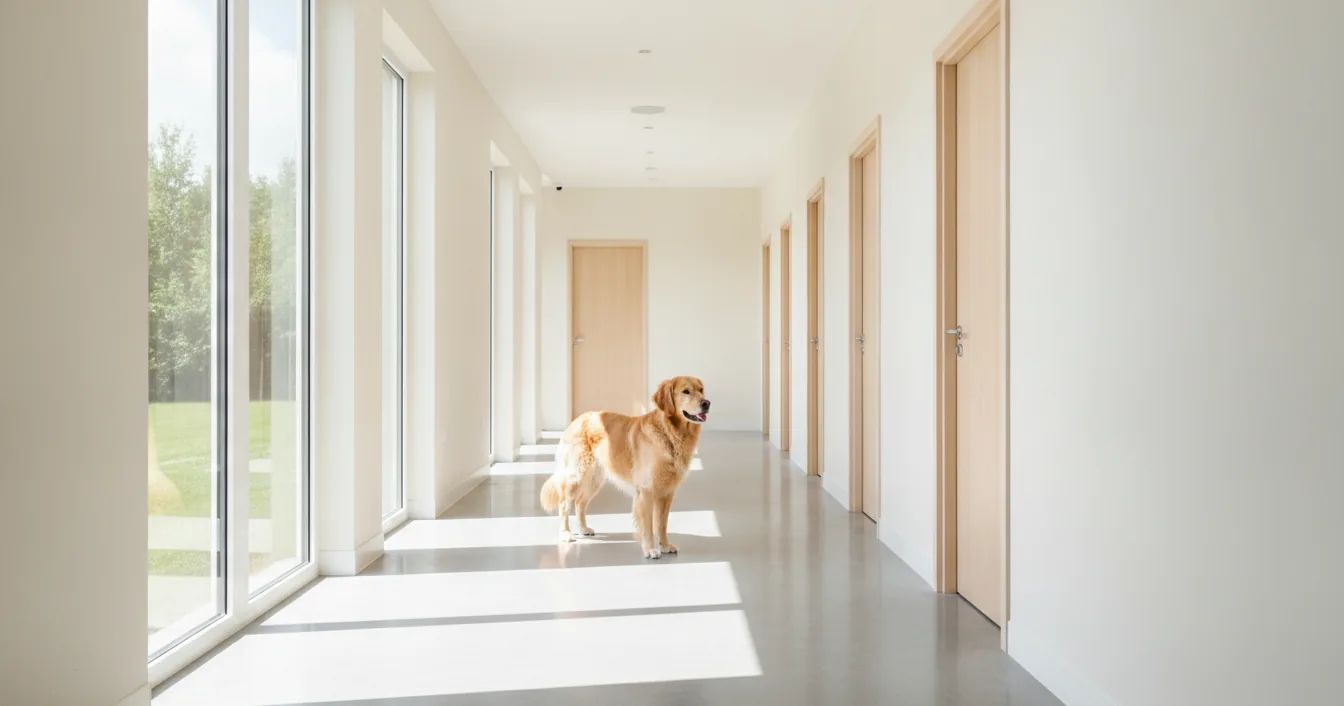
The federal government has already written the emergency checklist for animal facilities. Under the USDA’s contingency planning rule, in force since 2022, licensed dealers, exhibitors, handlers, and carriers must keep a written plan covering the emergencies they can reasonably expect: electrical outages, HVAC failure, fire, mechanical breakdown, animal escapes, and whichever natural disasters are common where they operate. The plan has to spell out the response tasks, name a chain of command, and get reviewed at least once a year, and staff have to be trained on it (APHIS, 2022).
Your boarding kennel is probably not covered by that rule. USDA licensing generally reaches wholesale breeders, dealers, and exhibitors, not the retail facility down the road where you drop your dog off before a flight. That business answers to state or local licensing instead, and what those licences demand ranges from a real inspection regime to almost nothing. So the checklist exists, but nobody is necessarily holding your dog’s kennel to it. That gap is why the questions below are yours to ask.
What a Real Emergency Plan Actually Contains
A plan is a document, not a sentiment. When an operator says “oh, absolutely, we have a plan,” the useful follow-up is “can I see it?” Borrowing the federal structure, a serious one does four things:
- Names the emergencies. Not “disasters” in the abstract, but the specific ones this building faces: the flooding risk of its actual location, the storm season it sits in, power failure, HVAC failure, fire, escape.
- States the response for each scenario, in order.
- Assigns a chain of command, with named roles and delegated authority, so someone on shift can act at 2 a.m. without waiting for a callback.
- Gets reviewed and rehearsed. A date on the document, a drill schedule, and staff who have actually practised it.
NFPA 150, the fire and life safety code written specifically for animal housing, takes the same view. It pairs physical protection like sprinklers and alarms with written plans for relocating or evacuating animals, precisely because the occupants of these buildings cannot let themselves out (NFPA). A laminated poster with an exit arrow on it does not meet that bar.
Severe Weather and the Evacuation Question
Every kennel will tell you it would evacuate. Far fewer can answer the question that follows: to where, in what, and how many trips?
Do the arithmetic out loud with them. A facility holding forty dogs, with one van that fits eight crates, needs five round trips and a driver for each. At 20 minutes each way, that is roughly three hours of driving alone, assuming nothing goes wrong, every crate is already assembled, and the roads are open. Hurricane and wildfire warnings rarely leave a clean two hours at the end. This is why the standard advice for moving animals is to go early rather than late, with primary and secondary routes mapped in advance and enough vehicles and handlers lined up for the number of animals actually on site (Ready.gov).
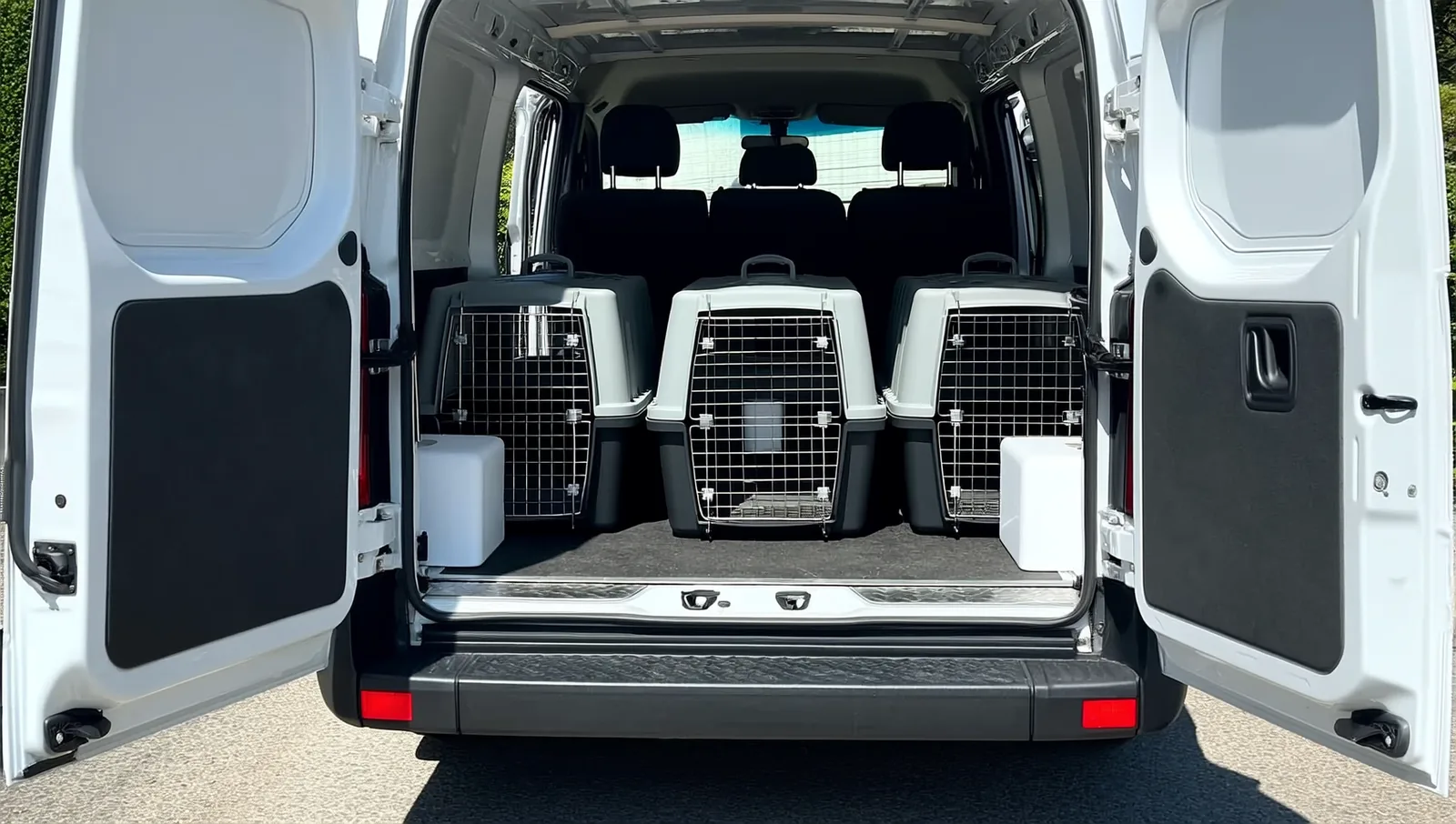
Then ask where. A real answer is a named place with a standing arrangement: a sister location across town, a partner kennel outside the flood zone, a veterinary practice with runs. “We’d find somewhere” means there is no destination, which means there is no evacuation plan.
One thing not to assume: the PETS Act of 2006 requires state and local emergency plans to account for household pets and service animals in order to qualify for FEMA assistance, which is why public shelters increasingly accept them (Congress.gov, 2006). That law covers residents evacuating with their own animals. It does not oblige a county shelter to absorb forty boarded dogs from a commercial business, so a kennel quietly counting on the local shelter has built its plan on someone else’s obligation.
Two smaller details separate the organised from the hopeful. Client records, including your phone number and your dog’s medical notes, should live off the premises, in the cloud or on a backup drive stored elsewhere, so the building’s destruction does not also destroy their ability to reach you. And there should be a stated communication protocol: who contacts owners, how fast, and what the backup channel is when the cell towers are down.
Evacuation is not always the answer. For tornado risk the move is inward, to an interior room without windows, rather than outward onto the road. A good operator can tell you which of the two their plan calls for, and why, for the specific hazards of their area.
Power Failure, the Quiet Emergency
Power loss rarely makes the news, and it is one of the most dangerous things that can happen to a building full of dogs. Ventilation stops, air conditioning stops, and in summer the temperature inside a closed kennel block climbs fast. Dangerous heat can build faster than almost any other threat on this list.
“We have a generator” is the beginning of the answer, not the end. Ask what is actually wired to it. Plenty of backup generators run the lights, the office, and the freezer, and leave the HVAC off the circuit because air conditioning is a heavy load. Ask how many hours it runs on the fuel stored on site, and whether it starts automatically on an outage or needs a person to drive in and start it, which is a different promise entirely at 3am.
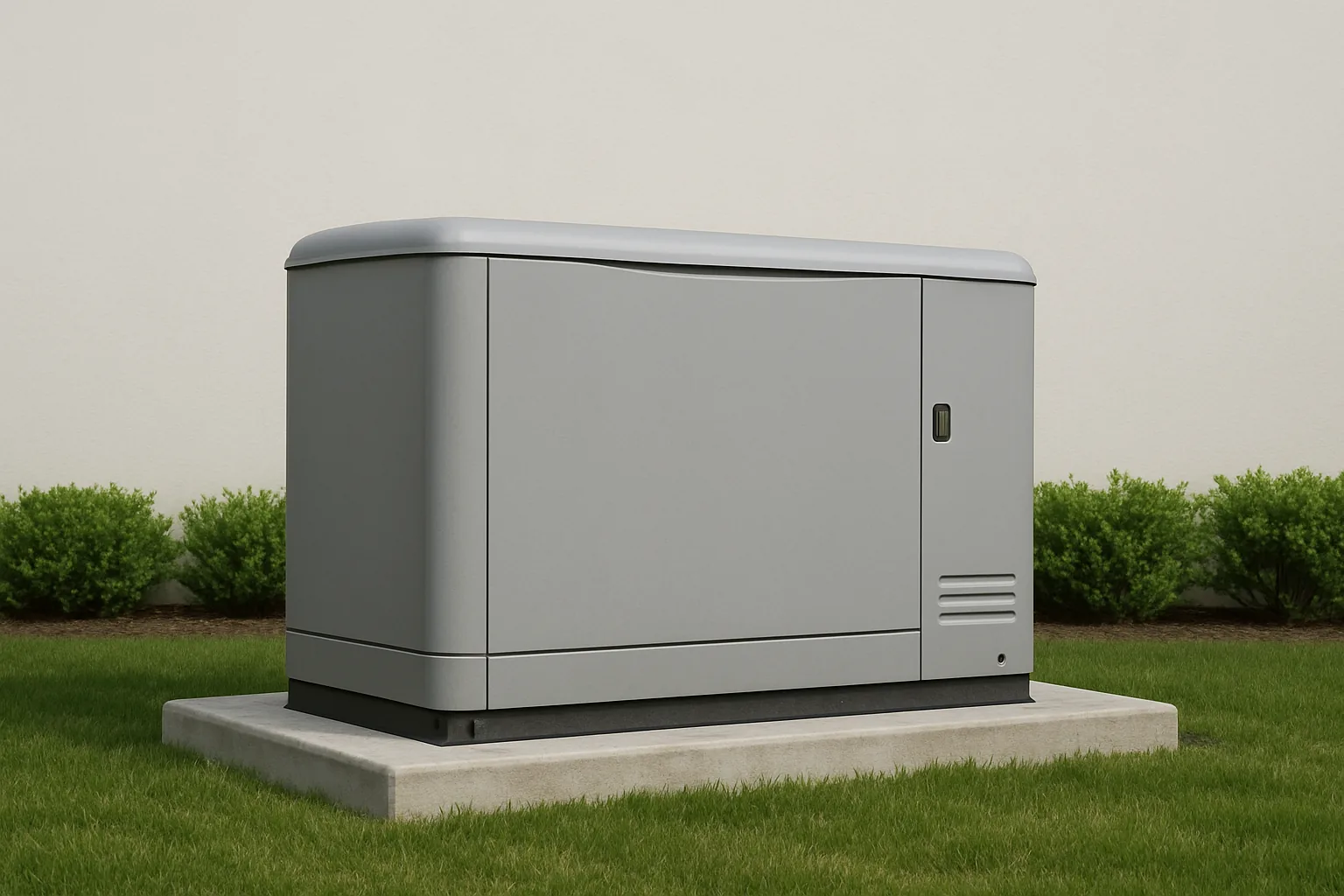
Three follow-up questions are worth asking: whether housing areas have temperature alarms and whose phone they ring, what happens to refrigerated medication, including insulin, if an outage exceeds its storage limits, and what electronic locks and gates do when the power drops, since some fail secure and stay shut, which is a serious problem in an evacuation.
Fire Deserves Its Own Conversation
Fire is the deadliest scenario a kennel faces, because it typically strikes overnight when nobody is in the building and confined dogs cannot save themselves. The short version is monitored detection that automatically summons the fire service rather than a wall siren nobody hears, sprinkler coverage in the housing areas, fire-rated compartments instead of one open shed, and a named overnight responder with a realistic arrival time. Our boarding kennel fire safety guide covers the full set of questions, and it is worth reading before a tour rather than after.
Medical Emergencies: The One Most Likely to Happen
This is the emergency your dog is most likely to actually meet. Bloat, heat stroke, a first seizure, a torn dewclaw that will not stop bleeding, a fast-moving infection. None of these are disasters in the civil-defence sense, and all of them are decided by how many minutes pass between the symptom and the veterinary table.
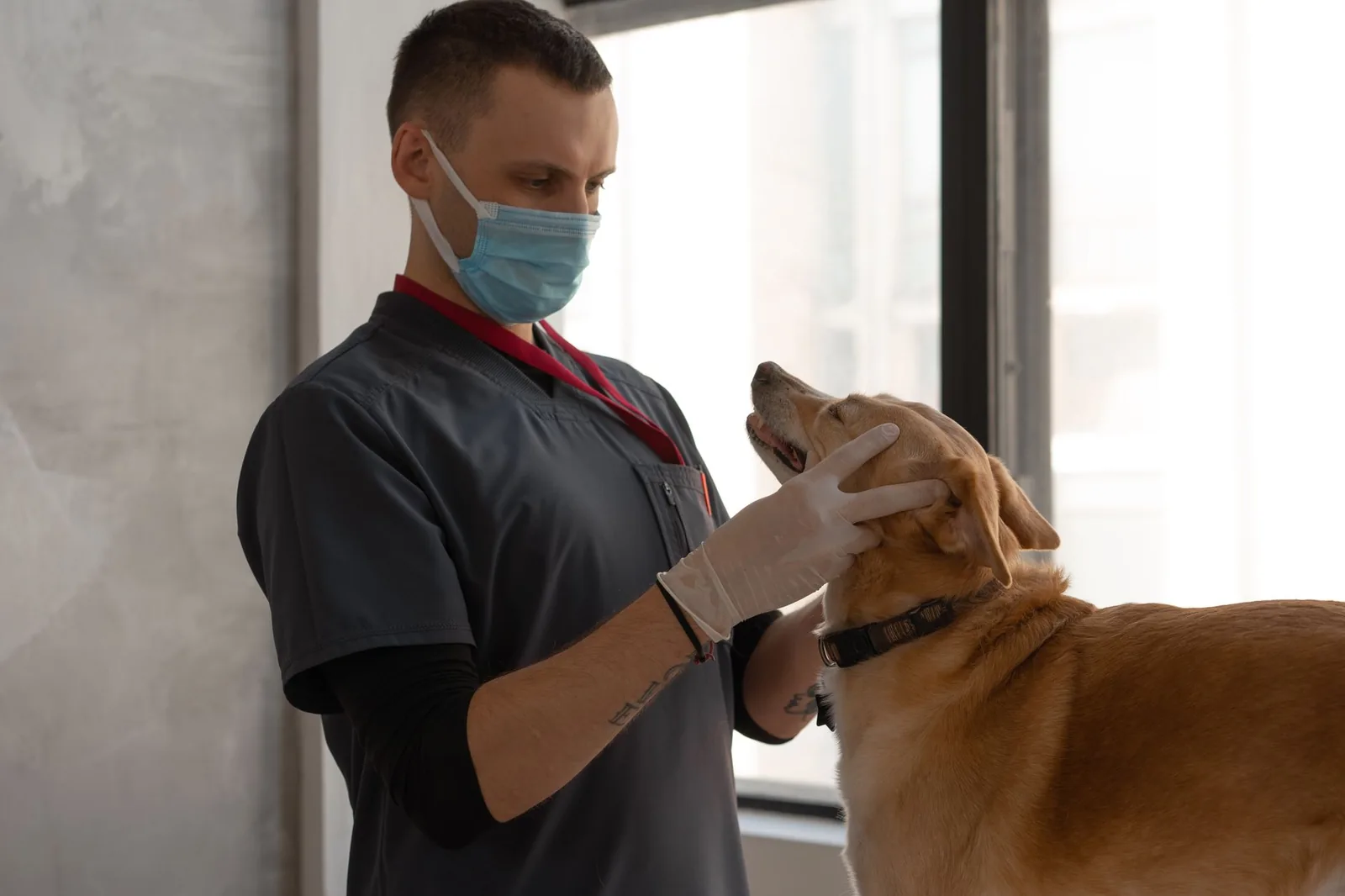
Confirm five things before you book:
- A signed treatment authorisation with a spending limit that you chose, not a blank number and not zero.
- A named 24-hour emergency hospital, and staff who know the drive time to it rather than just the name.
- Someone authorised to transport immediately, without waiting for permission from an owner who is asleep in another time zone, plus a vehicle actually available overnight.
- A stated threshold for calling you versus simply going. Ask it plainly: when do you phone me, and when do you just drive?
- Staff trained in pet first aid and CPR, with certification you can see.
Medication continuity belongs here too. If your dog takes daily medication, ask to see the administration log and ask what happens to the schedule during an evacuation, which is exactly the moment a routine slips. Our guide to what older dogs need from a boarding stay goes deeper on medication handling. Your own veterinarian is the right person to advise on your dog’s individual risk profile and what that authorisation should say, particularly for deep-chested breeds prone to bloat, epileptic dogs, and anything already on daily treatment.
Escapes and Loose Dogs
The most common emergency at a boarding facility is not a hurricane. It is a dog through a gate.
Ask about the physical controls first: double-gated entry vestibules so no single opened door leads to the street, perimeter fencing with no gaps at ground level, and latch hardware a determined dog cannot nose open. Then the protocol. Who searches, in what pattern, and how quickly? At what point do they call you, animal control, and the local shelters? Does your dog wear a facility tag during the stay in addition to your own ID, and do they check that your microchip registration is current at check-in?
Fearful dogs bolt hardest and travel furthest, which is why a facility that handles anxious and reactive dogs thoughtfully tends to have tighter escape procedures. If an operator has never had a dog get loose in ten years of operation, that is either excellent containment or a rehearsed answer. Ask what they changed after the last near miss, and listen for a real story.
Lockdown and Human-Caused Incidents
The American Kennel Club publishes active shooter and mass attack safety resources for event organisers, pointing them at federal Ready.gov and Department of Homeland Security material (AKC). Dog shows are not dangerous places. The AKC publishes it anyway, because any business that gathers people and animals under one roof is expected to have thought about the scenario.
For a boarding facility the practical version is smaller and more ordinary: a lockdown procedure, a rule about who is allowed behind the scenes, and, most useful of all, a method for verifying the identity of whoever collects a dog. Disputed pickups, an ex-partner arriving a day early, a stranger with a plausible story. These happen far more often than anything dramatic, and a facility that has never considered it will hand your dog to whoever seems confident at the desk.
What to Ask on the Tour
Ask to see, in writing:
- The written emergency or contingency plan, with a review date on it
- The named evacuation destination and any standing agreement with it
- The veterinary treatment authorisation form and the named emergency hospital
- Backup power details: what loads are covered and how long the fuel lasts
- The most recent fire inspection or licensing report
Ask out loud, and expect numbers:
- Where would my dog go if you had to evacuate, and how long would moving every dog take?
- Is the HVAC on the generator circuit, and does the generator start automatically?
- What temperature triggers an alarm, and whose phone does it ring?
- When do you call me in a medical emergency, and when do you just drive?
- What is the procedure the moment a dog gets loose?
- When did you last run a drill, and what did it change?
The tell is not whether every answer is perfect. It is whether the answers arrive as specifics or as reassurance. “We’d take care of it” is reassurance. “Our sister site forty minutes inland, twelve crates a run, three runs, and Marie is the one who calls it” is a plan. Operators in the second category are usually glad to walk you through it, because they spent real money getting there.
None of this means boarding is risky. It means the difference between a well-run facility and a poorly run one can be assessed before you hand over the lead, and emergency planning is one of the clearest signals available. The same diligence runs through our guide to choosing the right dog hotel and the failure-mode analysis in how dogs die at boarding facilities. Ask these questions in daylight, on a calm Tuesday, when nothing is going wrong. That is the only time you get a straight answer.
Further reading (sources)
- USDA APHIS on what a written animal contingency plan has to cover
- Ready.gov for building an evacuation plan around animals
- American Veterinary Medical Association with its disaster preparedness library for animal owners
- AVMA on the questions to put to a boarding facility
- National Fire Protection Association for the animal housing code that requires relocation planning
- American Kennel Club with the event safety resources it points organisers toward
- Congress.gov on the 2006 law that wrote pets into public evacuation planning
- IBPSA for fire safety and evacuation practice in boarding facilities