Boarding a Mixed-Breed or Unknown-Heritage Dog: How to Plan Care Without a Breed Label
Published on September 8, 2026
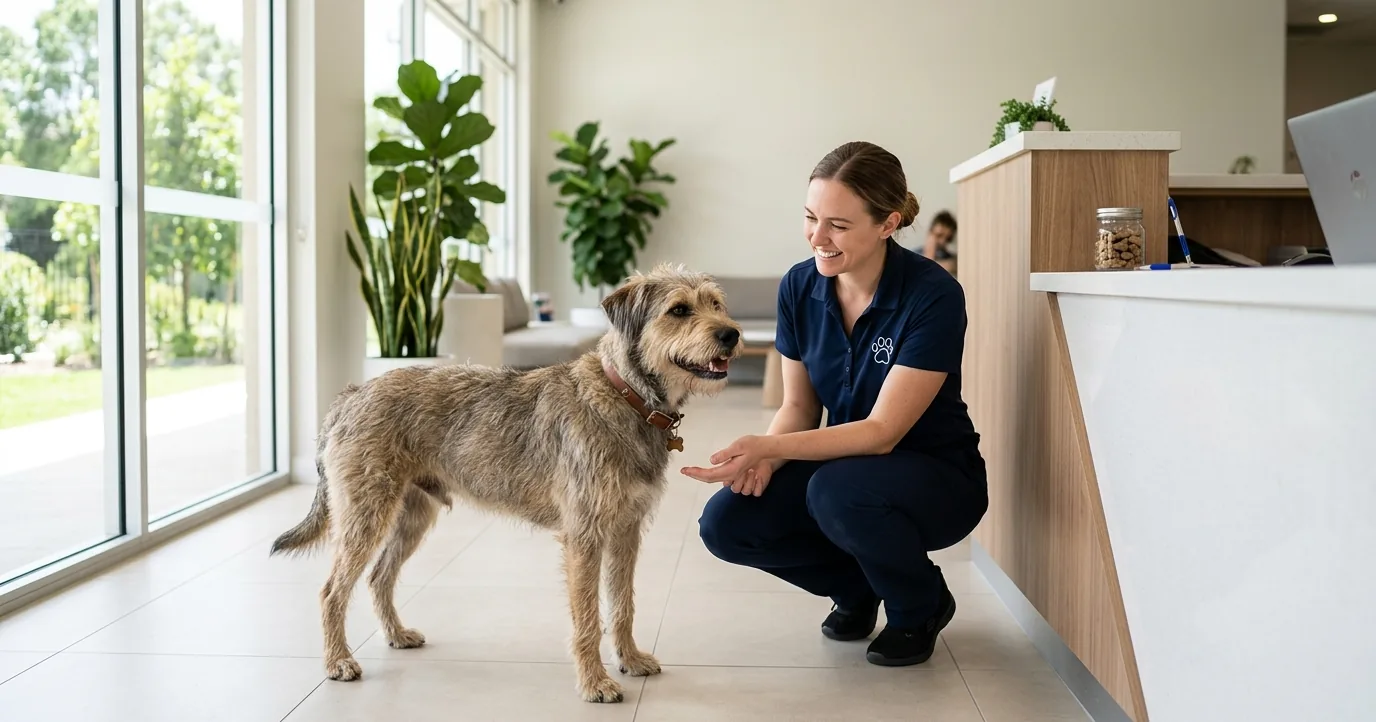
There is a box on almost every boarding intake form marked “breed,” and for most of the dogs walking through the door, whatever gets written in it is a guess. Owners write “lab mix” because the dog is black and friendly, or “shepherd mix” because the ears stand up. Staff read that word, form a picture, and start making decisions from it: which play group, which run, how much handling, how much caution. The guess quietly becomes the care plan.
That is a problem, because the guess is usually wrong, and because breed was never the thing that mattered. What matters is the actual dog: how thick its coat is, how long its muzzle is, how much it weighs and how it carries that weight, and what it does when it gets excited. Those are all things you can see and describe without knowing a single ancestor. Here is how to do it.
Why the Breed Box Is the Weakest Part of the Form
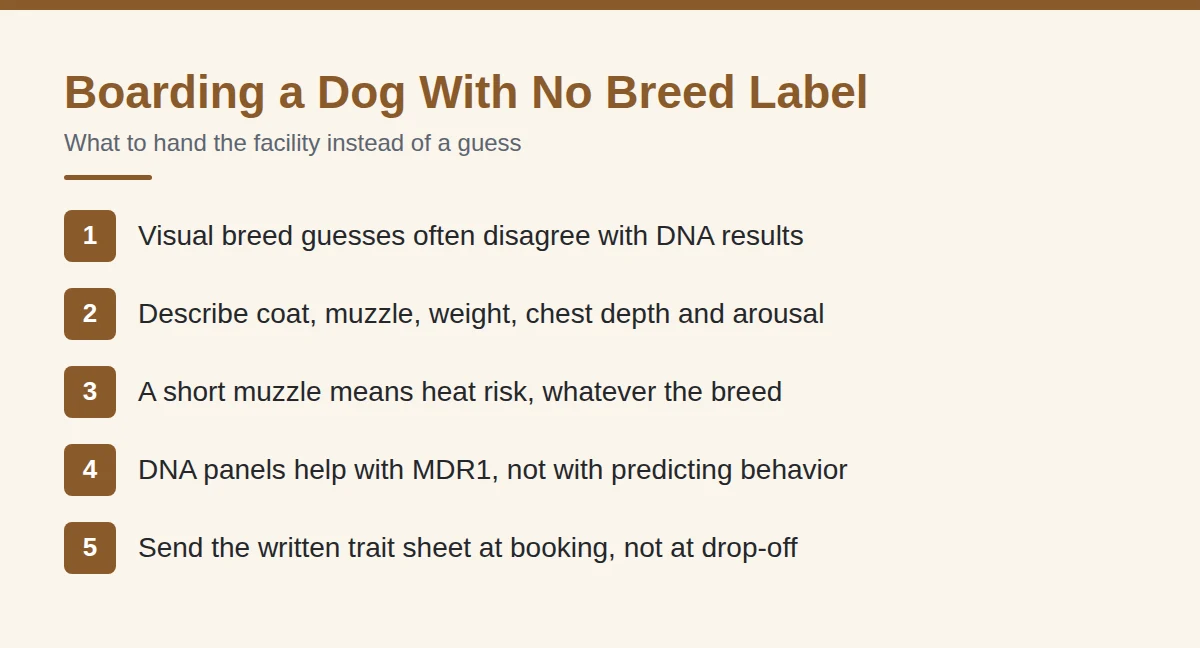
Visual breed identification is far less reliable than it feels. Studies comparing what experienced shelter and veterinary staff guessed from appearance against DNA results have repeatedly found poor agreement, with observers frequently disagreeing not just with the genetics but with each other about the same dog. People are confidently identifying breeds that are not there and missing ones that are.
A wrong guess goes wrong in two directions, and both cause real harm.
Over-restriction. A blocky head and a short coat get a dog labelled “pit bull type” at intake. That label can pull in facility policies and insurance exclusions written around a name rather than a behaviour, and a perfectly social dog gets pulled from group play, housed apart, or refused entirely. The dog’s actual temperament was never assessed.
Under-caution. This one is more dangerous and gets discussed less. A dog written down as “terrier mix” because it is small and scruffy might have a genuinely shortened muzzle, a dense double coat, or a heart murmur nobody screened for. Nothing about the label prompts staff to check heat tolerance or breathing. The dog is treated as low-risk because the word on the form sounded low-risk.
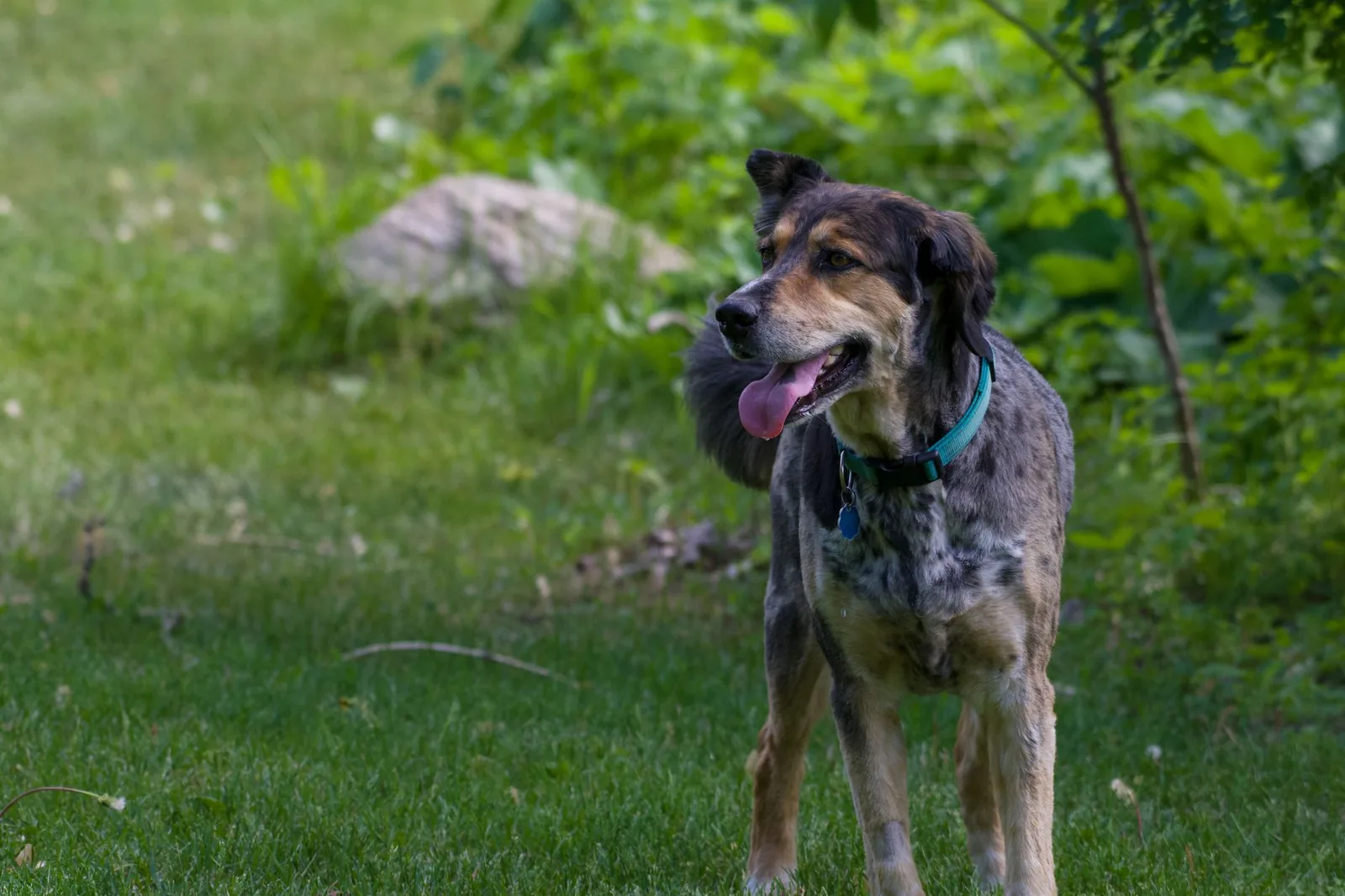
The fix is not a better guess. It is describing the dog instead of naming it.
The Traits That Actually Drive Handling Decisions
A breed profile is useful because it bundles physical and behavioural traits into one shorthand. You can hand over the same information directly, and it will be more accurate, because you are describing the dog in front of you rather than a population average. Six traits carry nearly all of the practical weight.
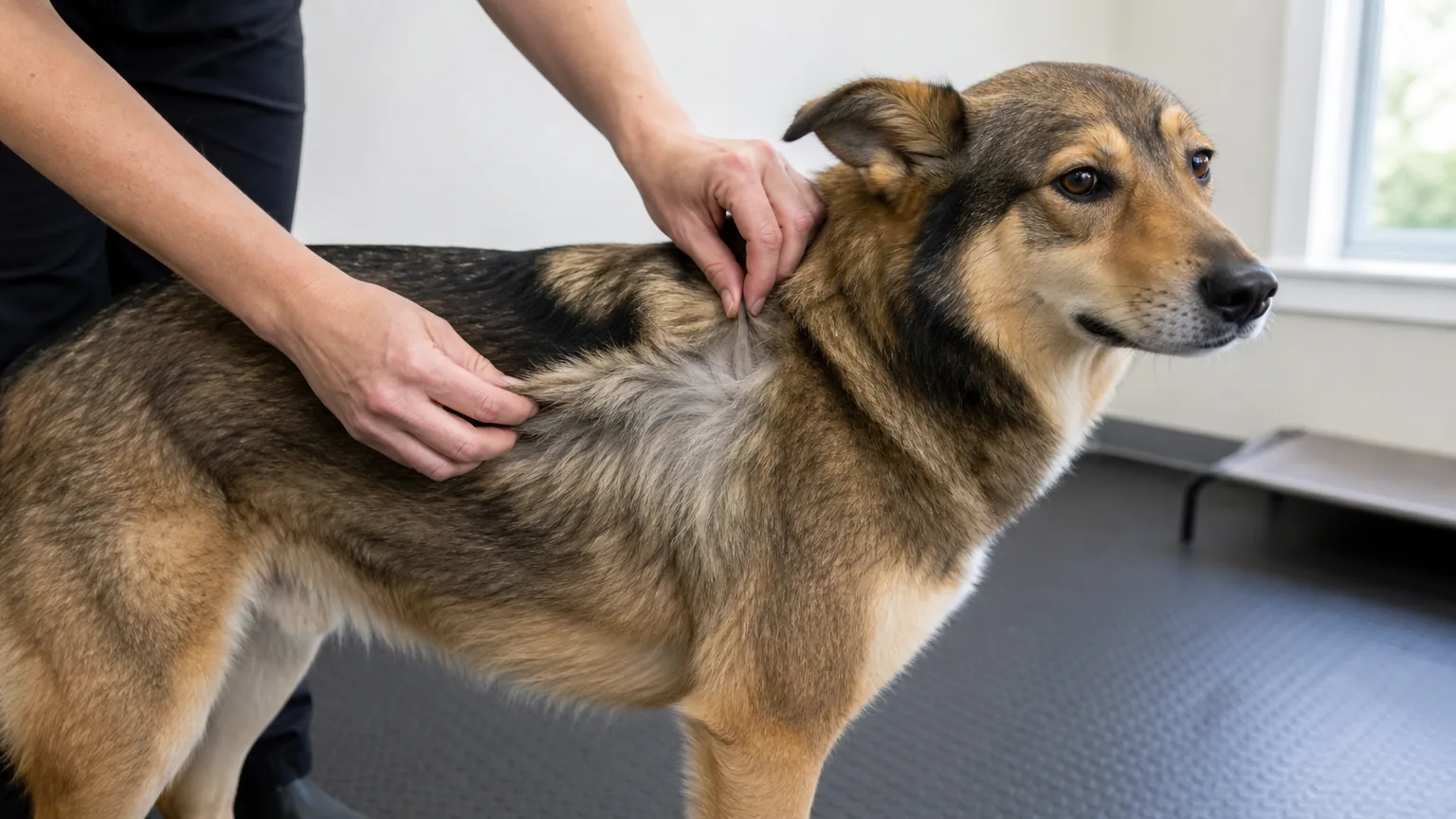
Coat type and density. Part the fur at the shoulders. If there is a soft, dense layer underneath the outer hairs, that is a double coat, and it changes how the dog sheds heat and how long it takes to dry after a bath. A dense-coated dog needs genuine climate control in summer and shaded turnout at the cooler ends of the day. A thin-coated, low-body-fat dog has the opposite problem and needs a raised bed off a cold floor, bedding, and often a coat for winter walks. Tell the facility which one your dog is.
Muzzle length. Look at the dog in profile. A muzzle noticeably shorter than the skull means some degree of brachycephalic airway compromise, and it does not require a purebred Bulldog to matter. Plenty of mixes inherit a shortened face without the breed name that would have triggered caution. If your dog snores, snorts, or tires quickly in heat, treat it as a flat-faced dog for boarding purposes and read our guide to boarding flat-faced breeds, because heat and exertion are the risk regardless of pedigree.
Size and structure. Give an actual weight, not “medium.” Weight determines run dimensions, latch strength, lead choice, and how many staff should handle the dog. A 70-pound dog that pulls needs different hardware from a 70-pound dog that ambles.
Chest depth. Deep, narrow-chested dogs carry elevated risk of gastric dilatation and volvulus, commonly called bloat, which is a life-threatening emergency. This is a body shape, not a breed, and mixes inherit it freely. If your dog’s chest is noticeably deep from spine to sternum and narrow side to side, put the feeding protocol in writing: smaller meals, rest either side, no vigorous play on a full stomach.
Arousal style. This is the behavioural trait that matters most and the one owners describe least well. Not “how energetic is my dog” but: what does the dog do when it gets excited, and how long does it take to come back down? A dog that gets loud and bouncy and settles in two minutes is a different management problem from one that gets loud and bouncy and stays lit for an hour. Say which yours is.
Thermal and noise tolerance. How does your dog behave on a hot day? What does it do during a thunderstorm or fireworks? Both are directly relevant to a building full of barking dogs and to summer turnout schedules.
Notice that none of these require you to know anything about ancestry. They require you to look at your dog and answer honestly. The same trait logic underlies our breed-specific boarding guide; the difference is that you are supplying the traits directly rather than having a breed name imply them.
What a DNA Panel Can and Cannot Tell a Facility
Commercial dog DNA tests have become cheap and popular, and owners increasingly turn up at drop-off with a breed percentage breakdown. It is worth being clear about which parts of that report are useful to a kennel and which are not.
Genuinely useful: specific health markers. The single most valuable result for boarding is the MDR1 (ABCB1) mutation, which affects drug metabolism and appears across herding-type ancestry and in plenty of mixes that do not look like herding dogs. It matters because affected dogs can react badly to drugs a facility or an emergency vet might reasonably reach for, including some sedatives and antidiarrhoeals. If your dog has been tested and carries it, that belongs on the care sheet in bold, alongside your vet’s contact details. Panels may also flag markers for exercise-induced collapse, degenerative myelopathy, and clotting disorders, all of which are worth passing on.
Not useful: predicting behaviour. A large genomics study published in Science in 2022, drawing on thousands of pet dogs with both survey data and sequenced genomes, found that breed ancestry explained only around nine percent of the variation in individual dog behaviour. Breed shifted the odds slightly on some traits and told you almost nothing about the specific animal. So a report saying your dog is 30 percent German Shepherd does not predict how it will handle a stranger reaching for its collar. Your own observation does.
Treat the percentages as estimates. Different companies use different reference panels and can return meaningfully different breakdowns for the same dog, particularly at low percentages. A result is a probabilistic inference, not a birth certificate.
The practical upshot: bring the health markers, leave the pie chart. A facility does not become safer for your dog by knowing it is part Chow.
How to Write a Trait-Based Care Sheet
This is the part that changes the stay. Instead of a breed name, hand the facility a short written description in plain language. One page, delivered at booking rather than at drop-off, so it can actually be read.
A workable template:
- Physical: weight, coat type (single/double, thick/thin), muzzle length relative to skull, chest depth, any known orthopaedic or airway issues.
- Thermal: the temperature above which the dog struggles, and how it prefers to sleep (raised bed, bedding, cool floor).
- Arousal: what winds the dog up, what it looks like when wound up, how long it takes to settle, and what helps it settle.
- Dog-to-dog: how it greets unfamiliar dogs, whether size or play style matters, whether it has ever been in a group setting before.
- Handling: how it reacts to collar grabs, being lifted, having paws or ears touched, and whether it takes food from strangers.
- Medical: medications, MDR1 or other genetic markers, vet contact, feeding protocol.
- Stress signals: the specific early signs that this particular dog is not coping. Yours will differ from the textbook list.
That last line is the one owners skip and staff value most. You know what your dog looks like an hour before it stops eating. Nobody else does.
The Rescue Dog With No History at All
An adopted dog with an unknown background is a harder case than an unknown mix, because you may not know the traits either. You have no record of how the dog handles a kennel environment, and possibly no idea whether it has ever been in one.
Do not make the first boarding stay a long one. Book a single daycare day or an overnight trial well before the trip you actually need cover for, so both you and the facility learn something while the stakes are low. Ask for the dog to be housed away from the busiest sightlines to start with, and ask staff to report back specifically on appetite, settling time, and behaviour at handling rather than the generic “he did great.”

Be honest that the history is blank. A facility told “we do not know his triggers” will handle a dog more carefully than one told “he’s fine with everything,” which is a claim you cannot actually make. If the dog is newly adopted, remember that it may still be decompressing from the shelter, and a boarding stay layered on top of that is a lot to ask; our guide to kennel stress covers what that looks like and how to help afterwards. Where a rescue dog shows real fear or reactivity, the setup described in our guide to boarding anxious or reactive dogs matters more than anything about its ancestry.
What to Ask the Facility
The questions below surface whether a kennel thinks in traits or in labels.
- How do you assign play groups? If the answer is by breed or by size alone rather than by observed play style, that is a limitation worth knowing.
- Do you have breed restrictions, and how do you apply them to a dog of unknown heritage? Ask whether the restriction is theirs or their insurer’s, and get any conditions in writing before you book.
- What do you do if my written description and your read of the dog disagree? Good facilities observe and adjust; the answer should involve calling you.
- Will you record what you observe during the stay and share it at pickup?
That last question is the sleeper. A facility that writes down how your dog actually behaved is handing you the beginning of a real profile, and after two or three stays you will have something far more useful than any breed guess. Our broader guide to choosing the right dog hotel covers the fundamentals underneath all of this.
The Bottom Line
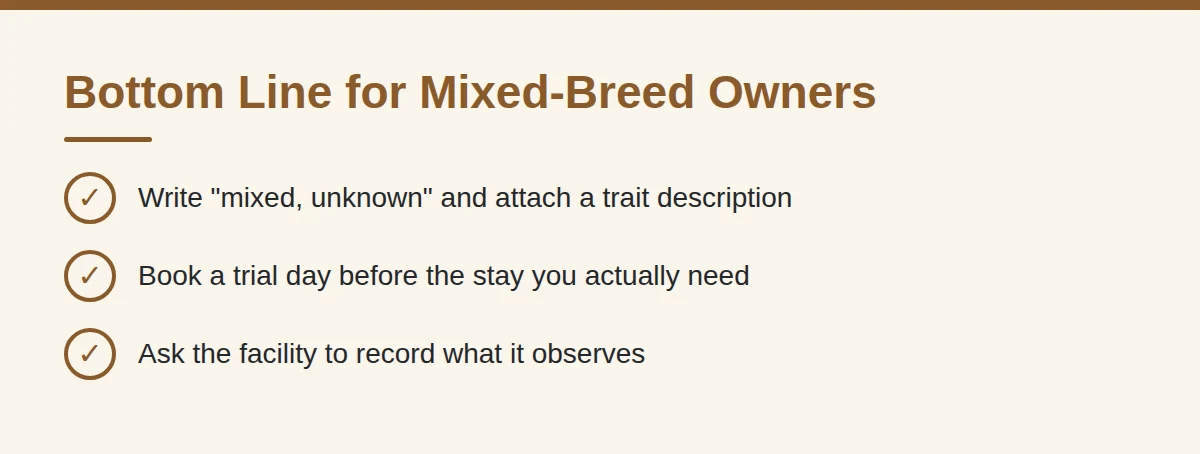
The breed box on the intake form is asking the wrong question, and for most dogs there is no honest answer to give it. Fill it in with “mixed, unknown” and put your effort into the written description instead. A facility that receives a clear account of coat, muzzle, weight, chest, arousal, and stress signals knows more about how to care for your dog than one holding a breed name it would only have used to infer those same things, less accurately.
Anything touching your dog’s specific medical risk, from airway compromise to bloat to a positive MDR1 result, belongs in a conversation with your veterinarian before you travel.
Further reading (sources)
- The Veterinary Journal on how poorly visual breed identification matches DNA results
- Science for the study finding breed explains about nine percent of behavioural variation
- Washington State University on what the MDR1 mutation means for drug sensitivity
- American Veterinary Medical Association on selecting and preparing for a boarding facility
- VCA Animal Hospitals for why deep-chested dogs are at risk of bloat