Kennel Stress in Dogs: A Complete Guide to Causes, Signs, Prevention, and Post-Stay Recovery
Published on July 14, 2026

Every dog feels something when the family drives away and a kennel door closes behind it. For most, that feeling is short lived and manageable. For some, it builds into a physiological stress response that shapes how they eat, sleep, and behave for the length of the stay and for days after they come home. Kennel stress is not a vague worry or a failure of love. It is a measurable, well documented phenomenon, and because it is measurable, it is also manageable. This guide covers what kennel stress actually does inside a dog, the signs owners and facilities can watch for, why kennels trigger it, what reputable operators do to keep it low, and the recovery routine to run through the first week your dog is back home.
What Kennel Stress Actually Is
Stress in dogs runs on much the same machinery it does in people. An unfamiliar, unpredictable environment activates the hypothalamic-pituitary-adrenal axis, and the adrenal glands release cortisol, the body’s main stress hormone. Researchers can measure that spike directly from saliva, urine, or blood. Studies of dogs entering shelters and kennels have repeatedly found cortisol climbing in the first days of a stay, often highest at the start before many dogs begin to adjust. The applied behavior work of Beerda and colleagues is a foundation here, linking confinement and loss of control to both hormonal and behavioral stress responses.
A short rise is normal and not harmful on its own. The problem is a response that stays switched on. Sustained cortisol suppresses appetite, disturbs sleep, loosens the gut, and taxes the immune system, which is part of why a stressed dog is also a dog more vulnerable to picking up kennel cough and other respiratory bugs in a group setting. It helps to separate two things. Acute settling stress is the normal reaction to arrival, a day or two of nerves that fades as the dog learns the routine. Chronic stress is the version that does not fade, and it is a genuine welfare problem rather than a passing mood.
Reading the Signs
A stressed dog broadcasts it, if you know the vocabulary. The signals fall into three groups.
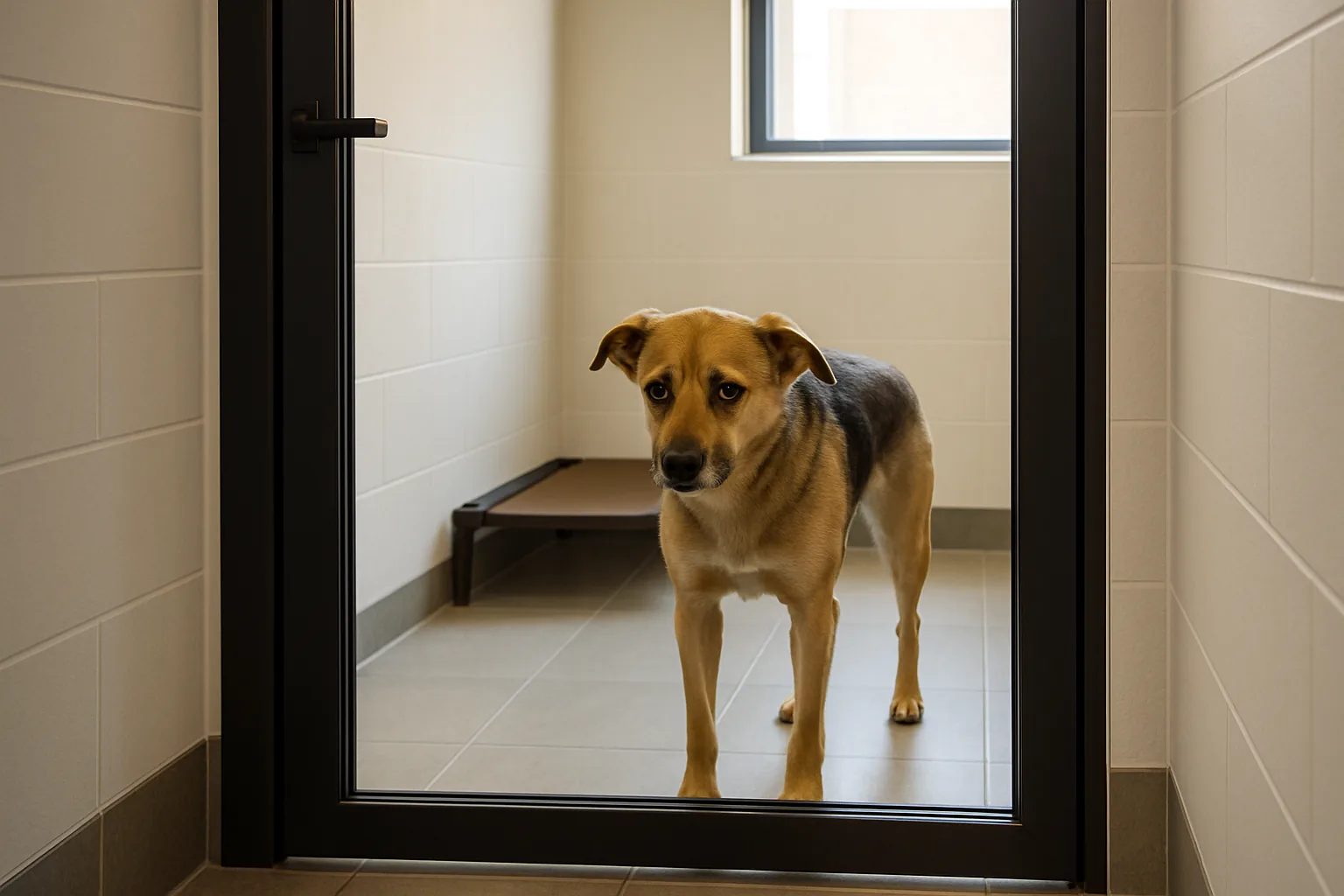
Behavioral signs in the moment. Heavy panting when it is not hot, pacing, an inability to settle, repeated lip licking and yawning, a tucked tail, flattened ears, “whale eye” (the whites showing at the corners), trembling, and either clingy or withdrawn behavior. Hypervigilance, constant scanning and startling at small sounds, is common in a noisy kennel.
Physical signs. Cortisol drives many of these. A stressed dog often goes off its food, which is one reason a good facility tracks how much each guest eats. Loose stool or outright diarrhea, sometimes called stress colitis, is among the most common boarding complaints. Over a longer stay a dog can drop noticeable weight. Some dogs drink and urinate more, others hold it.
Stereotypies and chronic signs. When stress becomes chronic, dogs develop repetitive behaviors that serve no purpose, the canine equivalent of pacing a cell. A Defense Department inspector general report published in February 2026 gave an unusually blunt catalogue of them. Investigators visiting military working dog kennels documented dogs in continuous spinning, jumping, chewing on metal water buckets, and “excessive vocalization,” alongside signs of heat stress, in facilities the report rated substandard. Those behaviors, spinning, circling, pacing a fixed path, bar biting, and self-directed licking or chewing, are red flags in any kennel. The fact that they turned up in elite, highly trained dogs underlines the central point: stress is about the environment, not the dog’s character.
Some of these signals cross from stress into a medical problem. Diarrhea that persists beyond a day or two, a refusal to eat for more than a day, blood in the stool, lethargy, or vomiting are reasons to involve a veterinarian rather than wait it out. Only a licensed vet can rule out an infection or other illness hiding behind what looks like nerves.
What Makes a Kennel Stressful
Understanding the triggers is what makes the problem fixable. The big ones are consistent across the research and the field.
- Noise. A kennel full of barking dogs is genuinely loud, and sound levels in some facilities reach ranges that would require hearing protection in a workplace. Constant noise is exhausting and gives a dog no way to switch off.
- Loss of routine and control. Dogs are creatures of habit. Meals, walks, and sleep suddenly happen on someone else’s schedule, in a place where the dog cannot predict what comes next or remove itself from anything unpleasant. That loss of predictability is a core driver of stress.
- Crowded sightlines. A dog that can see, hear, and smell many unfamiliar dogs at all times, with no visual break, stays on alert. Being housed a few feet across a narrow aisle from a reactive neighbor is its own low grade stressor.
- Too little exercise and enrichment. A dog with energy and no outlet stews. The Defense Department report is a stark example. Because of understaffing, some working dogs received only a few ten minute walks a week instead of the five hours of daily physical and mental activity their own regulations required. Boredom and confinement feed the repetitive behaviors above.
- Inconsistent handling. A rotating cast of unfamiliar people, some rushed or rough, denies a dog the one thing that lowers stress fastest: a predictable, gentle human it can learn to trust.
What a Good Facility Does to Keep Stress Low
None of this is inevitable. The difference between a stressful kennel and a calm one is mostly design and staffing. When you tour a facility, look for the features that flatten the cortisol curve:
- A quiet intake or decompression space where a new or anxious dog can settle away from the busiest runs, rather than being dropped straight into the loudest aisle.
- A predictable daily schedule with consistent meal, walk, and rest times, plus genuine quiet hours when lights dim and the building is allowed to go calm.
- Individual exercise blocks and one-on-one attention, not only open group play. Well run day camp and play groups help social dogs burn energy, but calm solo time matters just as much, and some dogs need it instead of the group.
- Sightline management, meaning solid dividers or visual breaks between runs so a dog is not staring at strangers every waking minute.
- Consistent caregivers who get to know each dog, and staff trained in low-stress, fear-free handling.
- Real enrichment: food puzzles, safe chews, sniff opportunities, and bedding that smells of home.
These are exactly the things a good tour surfaces, and our guide to choosing the right dog hotel walks through the questions that reveal whether a facility has thought about them. First timers in particular benefit from reading the complete first-time boarding guide before drop-off, since a trial day and a well prepared arrival blunt the worst of that initial spike.
The First Week Home: A Recovery Protocol
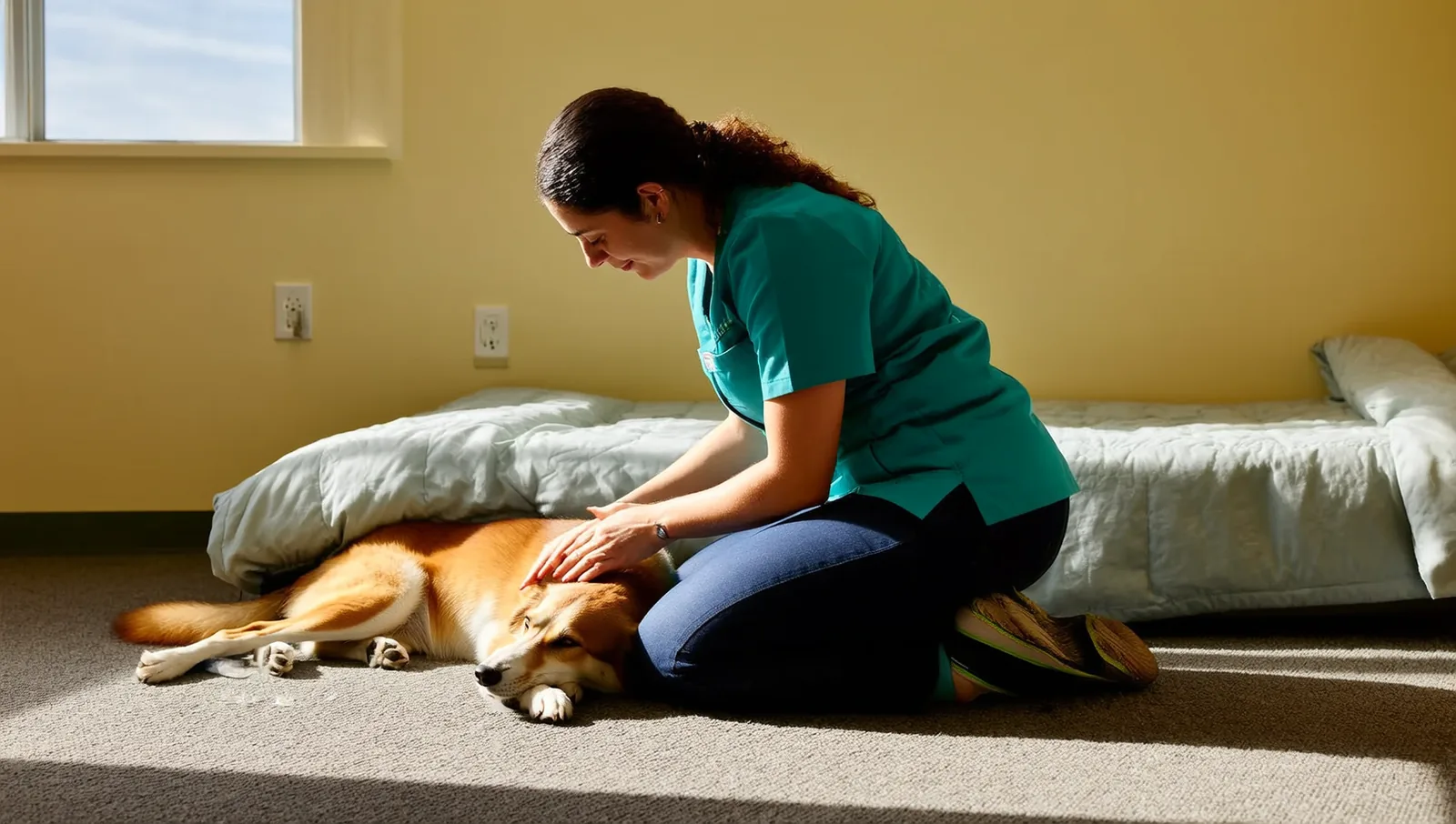
Recovery does not end at pickup. A dog coming off a boarding stay is often carrying a sleep debt, a rattled routine, and a nervous system that has been running warm for days. Give it a structured, low key first week rather than expecting an instant return to normal.

- Expect a decompression period. Many dogs are wiped out, extra thirsty, clingy, or a little off for one to three days. That much is normal letdown, not a warning sign.
- Keep the first days calm. Skip the dog park, big outings, and visitors for a few days. Let your dog sleep as much as it wants and offer a quiet, familiar space.
- Rehydrate and ease back onto food. Make sure fresh water is always available. If your dog’s stomach is unsettled, a bland diet for a day or two often helps, though it is worth a word with your vet before changing food if you are unsure.
- Rebuild the routine gradually. Returning to normal walk, meal, and bedtimes is the fastest way to signal to a dog that ordinary life has resumed.
- Watch the trend line. Note appetite, stool, energy, and mood each day. The direction is what matters. A dog steadily returning to itself is fine, while a dog getting worse, or not bouncing back at all after several days, needs a closer look.
Age changes the timeline. Senior dogs recover from stress more slowly than young adults and deserve extra patience and closer monitoring. And while a few rough days are ordinary, behavior that is new, intense, and lasting, a targeted fear of certain people, persistent flinching, or a dog that seems genuinely shut down, is worth taking seriously. If something feels wrong beyond normal stress, our guide to the signs a dog may have been mistreated at boarding covers how to tell the difference and what to do next.
The Bottom Line
Kennel stress is the price of admission for boarding, but a manageable one. A dog that goes to a calm, well staffed facility and comes home to an owner who understands the recovery curve will usually shed the stress and be back to itself within days. Persistent diarrhea, a refusal to eat, weight loss, or distress that does not lift are the moments to stop watching and call your veterinarian, who is the right person to separate ordinary nerves from something that needs treatment. Everything else, the pacing at the window, the heavy sleep, the extra clinginess, is mostly your dog telling you it missed home and is glad to be back.
Further reading (sources)
- Stars and Stripes on a Pentagon report documenting stress behaviors in substandard kennels
- American Veterinary Medical Association for what to weigh when boarding your pet
- ASPCA with how to recognize and ease common canine stress and anxiety
- Fear Free Pets on reducing fear, anxiety, and stress in how dogs are handled
- Applied Animal Behaviour Science for Beerda and colleagues on chronic stress in kenneled dogs
- VCA Animal Hospitals covering the signs of stress and anxiety in dogs and how to respond