The Complete First-Time Dog Boarding Guide: Everything Pet Parents Need to Know Before Booking, Packing, and Drop-Off
Published on June 29, 2026
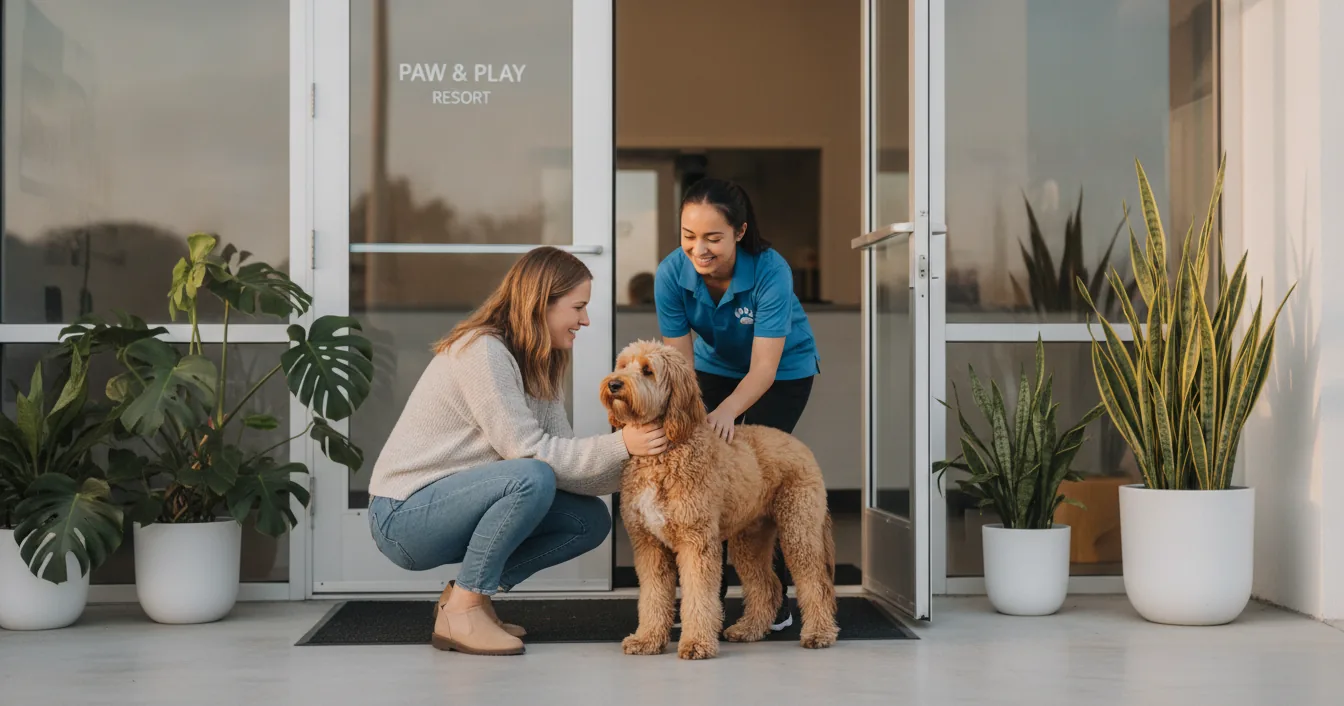
The first time you hand your dog to someone else for a few nights, the worry is rarely about the building. It is about your dog. Will he eat? Will she think she has been left behind for good? First-time boarding feels like a leap, but it is a well-worn path, and the families who find it easy are simply the ones who started early and knew what to expect. This guide walks the whole arc, from the first search to the moment you collect a tired, happy dog, so nothing catches you off guard.
Start Earlier Than You Think
The most common first-timer mistake is leaving it late. Good facilities, especially the ones other owners actually recommend, fill their best dates months ahead. Summer weeks, the December holidays, and long weekends book out first, sometimes by spring. Begin looking four to eight weeks before an ordinary trip, and far sooner for peak season. Starting early does more than secure a spot. It leaves room for a tour, a trial visit, and any vaccinations your dog still needs, none of which can be rushed in the final week.
Get the Vet Paperwork Moving
Every reputable facility requires proof of current vaccinations before your dog walks in, and this is the step most likely to trip up a beginner, purely because of timing. Rabies and the core DHPP combination are standard. So is Bordetella, the main defense against kennel cough and the wider respiratory complex, and many facilities want it given at least a week before arrival so immunity has time to build. Some also require the canine influenza vaccine, which for a first-timer is a two-dose series spaced two to four weeks apart. That alone can take a month. Call your chosen facility, ask for its exact requirements in writing, and book the vet visit as soon as you have them. Which vaccines your individual dog actually needs is a decision for your veterinarian, not the kennel.
Tour, Shortlist, and Trust Your Eyes
Never book a place you have not seen. A short visit tells you more than a week of reading reviews: whether the air smells clean, whether the dogs look calm, whether staff answer your questions instead of steering you toward the door. Our full guide to choosing the right dog hotel covers exactly what to inspect and which questions separate a genuine operator from a slick one. For a first stay, try to shortlist two places you would be happy with, so a fully booked calendar never forces a panicked last-minute choice.
Understand Booking, Deposits, and Cost
Once you have chosen, expect the business side to feel a little more formal than a grooming appointment. Many facilities take a deposit or full prepayment to hold peak dates, and most have a cancellation window, often anywhere from 48 hours to a week, beyond which that deposit is forfeit. Read the policy before you pay. Cost varies widely by region and by how much care is bundled in, but standard overnight boarding commonly runs in the range of roughly $40 to $75 a night across much of the United States, with premium suites and add-on services pushing higher (Daily Paws, 2025; Care.com, 2025). Always ask what the nightly rate actually includes. Feeding, walks, and playtime are folded into the base price at some places and billed as extras at others.
Ease a Nervous First-Timer In
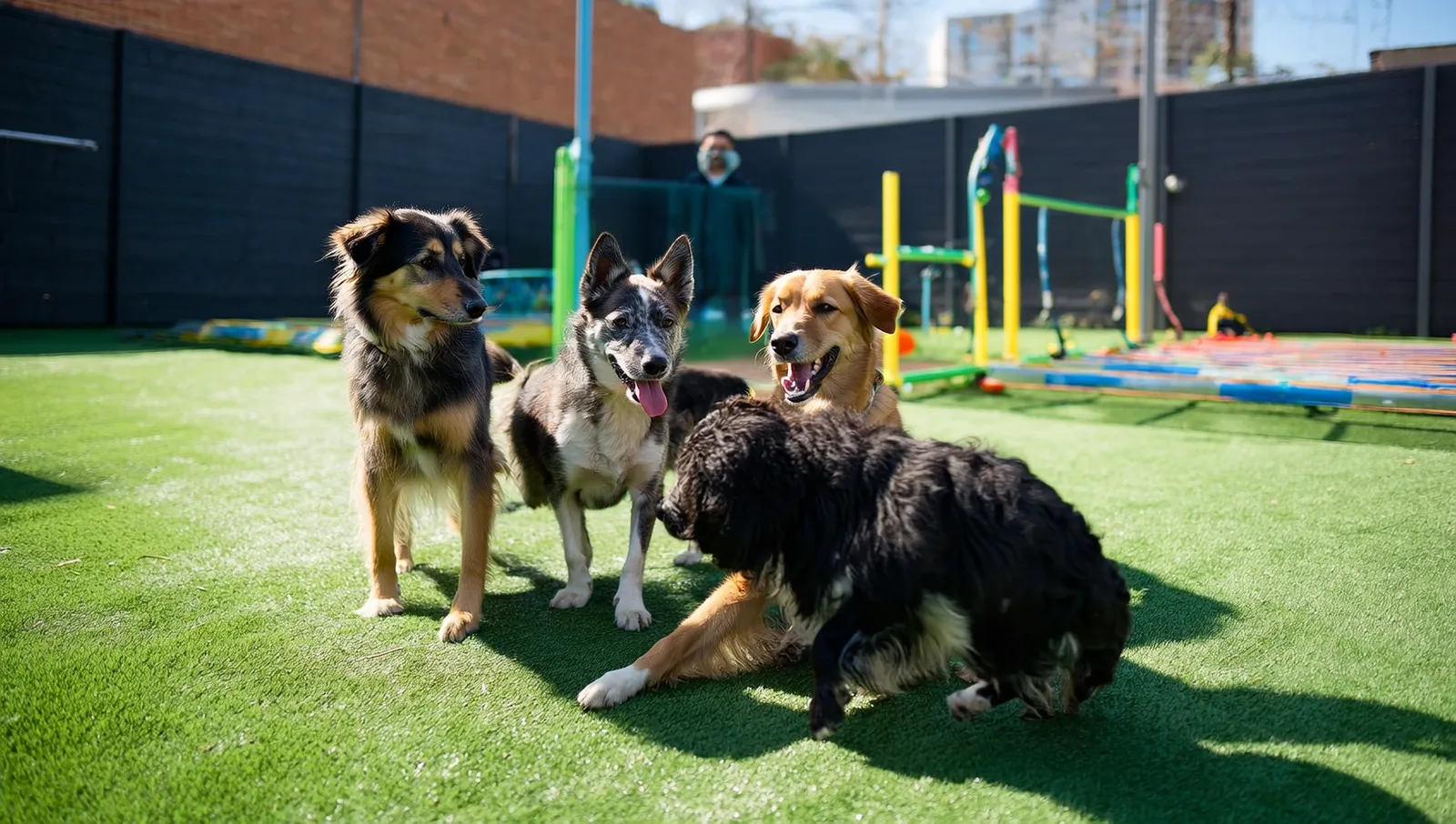
A dog that has never been away from home does far better with a gentle on-ramp than a cold first night. The simplest version is a single day of daycare or supervised group play a week or two ahead, which lets your dog meet the staff and learn the place while you are still the person coming back for them. Many facilities then offer a one-night trial stay before you commit to a longer booking. It is worth the extra trip. You learn how your dog settles overnight, and the staff learn your dog, long before the real separation arrives.
What to Pack, and What to Leave Home
Keep it simple and familiar. Pack:
- Your dog’s regular food, pre-measured into labeled daily portions. A sudden diet change on top of a new environment is the fastest route to an upset stomach.
- Any medication in its original labeled packaging, with written dosing instructions.
- One item that smells of home, such as a worn t-shirt or a familiar blanket. Scent is genuinely calming, which is why staff encourage it. One daycare worker went viral after an owner sent an entire couch cushion so the dog would feel at home (Newsweek, 2025). A t-shirt does the same job in less space.
- Emergency contact details and your veterinarian’s phone number.

Leave the expensive orthopedic bed, the irreplaceable toy, and anything you would be heartbroken to see chewed or lost. Tell the staff, in writing, about allergies, quirks, resource guarding, or any history of escaping. A facility that knows your dog steals socks can head off a problem. One that finds out the hard way cannot.
Drop-Off Day
Drop-off sets the tone, and the biggest favor you can do your dog is keep it low on drama. Walk or exercise your dog beforehand so some of that nervous energy is already spent. Keep your own goodbye short, calm, and upbeat. A long, tearful farewell only teaches an anxious dog that something must be wrong. Hand over the food, medication, and notes, confirm how the facility will reach you, and then go. It can feel abrupt, but dogs read our emotions closely, and a confident exit is reassuring.
What Staff Will, and Will Not, Tell You
Set your expectations for the quiet stretch in the middle of the stay. Most good facilities welcome a check-in and will share a photo or a quick note, and some post daily updates to social media or offer live webcam access so you can look in for yourself. What they generally will not do is phone you every few hours, and no news is usually good news. Agree before you leave on what counts as a reason to call you directly: a meal refused across a whole day, any sign of illness, or an injury. Settling on that threshold in advance stops you from reading ordinary silence as bad news.
Pickup and the First Day Home

Do not be alarmed if the dog you collect is not bouncing off the walls. A stay is stimulating, and plenty of dogs come home tired, extra thirsty, and ready to sleep hard for a day. Some are briefly clingy, others a little aloof, and a few have mild loose stool from the excitement or a change in water and routine. These shifts usually settle within a day or two. What is not normal is the opposite: a dog that is limping, flinching from handling, refusing food for more than a day, or showing fear it never had before. Those are worth a closer look, and our guide on spotting trouble at pickup explains how to document and respond. For the great majority of first stays, though, the worst you will face is a sleepy dog and the quiet realization that boarding was easier than you feared.
The first time is the hard one. Once you have a facility you trust, a vaccination record already on file, and a packing routine that works, every trip after this is little more than a phone call and a familiar drop-off.
Further reading (sources)
- Daily Paws on what it really costs to board a dog
- American Veterinary Medical Association for what to check and ask before boarding your pet
- Newsweek with the viral case for sending a comfort item from home
- Donegal Daily on a practical owner’s checklist for kennel stays